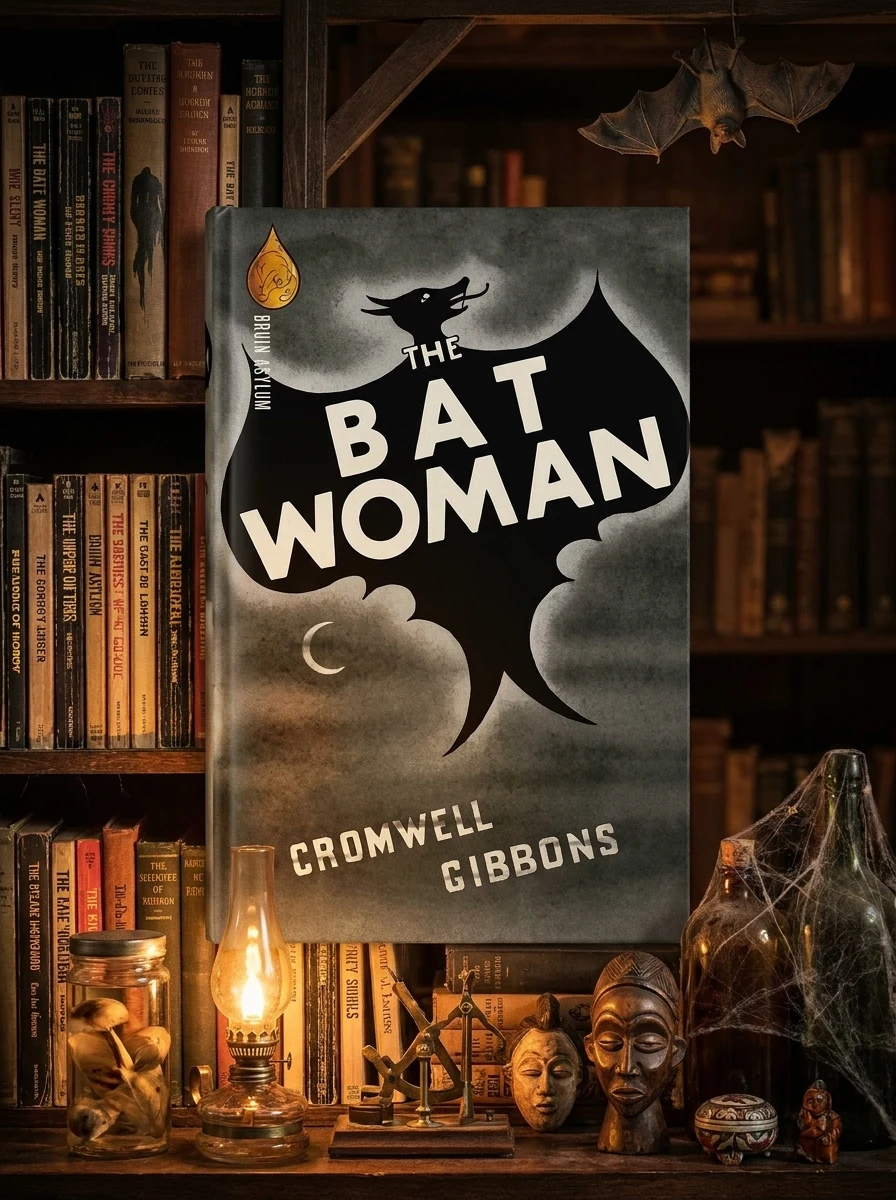
The Bat Woman
A 1930s pulp novel written as a Universal Studios treatment by Cromwell Gibbons
This text functions as a bridge between literature and cinema. Gibbons crafted the narrative to resemble a film treatment rather than a traditional novel. The plot revolves around classic horror archetypes including vampires and mad scientists. It also incorporates head hunting and yellow peril narratives. These elements combine to create a distinctively schlocky tone. The work reflects the sensationalist tastes of the nineteen thirties. It offers insight into how screenwriters approached horror stories during that period. The book remains a rare find for collectors of obscure genre fiction.
Gibbons wrote this work in the nineteen thirties while working as a Hollywood screenwriter. He intended it for Universal Studios. It reflects the schlocky horror trends of that era. The book captures the sensationalist style of early twentieth century American pop culture and cinema.


📝 Description: The Bat Woman
💎 Our verdict on The Bat Woman
📖 Why choose it
Why this book is worth reading
This volume is a wonderfully schlocky work that remains nearly impossible to find, offering a guilty pleasure for readers who enjoy vintage genre fiction. It suits those seeking obscure pulp horror or interested in early screenwriting history. The text does not shy away from the sensationalist style typical of its era, delivering a unique experience that bridges the gap between printed novel and cinematic script. Gibbons structures the tale to enthrall and amuse with its specific blend of supernatural and scientific tropes. It stands as a curious artifact of mid twentieth century pop culture for collectors of obscure genre fiction.
⭐ Reader reviews
Reader rating
The Bat Woman is a curious artifact that functions as a bridge between literature and cinema, crafted to resemble a film treatment rather than a traditional novel. Gibbons combines elements of schlock and awe into a narrative of evil menace, featuring vampirism, mad scientists, head hunters, and yellow peril themes. These components create the atmosphere of a Saturday matinee fright fest. The work offers insight into how screenwriters approached horror stories during the nineteen thirties. It may disappoint readers looking for literary depth or modern psychological horror but delights those who appreciate its specific blend of tropes and sensationalist style.