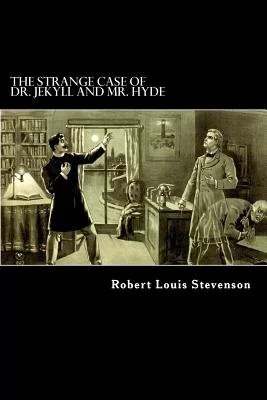
The Strange Case of Dr. Jekyll and Mr. Hyde
Alex Struik presents Robert Louis Stevenson's classic tale of duality and investigation.
This volume focuses on the narrative of Gabriel John Utterson, a London lawyer tasked with uncovering the truth behind the disturbing connection between Dr Henry Jekyll and Edward Hyde. The text relies on Stevenson’s original 1886 publication, preserving the atmospheric tension of the Victorian period. Readers encounter a story where scientific ambition collides with moral decay, viewed through the perspective of a rational observer. Struik ensures the core plot remains intact, allowing the horror to emerge from character actions rather than external monsters. The work appeals to those who appreciate the foundational elements of supernatural fiction and psychological thriller genres. It stands as a direct continuation of Stevenson’s legacy as a celebrated Scottish writer.
Robert Louis Stevenson was a Scottish novelist and poet active in the late nineteenth century. His work emerged from the Gothic tradition, influencing later writers like Hemingway and Borges. The novella reflects Victorian anxieties about identity and morality within the urban landscape of London.


📝 Description: The Strange Case of Dr. Jekyll and Mr. Hyde
💎 Our verdict on The Strange Case of Dr. Jekyll and Mr. Hyde
📖 Why choose it
Why this book is worth reading
This volume serves readers who appreciate the foundational elements of supernatural fiction and psychological thrillers without seeking modern reinterpretations or extensive critical analysis. It appeals to those interested in witnessing the gradual unraveling of human nature through the perspective of Gabriel John Utterson, a London lawyer tasked with uncovering disturbing truths. The narrative allows audiences to experience the horror emerging from character actions rather than external monsters, maintaining the core plot’s integrity. By preserving Stevenson’s original 1886 publication style, it offers direct access to a story that established literary celebrity during its time. It is ideal for those valuing atmospheric tension and Victorian moral complexity over contemporary stylistic innovations.
⭐ Reader reviews
Reader rating
Struik presents a version of Stevenson’s classic tale that relies heavily on the original 1886 text, ensuring the atmospheric tension of the Victorian period remains intact. The narrative focuses on Utterson’s investigation into the connection between Dr. Jekyll and Edward Hyde, allowing horror to emerge from character dynamics rather than external threats. This approach suits readers who value the psychological duality explored through a rational observer’s eyes. While it may not satisfy those seeking modern reinterpretations or deep critical analysis, it effectively maintains the novella’s structural integrity. The work stands as a direct continuation of Stevenson’s legacy, offering accessible entry points for contemporary audiences interested in Gothic traditions and the intersection of science and morality.