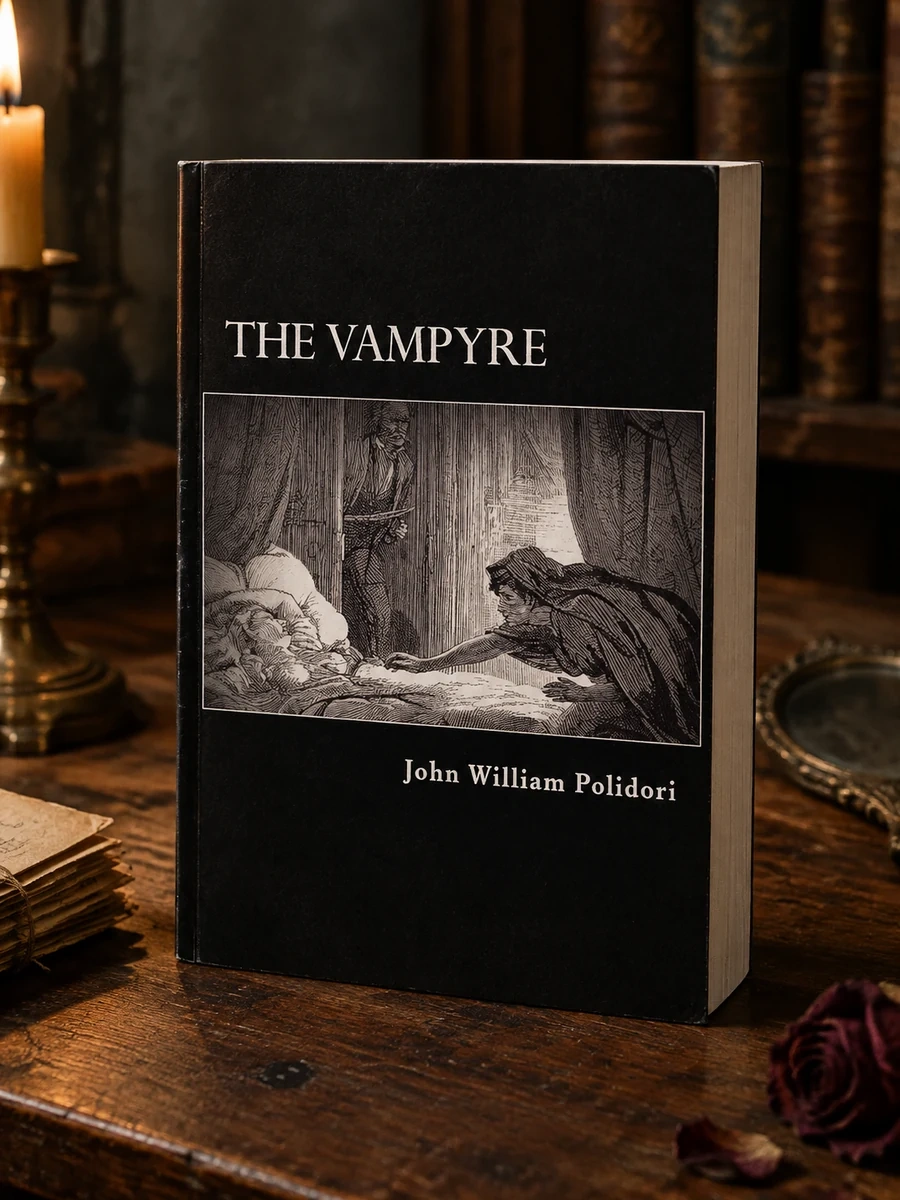

The Vampyre: A Tale
Struik publishes Polidori's 1819 romantic vampire novella in a modern reprint.
This volume contains the full text of John William Polidori's 1819 tale. The author was an English physician and writer associated with Romanticism. His Italian heritage influenced his literary perspective. The story is credited by some as the creation of the vampire fantasy genre. Although initially attributed to Lord Byron, this edition clarifies Polidori's authorship. The narrative structure follows the original octavo format. It explores themes of aristocratic corruption and supernatural predation. The work stands as a foundational text for subsequent horror literature. Struik ensures the historical context remains clear for contemporary audiences.
Published in London on Paternoster-Row in 1819, this work emerged during the Romantic movement. It was entered at Stationers' Hall on March 27, 1819. The text reflects the era's fascination with the supernatural and aristocratic decay.


📝 Description: The Vampyre: A Tale
💎 Our verdict on The Vampyre: A Tale
📖 Why choose it
Why this book is worth reading
This volume is essential for scholars and enthusiasts tracing the lineage of supernatural fiction. It offers American readers direct access to one of the earliest English vampire narratives, clarifying Polidori’s authorship after initial misattribution to Lord Byron. Those interested in the origins of gothic fantasy and the Romantic movement will appreciate this historical artifact. While modern horror fans may find it less immediate, students of literary history gain value from its primary source material. It provides insight into how the genre evolved from its anonymous beginnings, making it a crucial piece for understanding vampire lore's development.
⭐ Reader reviews
Reader rating
Struik’s reprint successfully preserves Polidori’s original octavo format and historical context, ensuring the work remains accessible to contemporary audiences. The edition clearly establishes John William Polidori as the physician and writer of Italian descent behind the tale, correcting earlier errors that credited Lord Byron. This clarity is vital for readers studying the Romantic movement’s influence on horror. The text stands as a foundational work for subsequent vampire literature, exploring themes of aristocratic corruption with a tone distinct from later iterations. It suits those seeking to understand the roots of gothic fantasy rather than those looking for immediate thrills.