
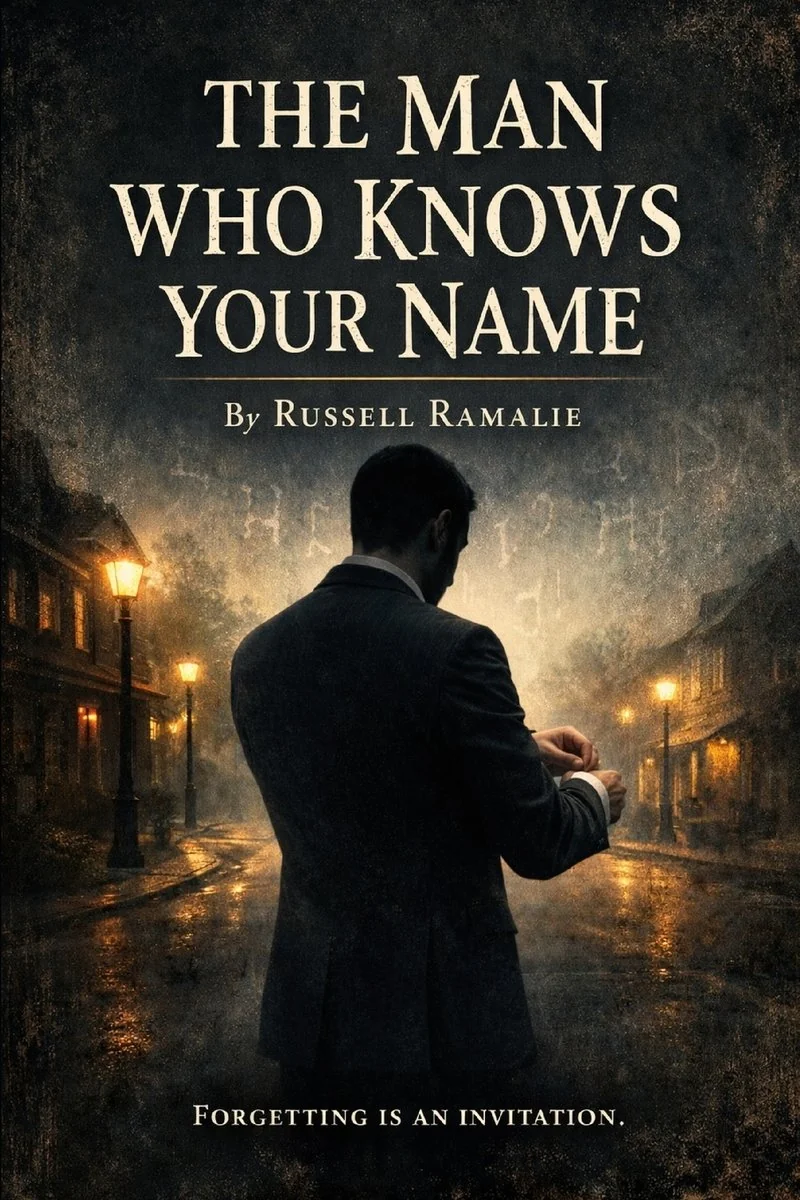
The Man Who Knows Your Name
A literary horror novel about an entity that removes people who are forgotten.
Ramalie constructs a tale where the antagonist is not a killer but a remover of existence. Asharath targets places of fading memory. The plot unfolds through the town's realization that their neglect invited this horror. Characters must confront what they overlooked to survive. The narrative structure emphasizes the psychological weight of being known versus being erased. It draws on ancient texts regarding cosmic mythology. The story argues that forgetting always invites monsters back. Readers will find a slow-burn tension built on the fear of erasure rather than physical harm. The prose focuses on the quiet dread of losing one's identity and place in the world.
This 2026 release from Independently Published sits within the tradition of modern literary horror. It blends quiet dread with cosmic mythology and visceral psychological terror. The work examines how societal neglect creates monsters, drawing on ancient texts to explore the power of naming and being known in a world that often overlooks the unacknowledged.


📝 Description: The Man Who Knows Your Name
💎 Our verdict on The Man Who Knows Your Name
📖 Why choose it
Why this book is worth reading
Readers seeking a slow-burn psychological horror experience will find deep satisfaction in this narrative's exploration of existential dread. Those who appreciate literary fiction that merges supernatural elements with philosophical inquiry into memory will gain from its examination of identity. It appeals to audiences tired of traditional jump scares, offering instead a chilling meditation on the consequences of collective forgetfulness. The book is ideal for individuals who enjoy intellectual engagement alongside terror, valuing quiet unease over visceral action.
⭐ Reader reviews
Reader rating
Ramalie constructs a compelling tale where the antagonist erases existence rather than killing bodies, creating a unique form of cosmic horror. The prose effectively builds tension through the fear of being forgotten, emphasizing the psychological weight of identity. By focusing on the quiet dread of losing one's place in the world, the narrative offers a refreshing departure from standard gore-based scares. It suits readers who prefer atmospheric storytelling and deep thematic exploration over fast-paced action. The work successfully blends literary fiction with supernatural terror, providing a thought-provoking examination of how attention wards off horror and how neglect invites it back.
📖 Read on the blog
🏛 Books from this publisher Independently Published








You might also like
See more →



Have a question about this item?
Ask about the edition, condition, delivery or anything else — we reply by email or phone, usually within a day.
