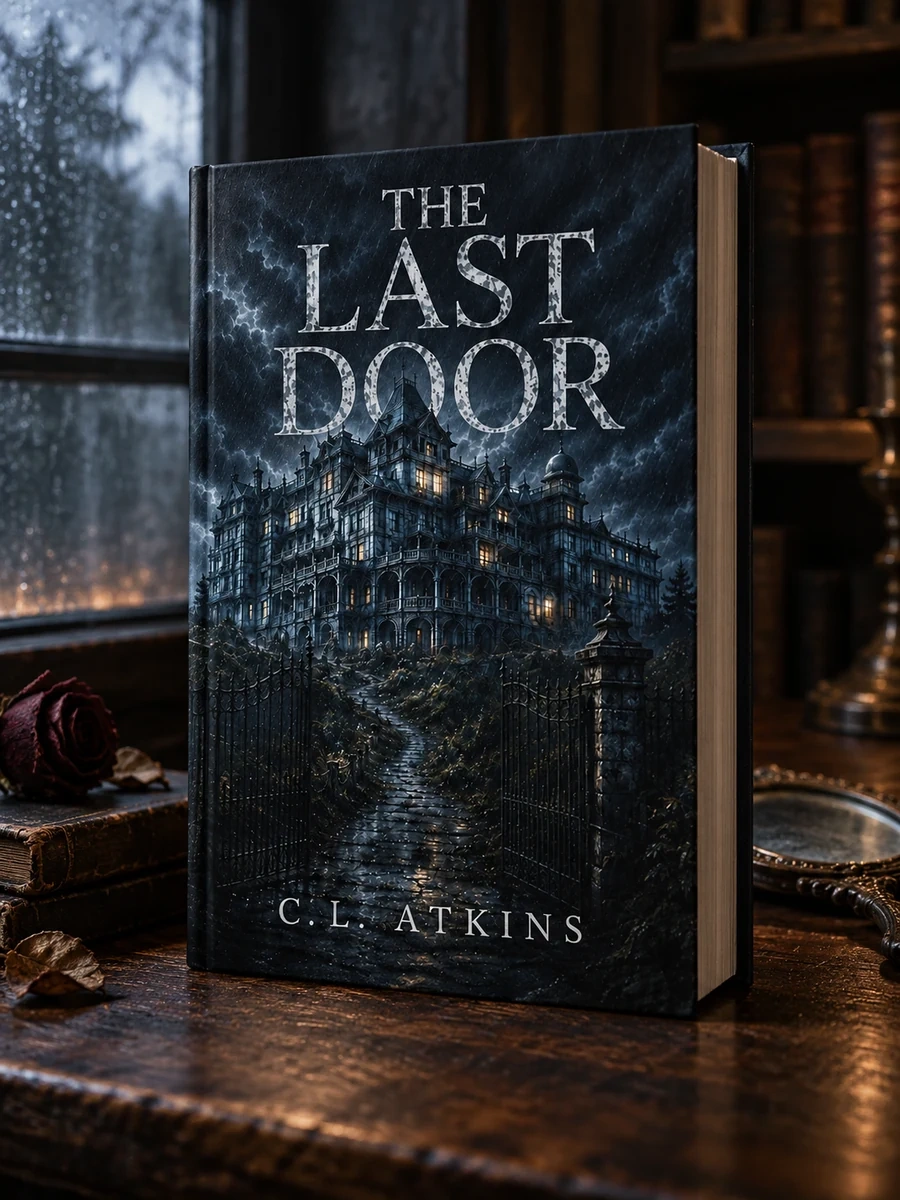
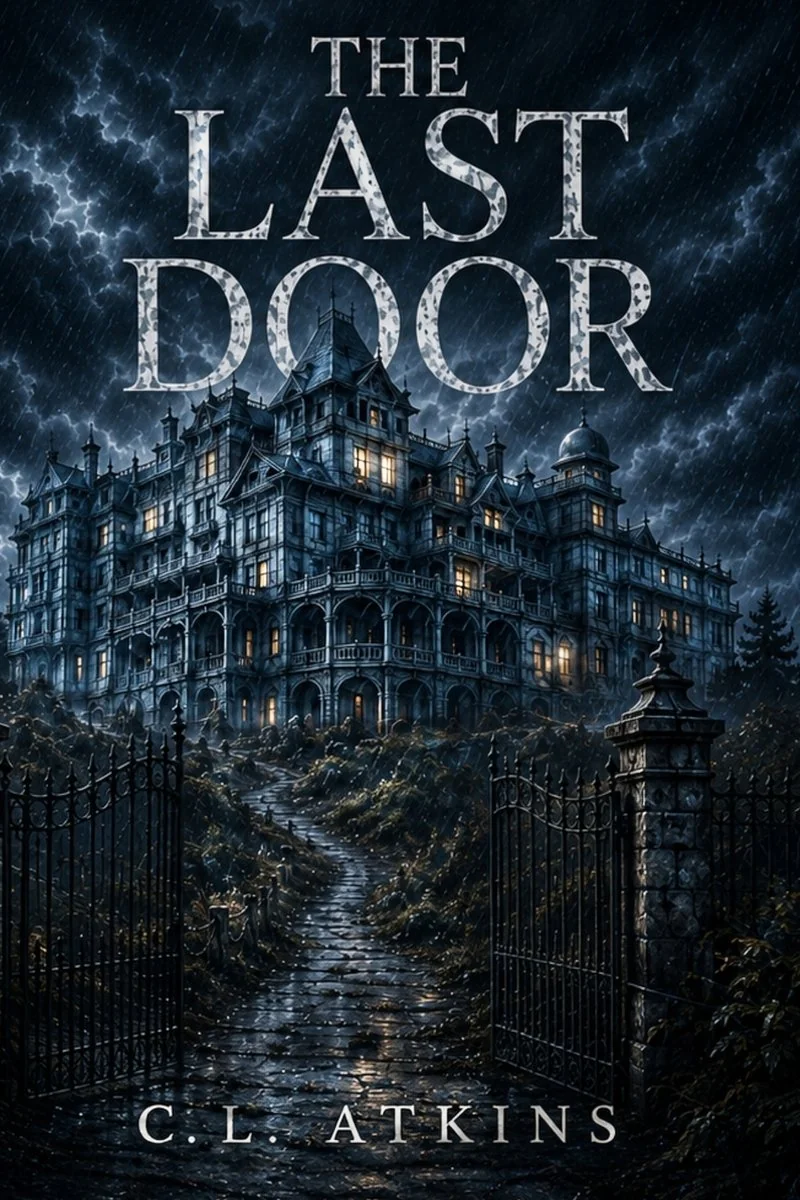
The Last Door
An engineer surveys a shape-shifting hotel to find her missing husband.
Maeve Carrow investigates Alderwick House to locate her vanished spouse. The island hotel defies physics, with rooms appearing where they should not and doors forming based on desire. Maeve uses measurement and testing to understand the building's logic. The structure learns from her actions, using her grief against her. She must distinguish between measurable facts and the hotel's illusions. The narrative focuses on her internal struggle as she confronts evidence that Liam may still be waiting inside. The isolation of the island and the approaching storm heighten the tension. Maeve realizes the hotel knows her deepest desires. She faces a choice between accepting an impossible answer or seeking a way out through a door that may lead to something worse.
This work sits within the tradition of gothic supernatural fiction and modern psychological horror. It draws on the trope of the haunted, isolated structure where the setting itself becomes an antagonist. The narrative reflects contemporary anxieties about loss and the inability to accept finality, using the condemned hotel as a metaphor for unresolved trauma.


📝 Description: The Last Door
💎 Our verdict on The Last Door
📖 Why choose it
Why this book is worth reading
This book is ideal for readers who appreciate psychological horror that prioritizes atmosphere and intellectual engagement over visceral gore or fast-paced action. Those interested in the intersection of logic and the supernatural will find value in Maeve’s attempt to apply engineering principles to an impossible reality. The narrative appeals to anyone exploring themes of grief, denial, and the dangerous nature of hope. Readers who enjoy ambiguous endings and complex emotional landscapes will gain satisfaction from the protagonist’s internal struggle. It offers a claustrophobic experience that examines how memory reshapes perception, making it suitable for those seeking a contemplative, unsettling read rather than a straightforward thriller.
⭐ Reader reviews
Reader rating
Atkins delivers a tense, claustrophobic exploration of grief through the lens of architectural impossibility. The concept of a hotel that materializes based on desire is handled with psychological precision, turning Maeve’s professional tools into instruments of her own entrapment. The isolation and storm create effective pressure, while the shifting geometry serves as a potent metaphor for denial. The narrative succeeds in blurring the line between measurable fact and illusion, keeping readers unsettled by the uncertainty of reality. While those seeking clear resolutions may find the ambiguity frustrating, fans of character-driven horror will appreciate the deep focus on internal struggle. It is a sophisticated, melancholic tale that lingers long after the final page.