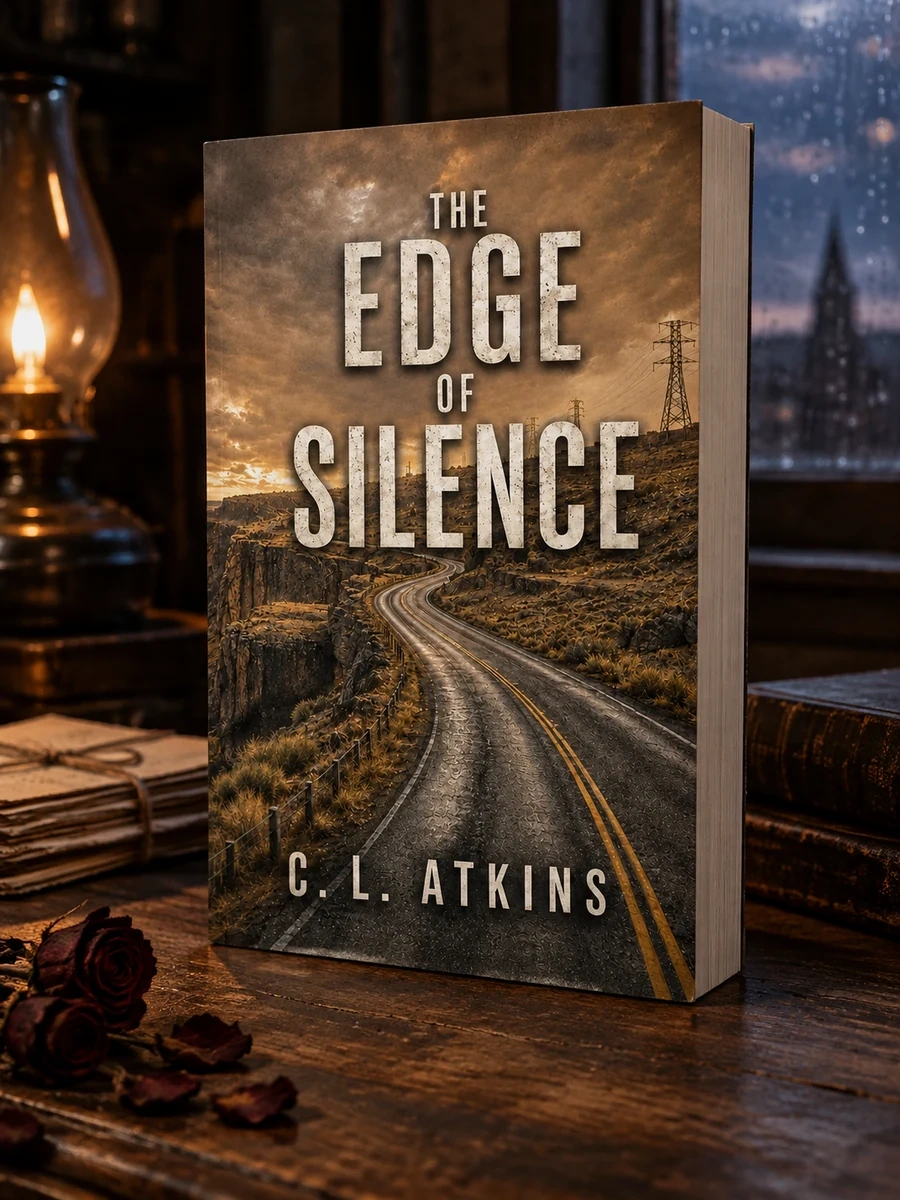
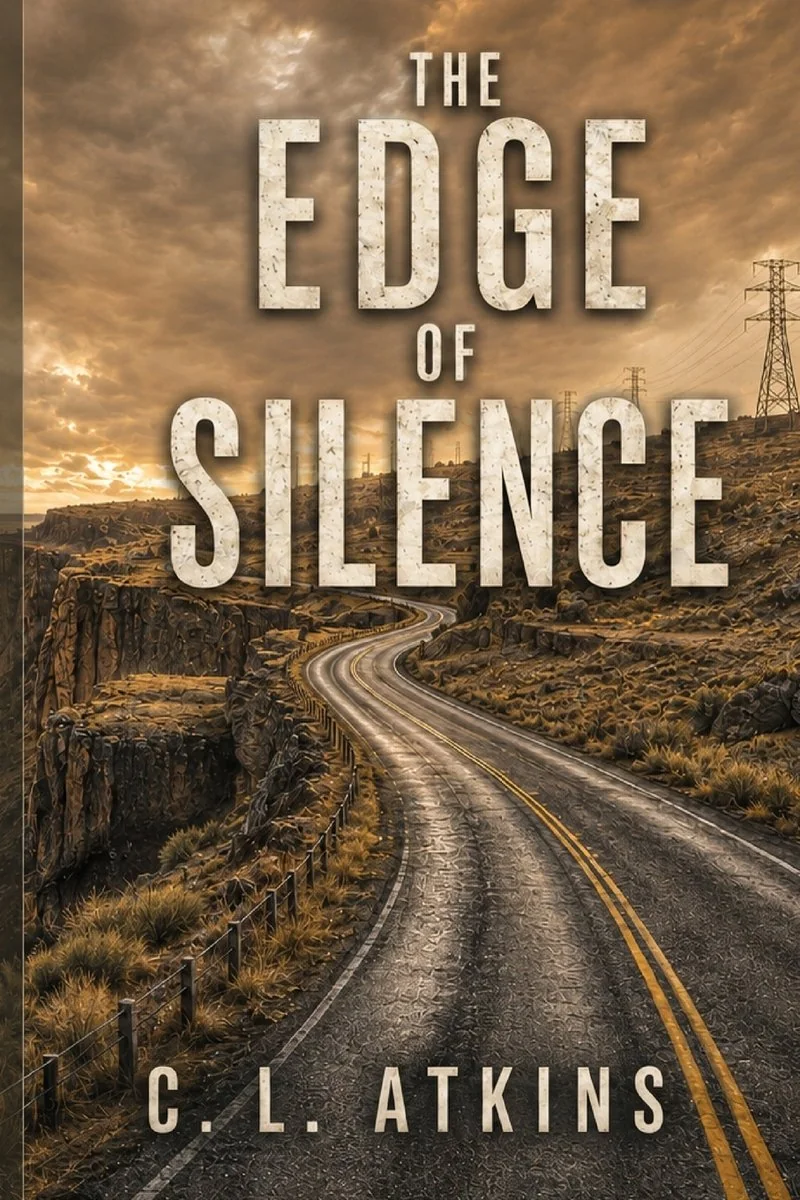
The Edge of Silence
A surveyor faces an aware landscape in eastern Oregon.
The narrative begins with Lauren Ralston arriving in eastern Oregon to document traces of lives erased by the high desert. She expects routine work but soon finds herself followed by footsteps across open ground. Local warnings conflict, and records point toward a forgotten spur road linked to an old disappearance. A retired lineworker recalls an extra set of boots, adding to the confusion. As incidents move beyond survey parcels into ordinary settings, Lauren’s search for logical explanations turns into a test of survival. The story examines how isolation distorts perception and how empty spaces can feel intentionally hostile. Atkins uses the setting to build tension without relying on jump scares or explicit monsters.
The book is set in eastern Oregon, a region known for its vast high desert and sparse population. It engages with American folklore traditions regarding abandoned places and unexplained disappearances. The narrative reflects contemporary anxieties about land use and the erasure of historical traces in rural America.


📝 Description: The Edge of Silence
💎 Our verdict on The Edge of Silence
📖 Why choose it
Why this book is worth reading
Readers who appreciate atmospheric tension and methodical investigations into the unknown will find this slow-burn supernatural thriller deeply satisfying. The narrative offers a compelling examination of how isolation distorts perception, transforming routine cultural-resources surveying into a harrowing test of survival against an aware landscape. It appeals to those who prefer psychological unease over explicit monsters or jump scares, providing a nuanced exploration of environmental dread. By focusing on incomplete knowledge and the threat embedded in ordinary places, the story challenges the protagonist's reliance on evidence and procedure. This book is ideal for audiences seeking a cerebral horror experience that prioritizes mood and setting over fast-paced action or clear resolutions.
⭐ Reader reviews
Reader rating
Atkins crafts a masterful study of psychological unease through the lens of eastern Oregon’s high desert. The narrative effectively utilizes the protagonist’s professional background in cultural-resources surveying to ground the supernatural elements, making the encroaching dread feel earned and plausible. The slow-burn structure allows for a deep immersion into Lauren Ralston’s deteriorating sense of reality as she confronts footsteps without sources and voices from empty spaces. This approach suits readers who enjoy atmospheric horror that relies on implication rather than gore. While it may disappoint those seeking immediate thrills or definitive answers, the book succeeds in making the landscape itself feel intentionally hostile, delivering a potent critique of isolation and the fragility of logical explanation.