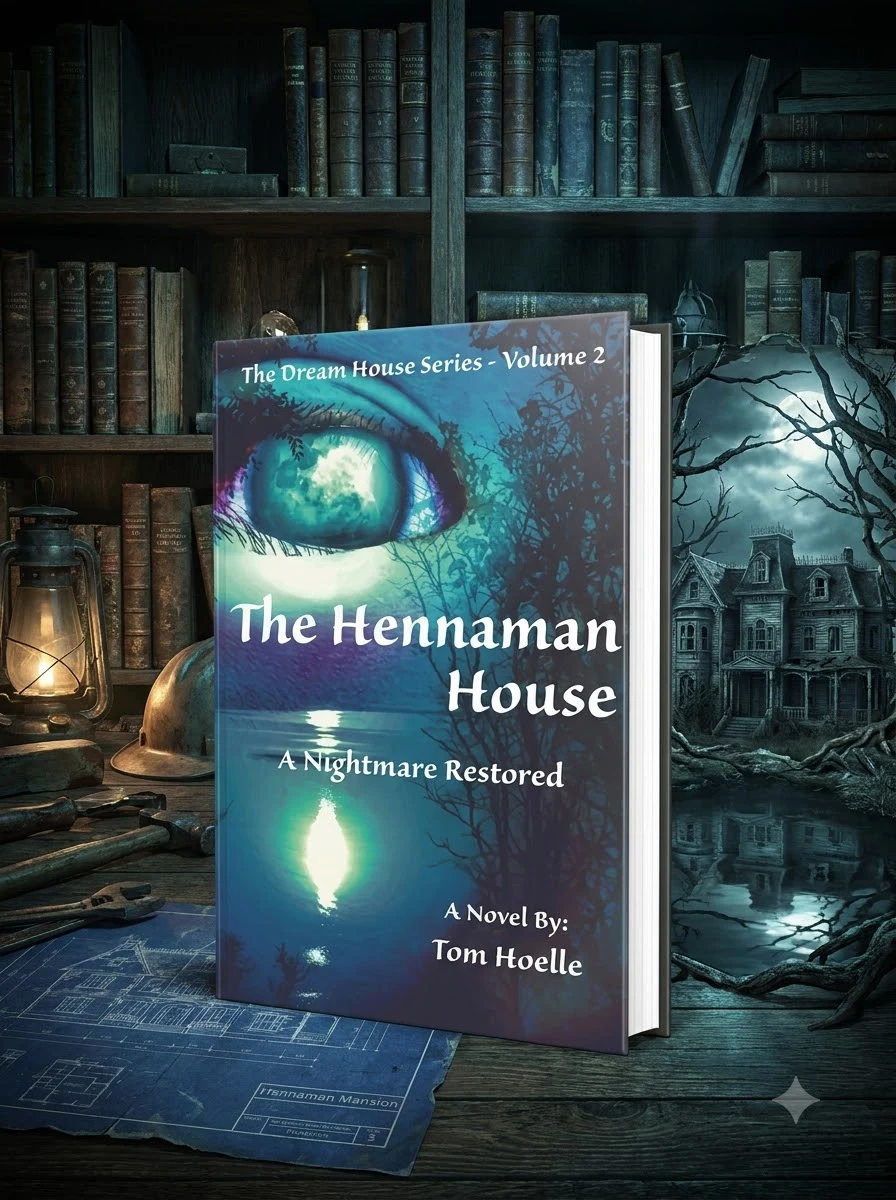
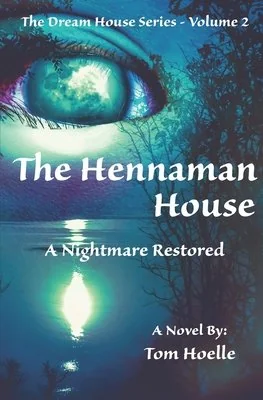
The Hennaman House: A Nightmare Restored
A developer renovates a haunted mansion with his family in 1963.
Paul Hennaman sees potential in remote lakefront land despite its dark history. He intends to restore an old mansion while developing the adjacent fifty-seven acres. His strategy involves bringing in professional workers first, then relocating his family for the summer months. This plan aims to save time and keep loved ones close during the construction phase. The house, however, has its own agenda. Events from thirty-four years prior continue to influence the present. The narrative examines how the structure resists modernization through eerie occurrences. Hoelle uses this setup to question the safety of domestic spaces.
The story is set in 1963, reflecting mid-century American attitudes toward property development and suburban expansion. It engages with the long-standing tradition of haunted house folklore, where old buildings retain the memories of past tragedies. The narrative situates itself within the realm of supernatural fiction popular in independent publishing during that era.


📝 Description: The Hennaman House: A Nightmare Restored
💎 Our verdict on The Hennaman House: A Nightmare Restored
📖 Why choose it
Why this book is worth reading
Readers who appreciate atmospheric horror and slow-burn psychological tension will find this narrative compelling. It appeals to those interested in how architecture retains memory and resists modernization. The book suits individuals who prefer grounded, specific timelines over fast-paced action or clear supernatural resolutions. Fans of goic traditions and stories where domestic spaces become antagonistic will gain satisfaction from the exploration of human ambition versus ancient evil. The unadorned prose offers a direct entry into the psychological strain experienced by the developer and his family as they confront the property's inherent hostility.
⭐ Reader reviews
Reader rating
Hoelle effectively utilizes the 1963 setting to examine the tension between development and tradition. The narrative succeeds in making the mansion an active participant, resisting renovation through eerie occurrences that question domestic safety. While the prose remains direct and unadorned, it supports a grounded exploration of psychological strain rather than relying on spectacle. This approach suits readers who enjoy atmospheric dread over action. It may disappoint those seeking clear resolutions or rapid pacing, but it rewards patience with a focused look at how space influences mind. The work stands as a competent entry in the haunted house subgenre, emphasizing mood and setting to create a sense of inevitable unease.