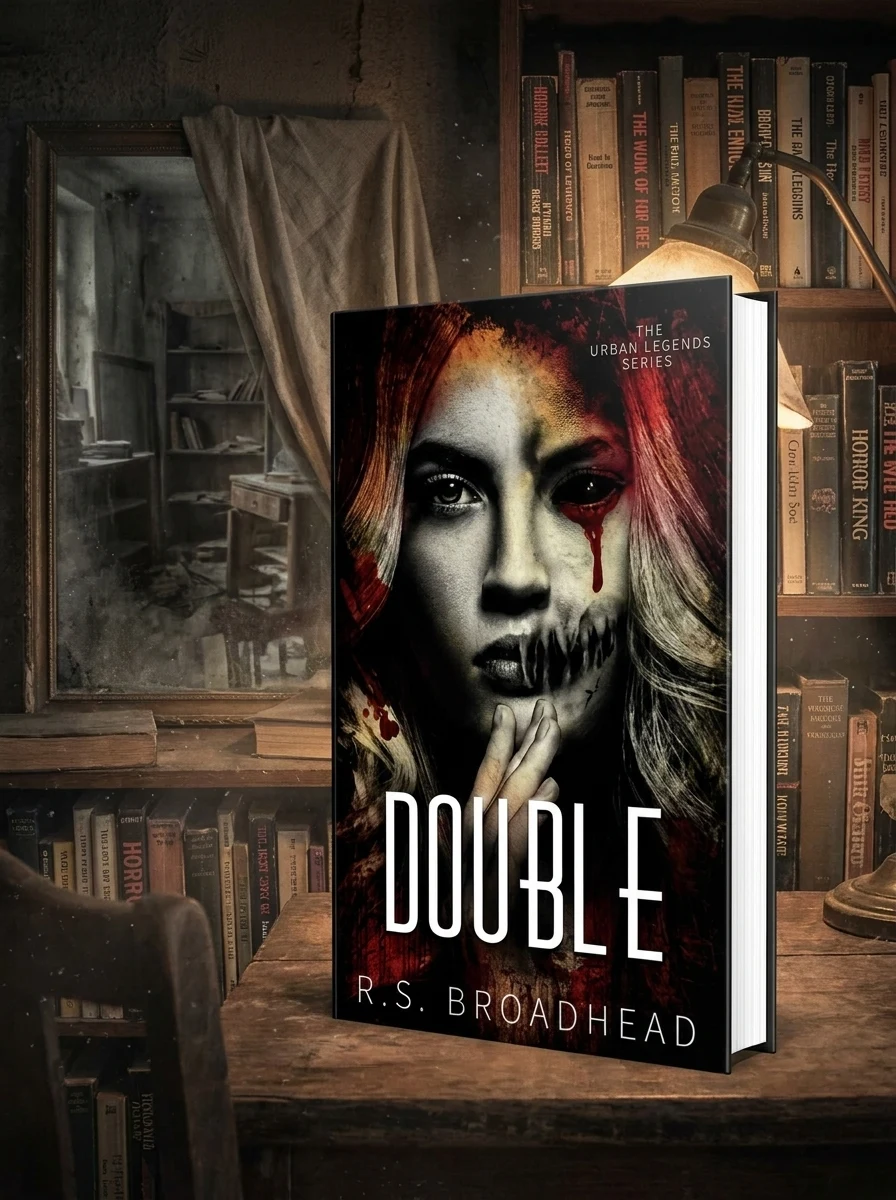
Double
A woman confronts inherited madness and supernatural horror upon returning to her haunted childhood home.
The novel follows Wren Miller as she navigates the return to a place defined by loss and instability. Her aunt's death forces a reunion with a sister who bears the weight of their shared past. The text examines how trauma echoes through generations, manifesting in physical spaces and mental states. Wren’s initial relief at escaping transforms into dread as she recognizes similar symptoms emerging within herself. The story does not rely on external monsters alone but on the internal horror of losing one's grip on reality. It portrays the isolation of a small town where gossip replaces genuine connection. The narrative structure mirrors this fragmentation through sudden, terrifying visions that disrupt Wren’s perception of safety.
The book sits within the American independent publishing landscape of horror fiction. It engages with gothic traditions of haunted houses and familial curses. The setting reflects small-town dynamics where community knowledge becomes a source of fear rather than support.


📝 Description: Double
💎 Our verdict on Double
📖 Why choose it
Why this book is worth reading
Readers seeking atmospheric dread and introspective horror will find value in this narrative’s exploration of inherited instability. It appeals to those who prefer slow-burn tension over action, offering a deep dive into how trauma echoes through generations. Fans of psychological horror will appreciate the focus on internal disintegration rather than external monsters. The book is ideal for individuals interested in the intersection of family duty and mental health, particularly within small-town settings where gossip exacerbates isolation. It provides a chilling examination of losing one's grip on reality, making it suitable for those who enjoy ambiguity and unsettling endings that linger long after the final page.
⭐ Reader reviews
Reader rating
Broadhead crafts a compelling gothic narrative that prioritizes psychological erosion over jump scares. The protagonist’s journey from relief to dread is handled with nuanced tension, effectively mirroring her fragmentation through sudden, terrifying visions. The setting of a drafty, haunted childhood home serves as a perfect backdrop for examining how familial secrets manifest as tangible threats. While the ambiguity may frustrate those seeking clear resolutions, it perfectly suits fans of domestic gothic horror. The portrayal of small-town isolation adds layers to the psychological pressure, making the internal horror feel inescapable. This is a sophisticated entry for enthusiasts of literary horror who appreciate slow-burn dread and complex character studies over conventional plot structures.