The Devil's Piano
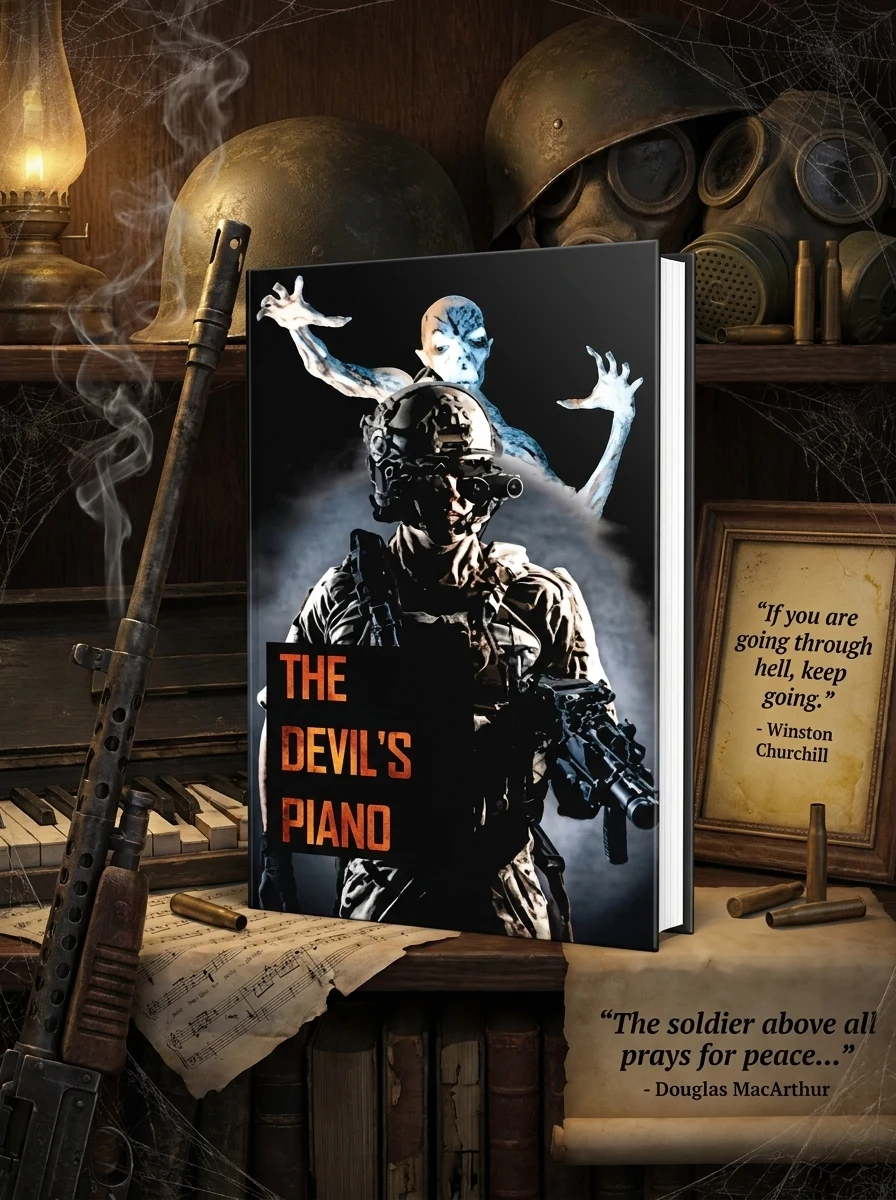
A study of war trauma using quotes from MacArthur and Churchill.
This book analyzes the psychological impact of warfare on soldiers by examining the metaphor of the machine gun as the devil's piano. It uses historical perspectives to discuss the deep wounds and scars that combatants carry long after fighting ends. The text explores how the sounds and mechanics of war linger in memory, affecting both those who survive and those who do not. By referencing General Douglas MacArthur and Winston Churchill, the author grounds these abstract feelings in real military leadership experiences. The work focuses on the soldier's prayer for peace and the necessity of enduring pain to achieve it. It does not provide tactical advice or fictional narratives but offers a reflective look at the human side of conflict. Readers interested in the intersection of history, psychology, and literature will find value here. Those looking for action-packed plots may find the tone too contemplative.
The book sits within military history and psychological analysis, drawing on American and British perspectives from the twentieth century. It references General Douglas MacArthur of the USA and Winston Churchill of Great Britain to contextualize the soldier's experience of war and the enduring nature of its scars.


📝 Description: The Devil's Piano
💎 Our verdict on The Devil's Piano
📖 Why choose it
Why this book is worth reading
Readers interested in the intersection of military history, psychology, and literature will find significant value in this contemplative examination of warfare's psychological impact. The book offers a unique perspective by analyzing the soldier's experience through the metaphor of the machine gun as a devilish instrument, grounding abstract trauma in historical reality via figures like MacArthur and Churchill. It is ideal for those seeking to understand the enduring wounds carried by combatants long after fighting ends, focusing on the human side of conflict rather than tactical details. Those who appreciate reflective, non-fiction approaches to horror themes will gain insight into the necessity of enduring pain to achieve peace.
⭐ Reader reviews
Reader rating
The Devil's Piano offers a profound and unsettling look at the psychological weight of combat, utilizing the dark metaphor of the machine gun as a musical instrument to illustrate the persistence of violence in memory. By anchoring its analysis in quotes from General Douglas MacArthur and Winston Churchill, the text validates the soldier's burden with historical authority while exploring the emotional aftermath of war. The tone is deeply contemplative, focusing on scars borne by fighters rather than action-packed narratives. This approach suits readers interested in military history and psychological studies of warfare who are willing to engage with a heavy, reflective examination of trauma and the desire for peace amidst suffering.