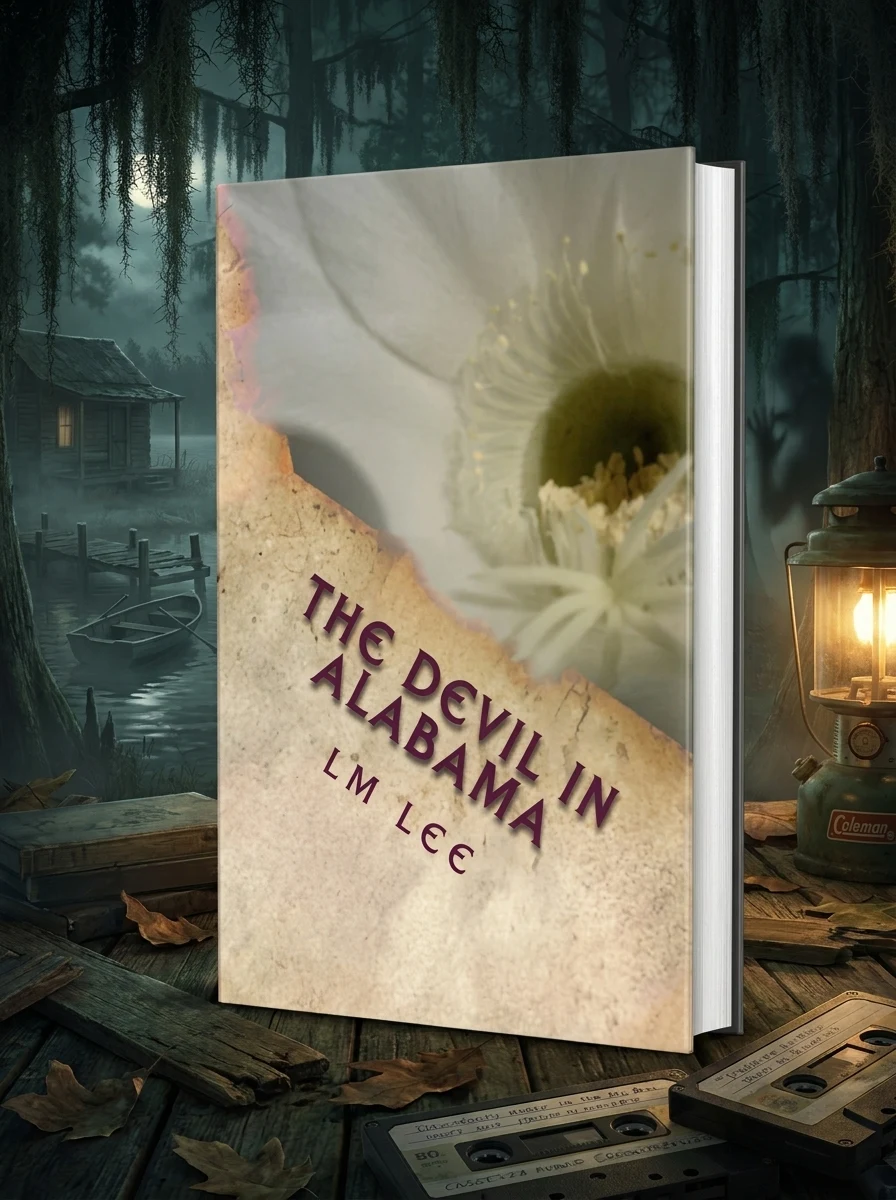

The Devil In Alabama
A fictionalized account of survival set in rural Alabama during the early 1980s.
Lee uses real events to build a narrative about Micki’s struggle for agency. The plot unfolds through her interactions with friends and her internal battles against haunting dreams. The setting of rural Alabama provides a specific atmosphere for these generational anxieties. The book examines how young adults in the early eighties dealt with uncertainty and the pressure to define their own paths amidst societal shifts.
The story is situated in rural Alabama during the early 1980s. It reflects the experiences of Generation X individuals who faced confusion and fear while trying to control their futures. The narrative weaves real historical events into a fictional framework to explore the era's social changes.


📝 Description: The Devil In Alabama
💎 Our verdict on The Devil In Alabama
📖 Why choose it
Why this book is worth reading
Readers who appreciate grounded, atmospheric horror will find value in this narrative. It appeals to those interested in how historical events shape personal identity and survival. The book offers a deep dive into the psychological struggles of young adults navigating uncertainty in the early eighties. It is ideal for fans of stories where the terror stems from human experience rather than supernatural spectacle. Those seeking resilience themes amidst generational anxiety will connect with Micki’s journey. The text provides a unique perspective on rural life and societal shifts without relying on fast-paced thrills.
⭐ Reader reviews
Reader rating
L M Lee crafts a compelling narrative that blends documented history with fictionalized survival. The strength lies in its psychological depth, exploring Micki’s internal battles against haunting dreams and external pressures. The rural Alabama setting enhances the atmosphere of generational anxiety. While it lacks overt supernatural monsters, the horror is derived from realistic human experience. This approach suits readers who prefer slow-burn tension over action. The focus on agency and identity during a specific historical moment adds weight to the story. It is a thoughtful examination of resilience, making it a strong choice for those interested in regional fiction and the nuances of early eighties societal shifts.
You might also like
See more →






Have a question about this item?
Ask about the edition, condition, delivery or anything else — we reply by email or phone, usually within a day.
