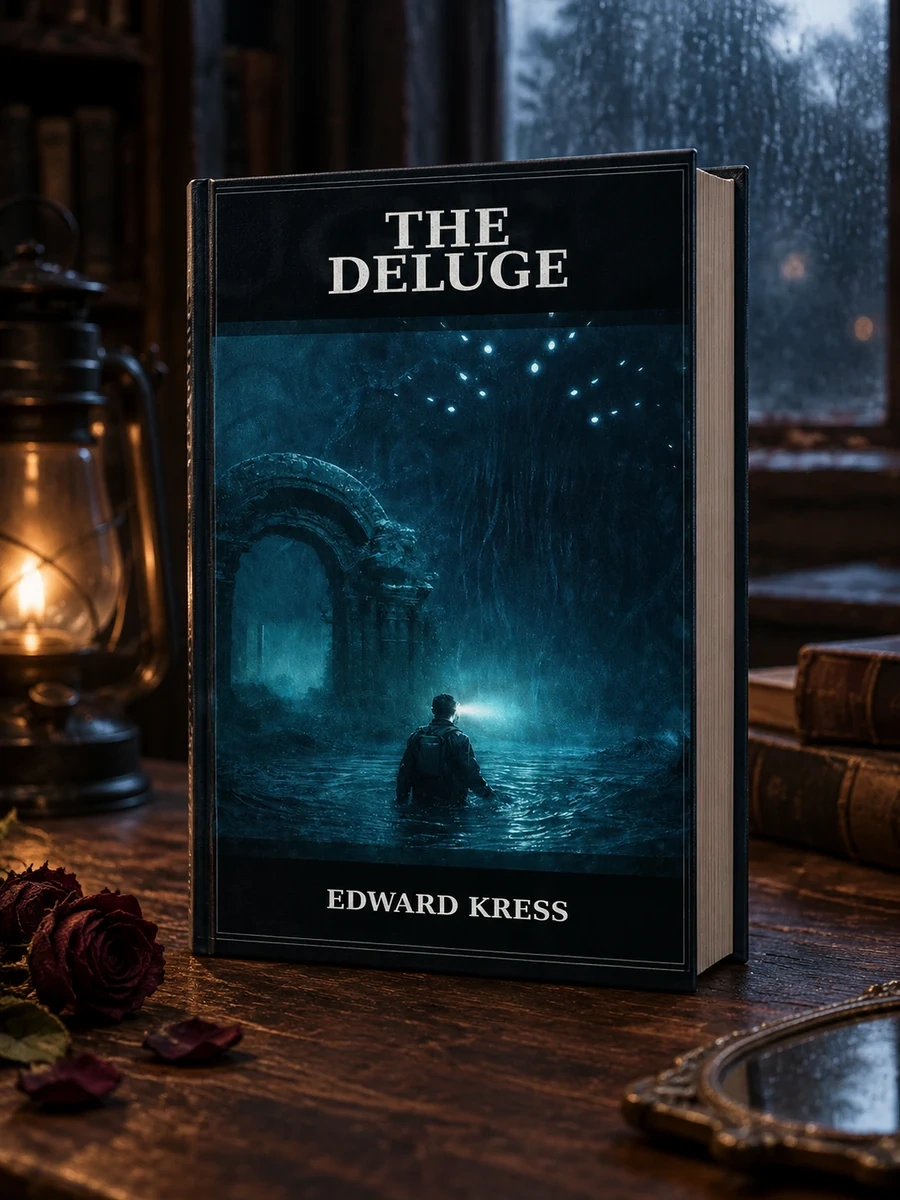
The Deluge
An engineer investigates a London flood that reveals an ancient, living intelligence below.
The story begins with a violent infrastructure disaster at a London station. Nadia Voss saves eight people from rising black water carrying the smell of rot and ancient stone. Her escape leads her to dig through forgotten records and sealed passages. She finds Whitmore Central built over something no one was meant to uncover. The text describes impossible stonework and a chamber older than memory. Nadia returns with an unlikely group to face the evidence below. They encounter walls covered in markings and feel a pulse in their chests. The narrative examines the terrifying possibility that humanit is not alone. Contact with this entity brings awe and unease rather than comfort. The book details the struggle to understand signals that defy archaeology. It focuses on the buried anatomy of the city used for communication.
This work sits within the tradition of gothic and supernatural fiction set in London. It draws on Roman history and engineering disasters. The narrative explores the buried layers of the city beneath modern infrastructure.


📝 Description: The Deluge
💎 Our verdict on The Deluge
📖 Why choose it
Why this book is worth reading
Readers who appreciate the intersection of technical precision and supernatural awe will find this compelling. It offers a unique perspective on urban exploration, framing London not just as a city but as a living archive of buried secrets. Those fascinated by the idea that infrastructure disasters might be symptoms of deeper, subterranean communications should engage with Nadia Voss’s investigation. The book provides intellectual stimulation through its focus on engineering and archaeology while delivering the visceral unease of confronting an entity that defies conventional understanding. It appeals to those who prefer horror grounded in physical evidence rather than spectral apparitions, offering a chilling examination of human insignificance against ancient, living stone.
⭐ Reader reviews
Reader rating
Kress effectively utilizes the setting of Whitmore Central to construct mounting tension through the lens of infrastructure failure. The narrative succeeds by grounding cosmic terror in tangible details like black water, rotting smells, and impossible stonework, making the supernatural feel physically present. Nadia Voss serves as a compelling protagonist for those who favor rational inquiry colliding with the inexplicable. The work is best suited for readers interested in archaeological mystery and urban horror who seek a slow-burn revelation of buried anatomy. It avoids traditional ghost story tropes, instead focusing on the eerie atmosphere of sealed passages and forgotten records. This approach creates a distinct mood of awe and unease, appealing to audiences who enjoy psychological depth alongside atmospheric dread.
📖 Read on the blog
✍️ More books by this author Kress


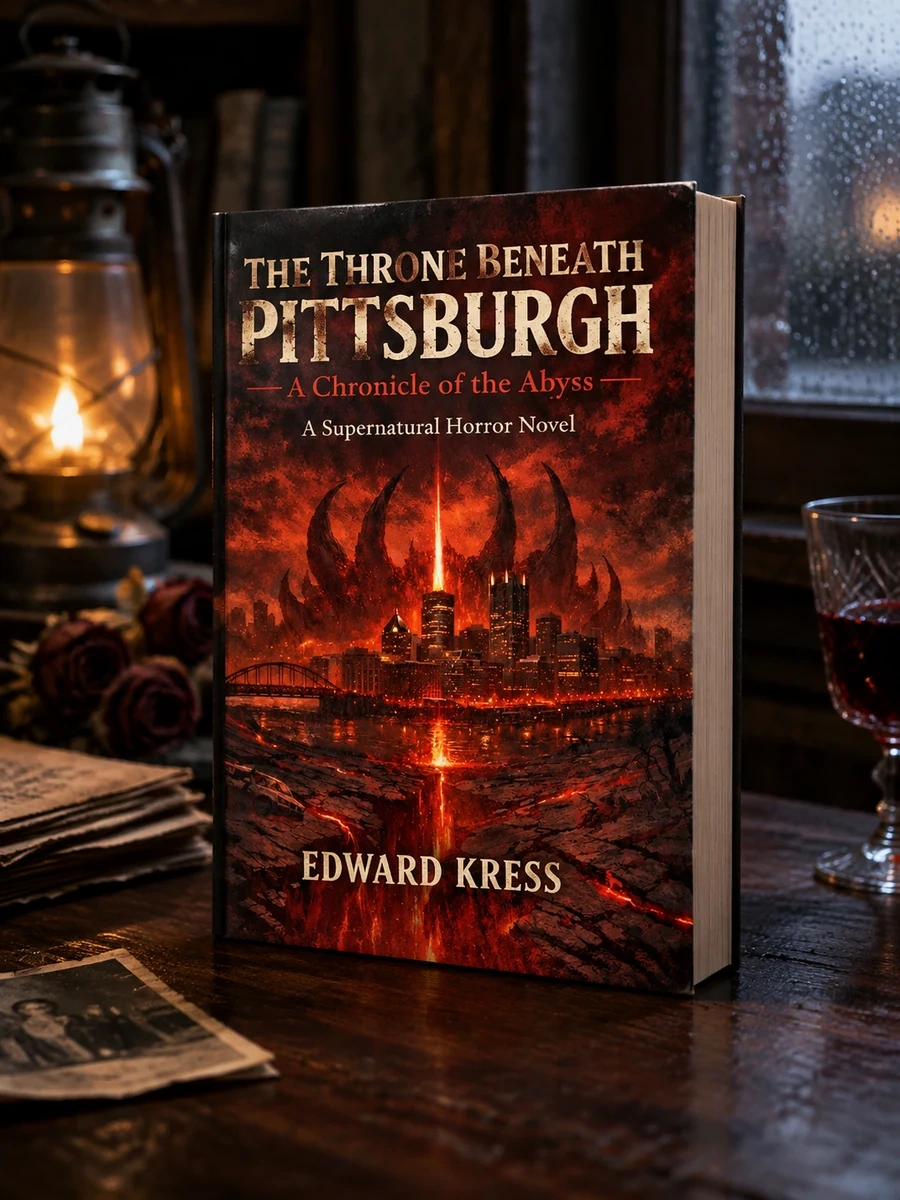
🏛 Books from this publisher Steel City Press

You might also like
See more →


Have a question about this item?
Ask about the edition, condition, delivery or anything else — we reply by email or phone, usually within a day.
