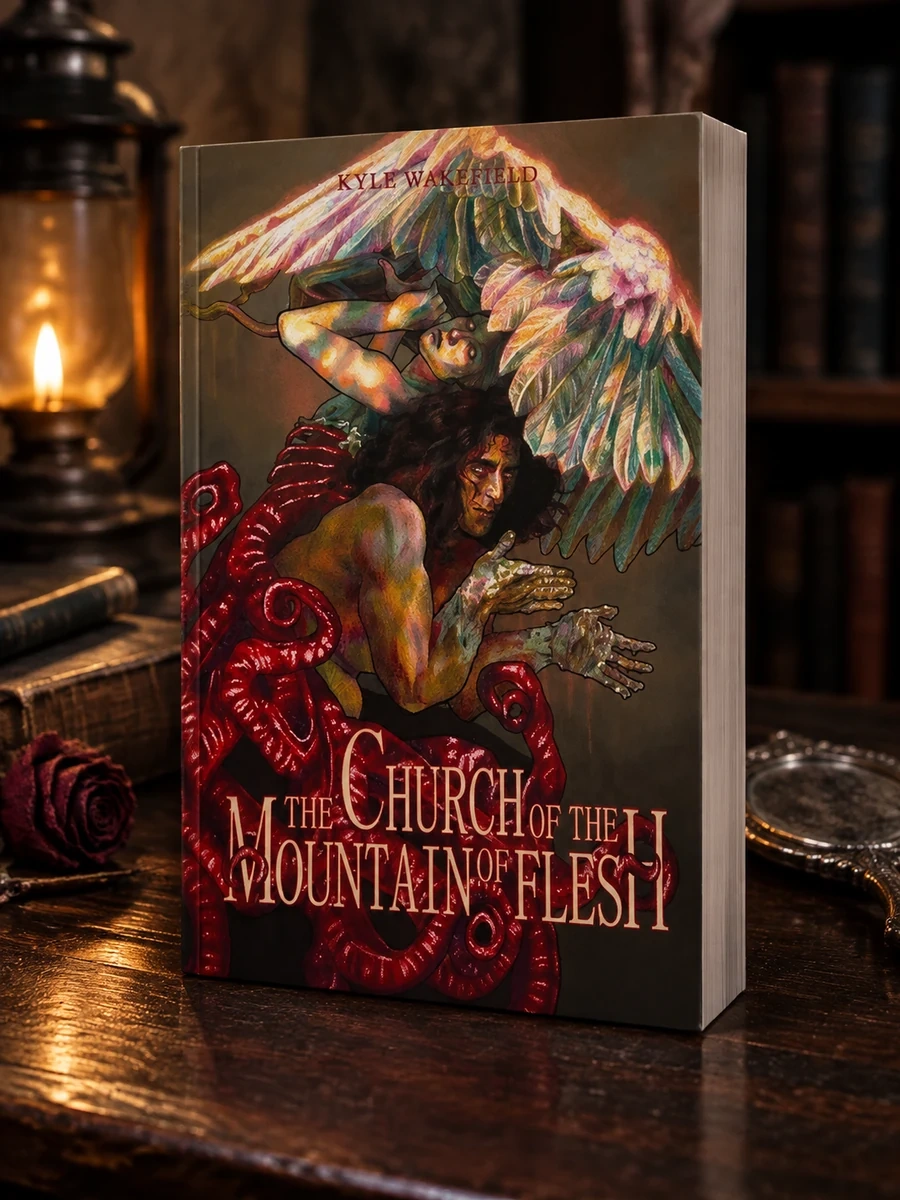
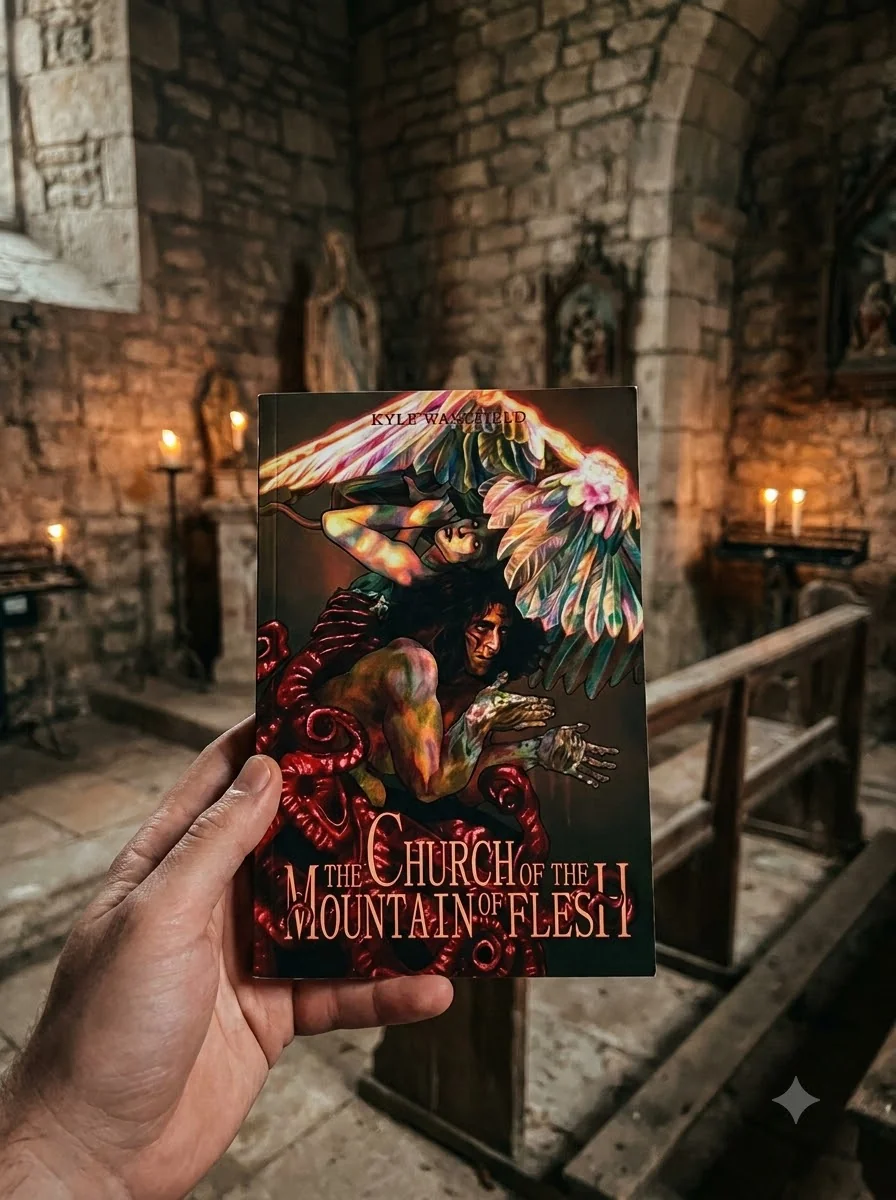

The Church of the Mountain of Flesh
A trans man trades his soul to rebuild a church for a male body in this illustrated cosmic horror novel.
This work examines the intersection of divine command and personal identity through the lens of body horror. Sole De Gasinis accepts a deal with God to reconstruct a local church, hoping to gain a male physique. The process demands he interact with the remains of a deceased lover, creating a cycle of trauma and creation. Wakefield uses illustrations to enhance the visceral nature of Sole’s sculptures and the decaying village. The story focuses on the corruption of friendship and the rise of tyranny within a fractured community. It is a dark exploration of how grief can warp religious devotion into something monstrous and self-serving.
The novel emerges from contemporary independent publishing, released in September 2024. It engages with modern discussions on gender identity and bodily autonomy while utilizing traditional gothic horror tropes. The work reflects current trends in speculative fiction that blend personal trauma with supernatural elements.


📝 Description: The Church of the Mountain of Flesh
💎 Our verdict on The Church of the Mountain of Flesh
📖 Why choose it
Why this book is worth reading
Readers drawn to the intersection of theological thriller elements and intense body horror will find this narrative compelling. It offers a visceral exploration of divine command and personal identity, particularly resonating with those interested in trans narratives and the corruption of religious devotion. The full-page illustrations enhance the grotesque atmosphere, appealing to fans of visual storytelling within cosmic horror. Those who enjoy dark fantasies where grief warps reality and friendships fracture under tyranny will appreciate the psychological depth. It is unsuitable for seekers of traditional redemption or lighthearted supernatural tales.
⭐ Reader reviews
Reader rating
Wakefield crafts a disturbing examination of how grief and desperation can transform religious devotion into something monstrous. The narrative effectively utilizes the tension between divine mandate and human frailty, grounding abstract cosmic horror in the physical act of construction. Sole’s journey serves as a dark allegory for bodily autonomy and the rise of tyranny within fractured communities. The integration of illustrations amplifies the visceral nature of the sculptures and decaying village, creating an immersive experience. This book suits readers who appreciate complex character studies amidst grotesque imagery and theological inquiry.
You might also like
See more →






Have a question about this item?
Ask about the edition, condition, delivery or anything else — we reply by email or phone, usually within a day.
