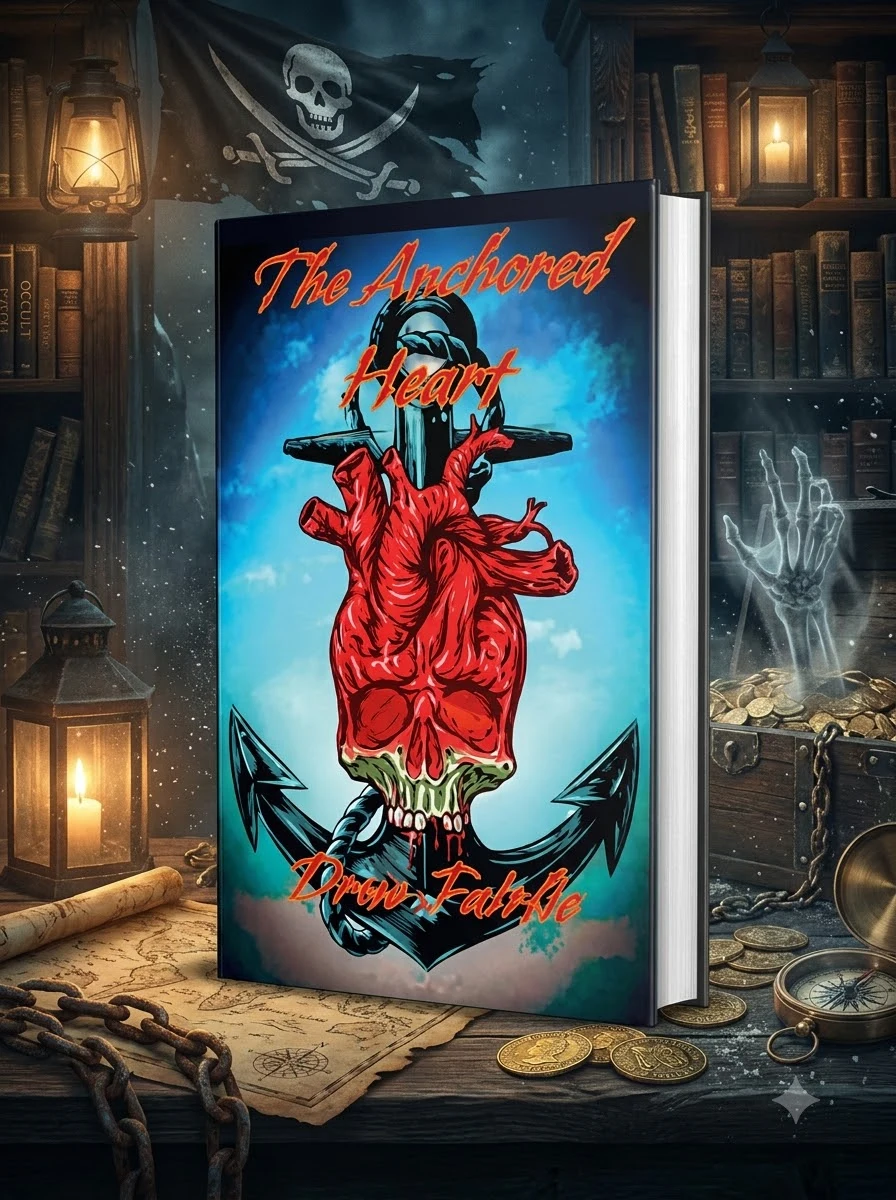

The Anchored Heart
A modern pirate captain uncovers a supernatural secret aboard a lost Spanish ship.
Alexandria Duvell operates as a dangerous figure within the world of modern piracy while simultaneously working for the CIA. Her black ops assignment directs her toward the legendary Spanish treasure ship, The Anchored Heart. This vessel is described as the greatest prize of the sea. However, the narrative warns that not all loss should be reversed. Alexandria discovers that the ship contains entities or forces beyond mere wealth. The story explores the consequences of disturbing a resting place meant to remain hidden. Fairlie uses this premise to examine the intersection of greed and the supernatural. The plot does not focus on the mechanics of piracy but rather on the haunting nature of the find. The protagonist faces a threat that transcends physical danger. This angle appeals to fans of gothic fiction who appreciate ambiguity and lingering dread.
The Anchored Heart sits within the tradition of modern pirate fiction infused with gothic and supernatural elements. It reimagines the legend of a long-lost Spanish treasure ship for contemporary audiences seeking eerie, atmospheric narratives rather than historical accuracy.


📝 Description: The Anchored Heart
💎 Our verdict on The Anchored Heart
📖 Why choose it
Why this book is worth reading
Readers who appreciate the intersection of gothic fiction and modern thriller elements will find this narrative compelling. It offers a unique perspective on maritime legend, moving away from traditional treasure hunts to explore the spiritual weight of forbidden history. Those drawn to ambiguous endings and lingering dread will enjoy the atmospheric tension. The book suits fans of cosmic horror who prefer psychological struggle over physical combat. It is ideal for those interested in how greed intersects with the supernatural, providing a thoughtful examination of disturbing resting places without offering straightforward resolutions.
⭐ Reader reviews
Reader rating
Fairlie successfully merges the danger of modern piracy with the eerie ambiguity of gothic tradition. The narrative avoids focusing on piracy mechanics, instead centering on the haunting nature of the find and the protagonist's internal struggle. This approach creates a sense of lingering dread suitable for horror enthusiasts who value atmosphere over action. The story effectively explores the consequences of disturbing hidden secrets, appealing to those who enjoy psychological weight in their fiction. While it may unsettle readers seeking straightforward adventure, its focus on spiritual threat and historical myth makes it a distinctive contribution to contemporary supernatural literature.