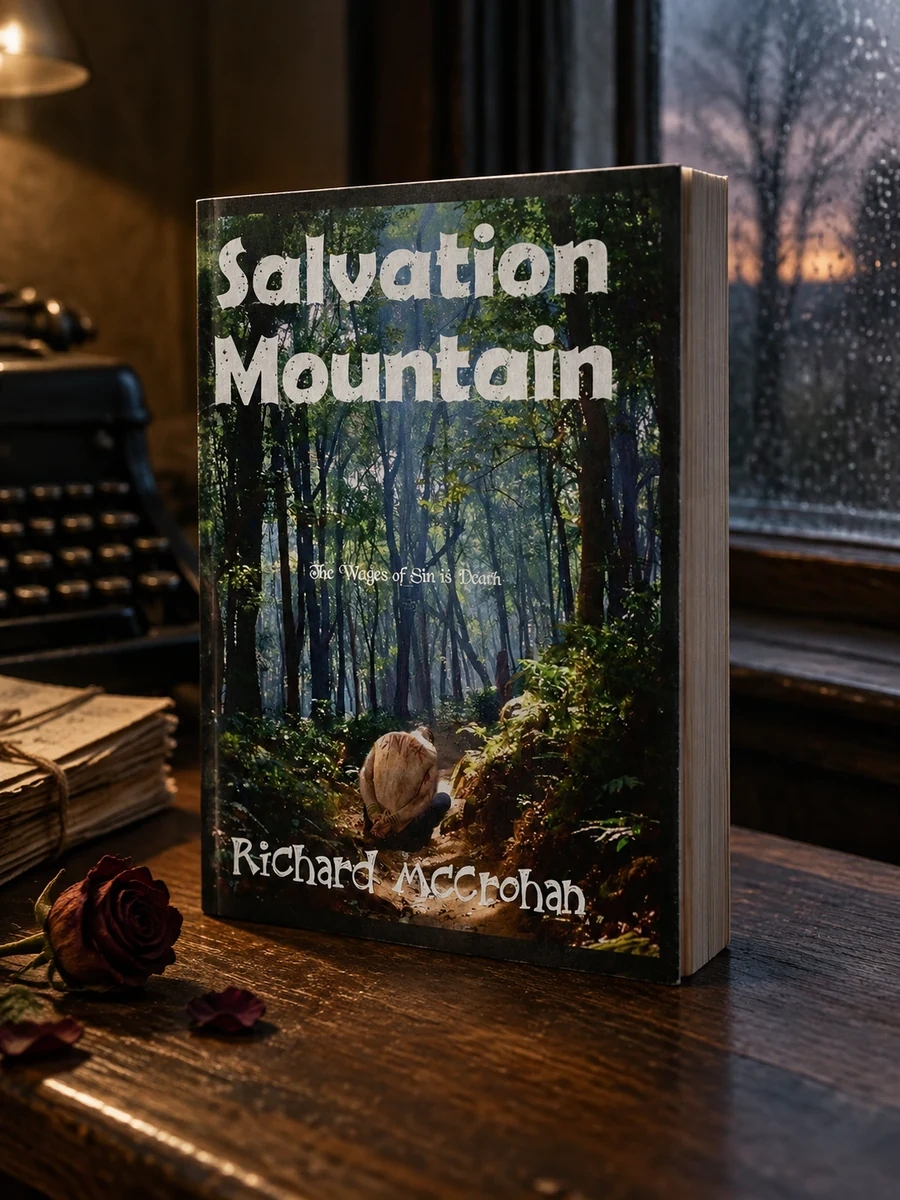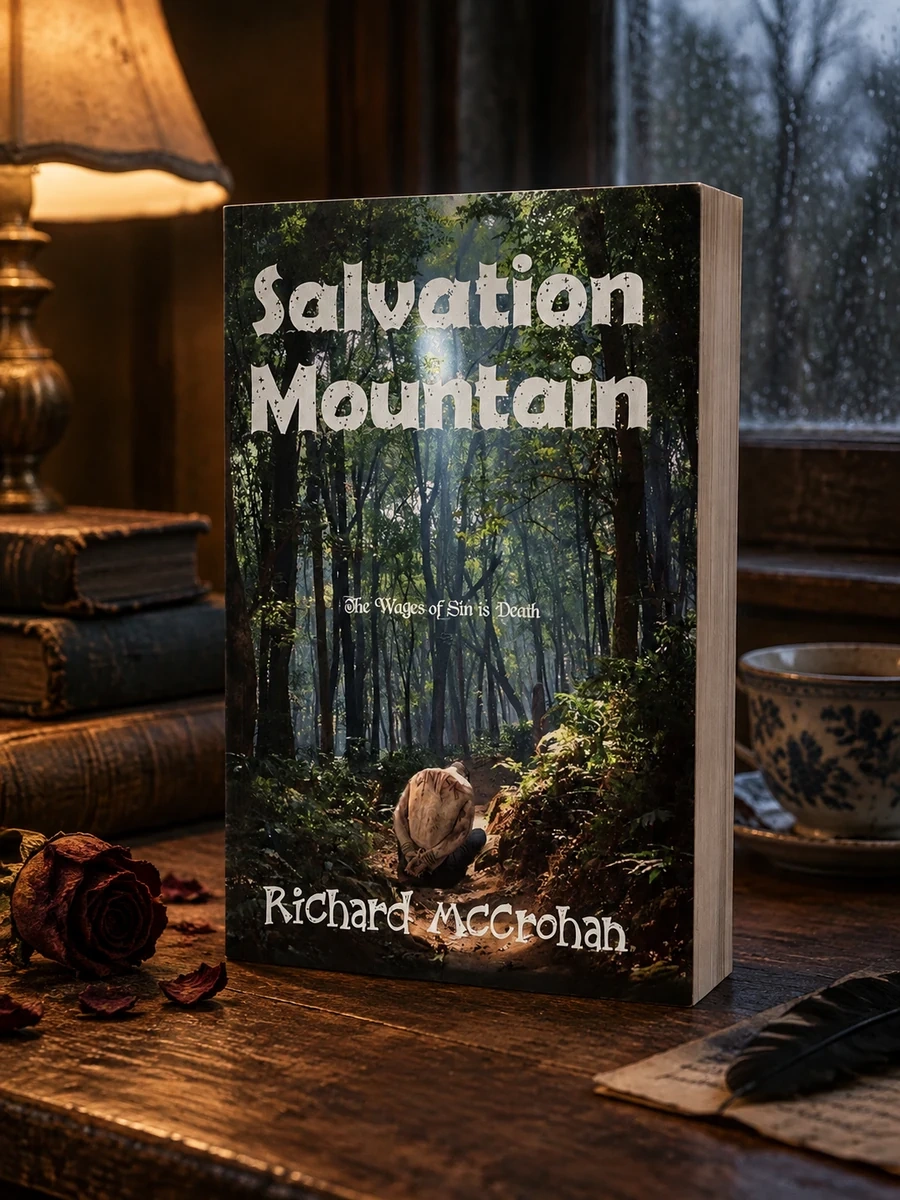
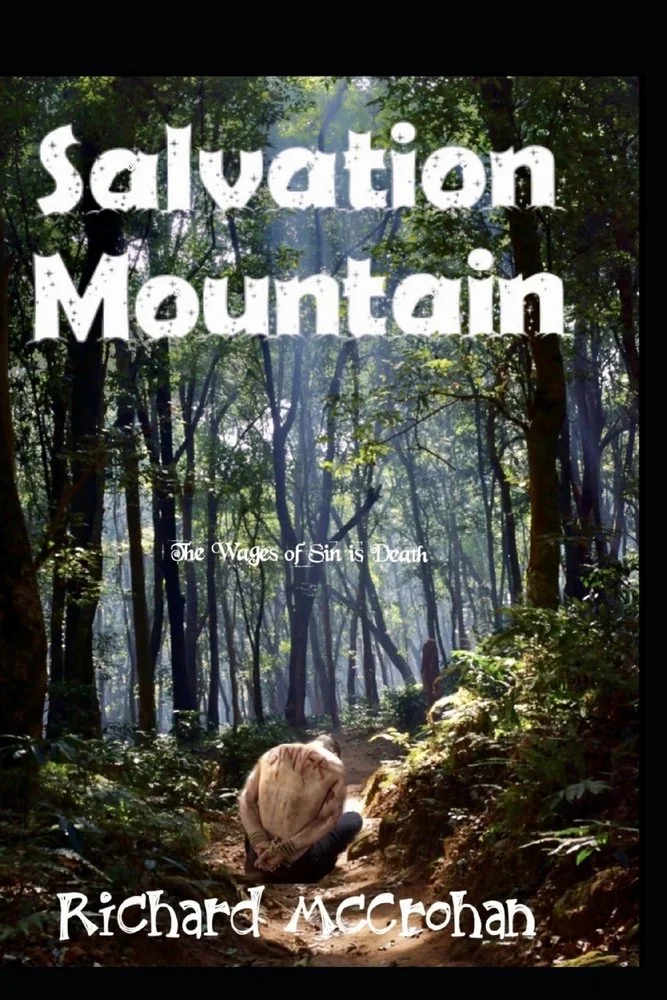
Salvation Mountain
A professor and his assistants confront lingering cult violence in northern Georgia.
The narrative focuses on a group of four academics studying the legacy of Father Divine in northern Georgia. Their research into a century-old tragedy involving murder and disappearance turns personal as they face active threats from the past. The story highlights the isolation of the Appalachian mountains and the persistence of fanaticism. McCrohan uses this setting to explore how historical trauma can manifest as present danger for those who investigate it too closely.
This book is set in the dark backwoods of northern Georgia, specifically focusing on Salvation Mountain. It draws on the tradition of Appalachian folklore and the history of itinerant preachers who established fanatical religious communities during the early twentieth century.


📝 Description: Salvation Mountain
💎 Our verdict on Salvation Mountain
📖 Why choose it
Why this book is worth reading
Readers drawn to the intersection of academic inquiry and supernatural dread will find much to appreciate here. The narrative offers a compelling look at how historical trauma manifests as present danger, particularly for those interested in the darker aspects of American religious history. It is ideal for fans of cult horror who enjoy seeing intellectual characters confronted by primal forces they cannot analyze away. The setting provides a rich atmospheric backdrop that enhances the sense of isolation and inevitability. Those who prefer their horror grounded in real-world historical fears, such as the legacy of itinerant preachers and mountain folklore, will find this story resonant. It serves those who want to explore the persistence of fanaticism beyond its original timeframe.
⭐ Reader reviews
Reader rating
McCrohan effectively utilizes the eerie backdrop of northern Georgia’s backwoods to create a tense atmosphere where the past refuses to stay buried. The premise of academics confronting an enduring supernatural threat rooted in religious madness is executed with a focus on psychological unease rather than cheap jumpscares. The book succeeds in highlighting the isolation of the Appalachian setting, making the characters' vulnerability palpable. It suits readers who enjoy horror that examines the persistence of fanaticism and historical trauma. While it may not appeal to those seeking urban settings or strict non-fiction, it offers a solid exploration of cult horror for enthusiasts of regional folklore and dark academia.