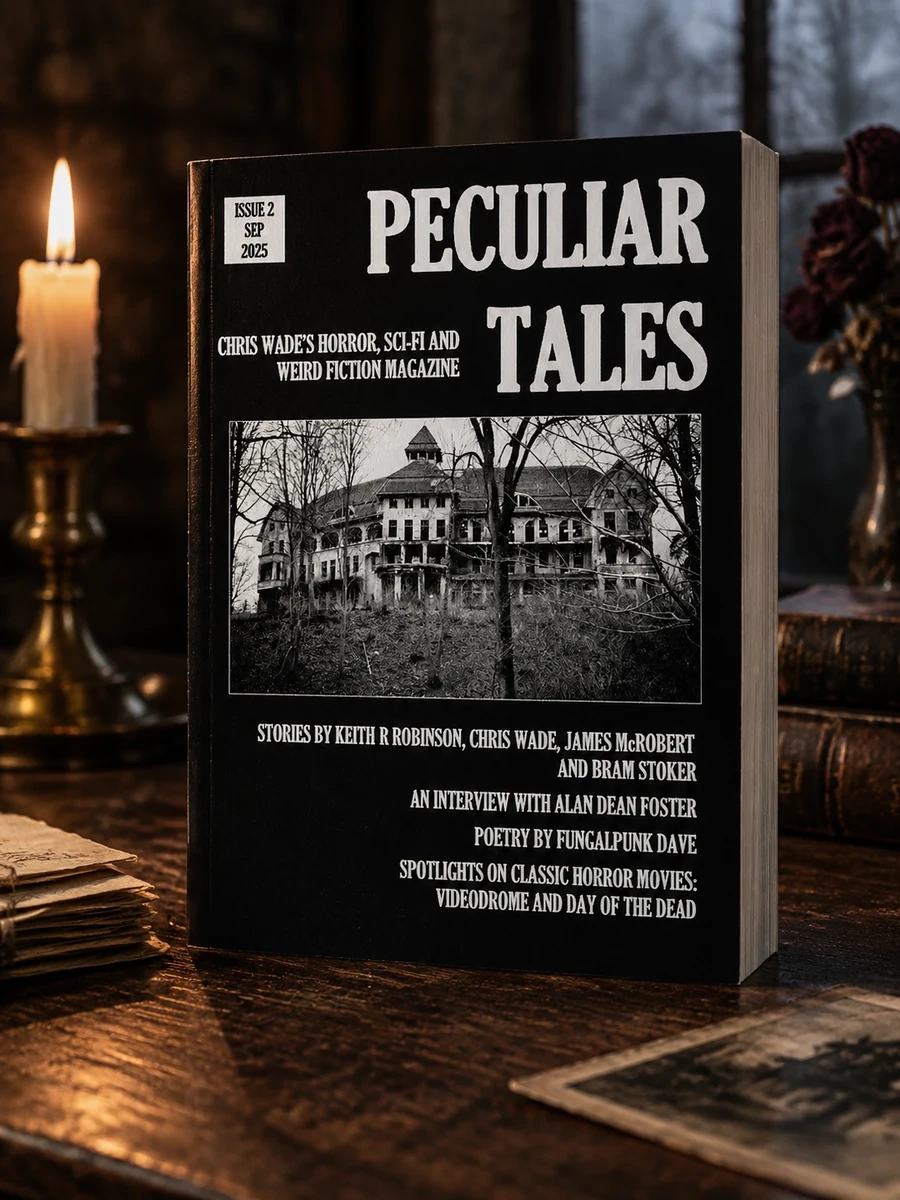
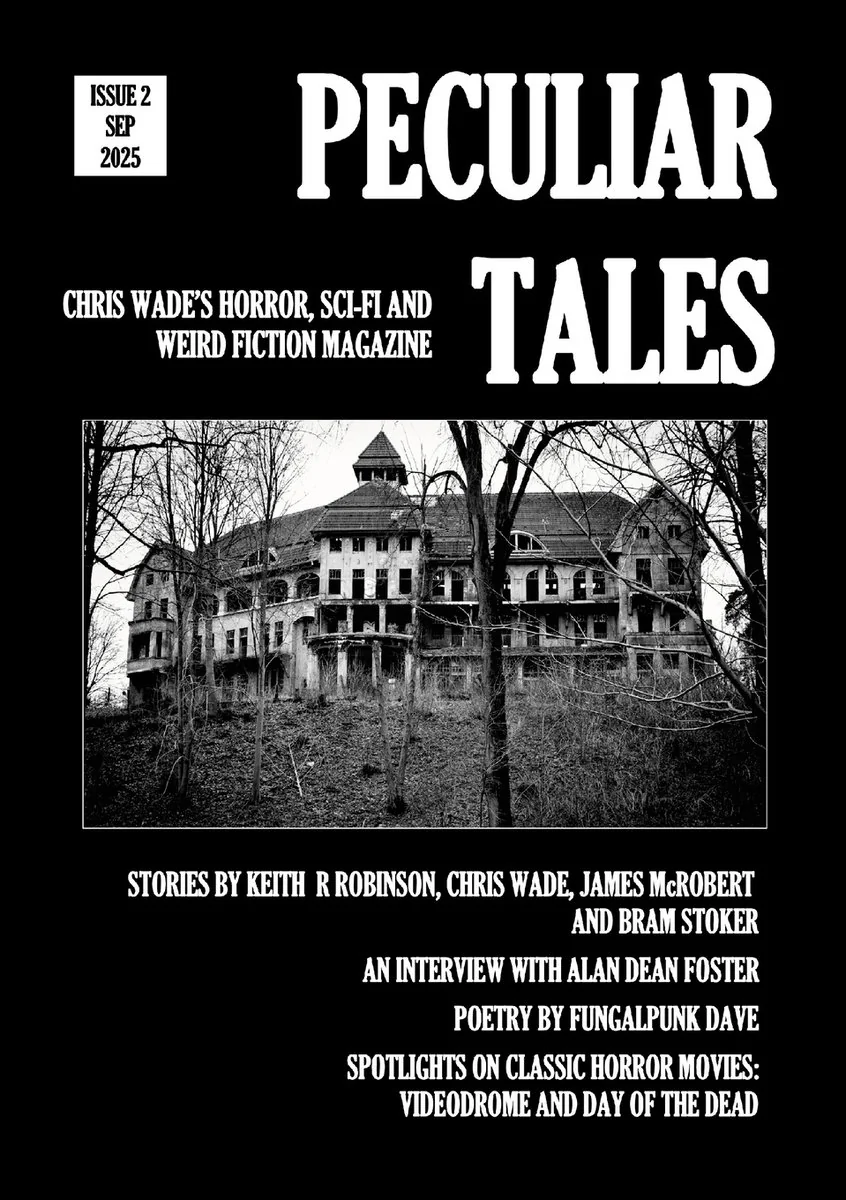
Peculiar Tales: Issue 2
A curated anthology of horror fiction and film analysis edited by Chris Wade.
This volume combines literary fiction with media criticism to explore the evolution of supernatural storytelling. It pairs classic authors like Bram Stoker with contemporary voices such as Keith R Robinson and James McRobert. The inclusion of poetry by Fungalpunk Dave adds a lyrical dimension to the horror themes. Non-fiction sections provide depth through interviews with Alan Dean Foster and cast members from Videodrome. This approach contextualizes fictional narratives within broader cultural discussions about fear and the supernatural.
Published in 2025 by Lulu.com, this book bridges classic gothic literature with modern horror cinema. It reflects a continued interest in Bram Stoker’s legacy and the enduring impact of David Cronenberg’s Videodrome on contemporary genre storytelling.


📝 Description: Peculiar Tales: Issue 2
💎 Our verdict on Peculiar Tales: Issue 2
📖 Why choose it
Why this book is worth reading
Readers who appreciate the layered complexity of horror will find this anthology particularly rewarding. It appeals to those interested in the evolution of supernatural themes, offering a unique perspective by pairing classic authors like Bram Stoker with contemporary voices such as Keith R Robinson and James McRobert. The inclusion of poetry by Fungalpunk Dave adds a lyrical dimension that enriches the thematic depth. Furthermore, the non-fiction sections provide valuable context through interviews with Alan Dean Foster and cast members from Videodrome. This combination allows enthusiasts to explore how literary traditions influence modern body horror and sci-fi thrillers, making it ideal for those seeking a comprehensive understanding of fear in art.
⭐ Reader reviews
Reader rating
Chris Wade curates a distinctive blend of fiction and critical analysis that successfully bridges the gap between gothic literature and cinematic horror. The juxtaposition of Bram Stoker’s foundational work with contemporary stories creates a compelling dialogue across time. The inclusion of interviews regarding Videodrome offers insightful production history, appealing to fans of body horror and sci-fi. While it may not satisfy those seeking purely standalone short stories, the volume excels in contextualizing narratives within broader cultural discussions about the supernatural. It is best suited for readers who enjoy critical commentary alongside their fiction.