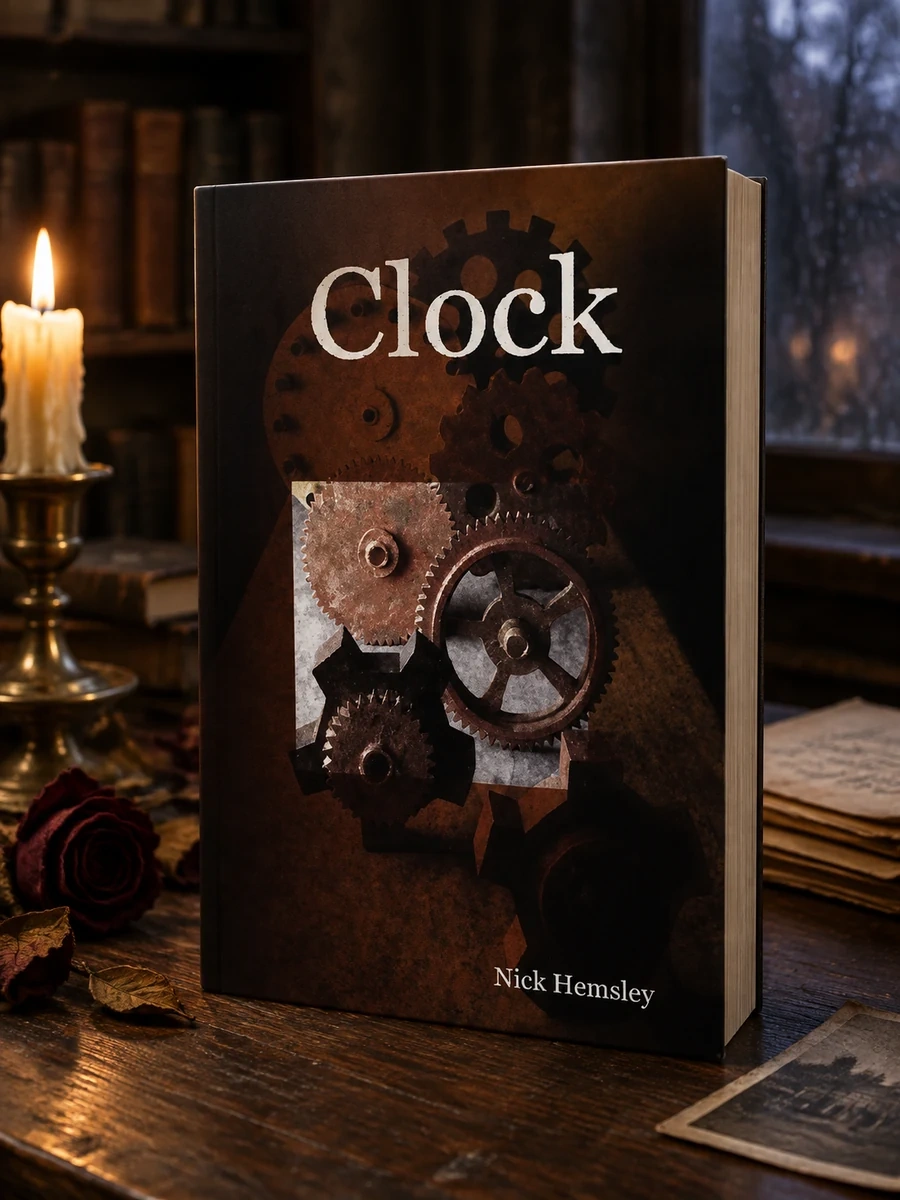

Clock
A ghost story without ghosts set in 1992 West London.
The narrative focuses on two professionals whose lives unravel over three weeks. Hemsley uses their interactions to dissect themes of perversion and art. The absence of supernatural elements forces the reader to confront the horror inherent in human weakness. This approach creates a unique atmosphere where madness feels inevitable rather than shocking. The story challenges the reader’s own beliefs about morality and accountability. It is an intense examination of how ordinary people can commit terrible acts. The tone balances humor with deep sadness, creating a dissonant reading experience. Hemsley’s background in observing human nature informs every detail. The clock motif underscores the urgency of their descent into chaos.
Set in West London in 1992, this novel reflects the anxieties of early nineties professional life. It draws on gothic traditions by focusing on psychological decay rather than external threats. The setting provides a realistic backdrop for the exploration of art and horology.


📝 Description: Clock
💎 Our verdict on Clock
📖 Why choose it
Why this book is worth reading
Readers seeking intense psychological depth and literary horror will find this book compelling. It appeals to those interested in exploring the terrifying nature of human behavior and moral decay without relying on external monsters. The narrative offers a unique dissonance by balancing humor with deep sadness, creating a haunting experience that challenges beliefs about accountability. Fans of dense, atmospheric works that examine how ordinary people commit terrible acts will appreciate the precision of Hemsley’s observation. This text is ideal for those who enjoy narratives where madness feels inevitable rather than shocking, providing a profound examination of human weakness and the urgency of internal collapse.
⭐ Reader reviews
Reader rating
Hemsley delivers a stark, precise examination of moral decay set in 1992 West London. By removing supernatural elements, he forces readers to confront the horror inherent in human weakness and professional unraveling. The tone’s balance of humor and sadness creates a dissonant, haunting atmosphere that lingers long after reading. It suits those appreciating psychological intensity and literary horror over traditional thrills. The clock motif drives the plot with urgency, highlighting the inevitability of the characters' descent into chaos. While unsuitable for those seeking lighthearted entertainment or ghosts, it rewards readers willing to engage with dense, atmospheric storytelling that challenges their own morality and accountability through the lens of perversion and art.