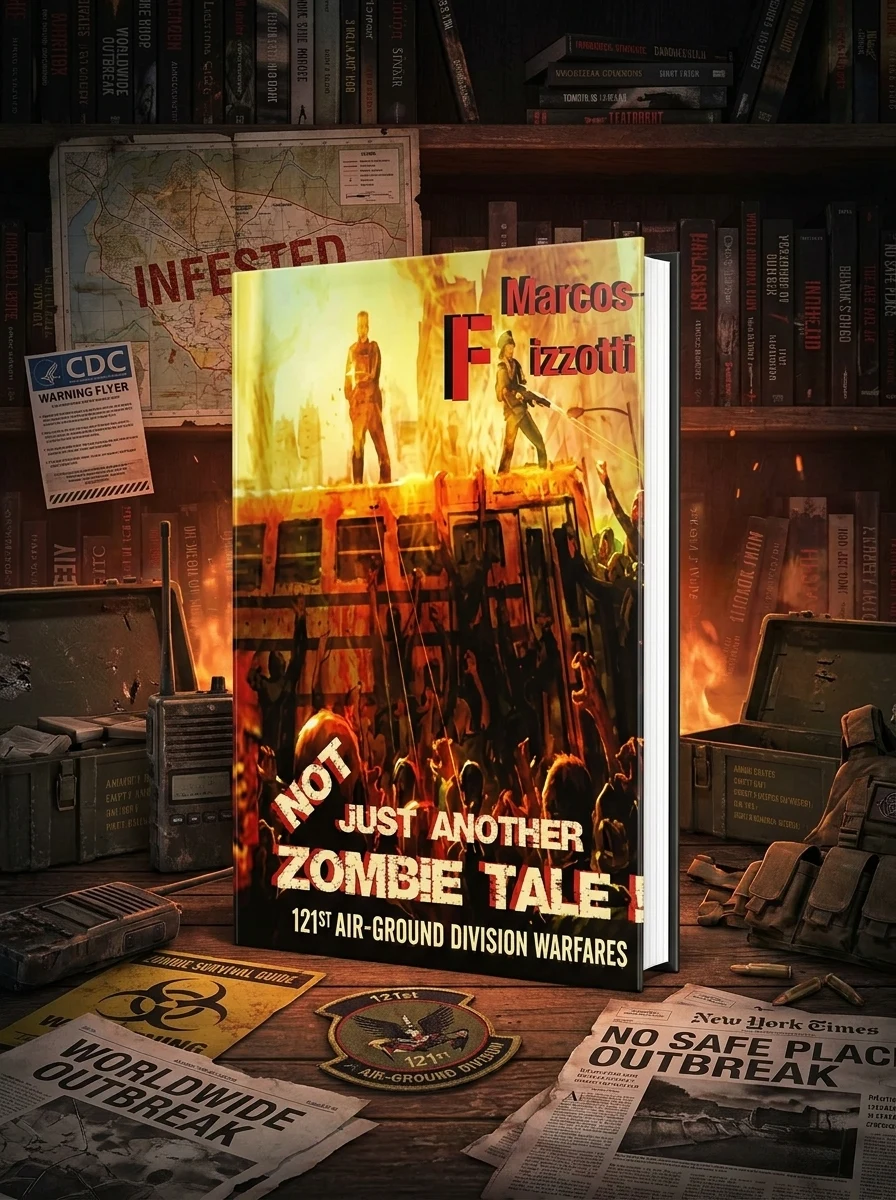
Not Just Another Zombie Tale: 121st Air-Ground Division Warfares
A story about the 121st Air-Ground Division fighting an inescapable zombie plague.
The narrative tracks the rapid spread of a zombie epidemic across multiple geographic levels. It starts locally and expands to cover nations and the entire world. The 121st Air-Ground Division plays a central role in the conflict alongside other military and medical groups. Olofsson emphasizes the personal terror of potentially being infected by loved ones or neighbors. The work does not offer solutions but rather depicts the inevitability of the outbreak. It focuses on the loss of safety in everyday environments like homes and workplaces.
Published in 2014 by Marcos Bevilacqua Fizzotti, this work engages with the American horror tradition of domestic invasion. It utilizes the trope of the military failing to contain a supernatural threat that originates within civilian society.


📝 Description: Not Just Another Zombie Tale: 121st Air-Ground Division Warfares
💎 Our verdict on Not Just Another Zombie Tale: 121st Air-Ground Division Warfares
📖 Why choose it
Why this book is worth reading
Readers who enjoy high-stakes military fiction blended with horror elements will find this narrative compelling. The book offers a claustrophobic exploration of trust and survival, focusing on the terror of familiar neighbors turning into monsters. It appeals to those interested in the rapid escalation of global catastrophe from local incidents. The text provides no easy solutions, offering instead a raw depiction of inevitability and loss of safety. Fans of stories where traditional defenses fail against an internal threat will appreciate this perspective. It is ideal for audiences seeking tension without academic critique or historical analysis.
⭐ Reader reviews
Reader rating
Joakim Olofsson constructs a tense narrative that prioritizes immediate danger over complex world-building, creating a claustrophobic atmosphere where trust is impossible. The book excels in depicting the psychological terror of infection spreading through intimate circles, from family to roommates. By accelerating the pace as the threat becomes inescapable, Olofsson effectively eliminates any sense of safety for the characters. This approach suits readers who prefer visceral horror and military responses to supernatural threats over detailed historical analysis. The focus remains on the immediate peril posed by familiar faces turning into monsters, delivering a compelling account of societal collapse.
You might also like
See more →


Have a question about this item?
Ask about the edition, condition, delivery or anything else — we reply by email or phone, usually within a day.
