🩸Horror Tradition
Zombie
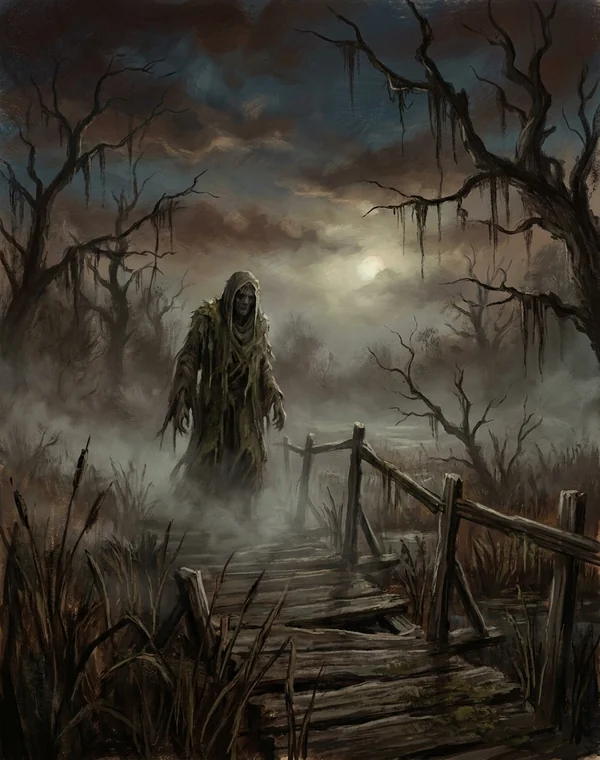
A reanimated corpse driven by primitive hunger or supernatural compulsion, originating in Afro-Caribbean folklore and Haitian Vodou traditions before permeating global horror literature.
Etymology & Origin
Where the word comes from
Derived from the Haitian Creole word zombi, with probable etymological links to Central African terms such as the Kikongo nzambi, meaning a deity or the spirit of a dead person.
Full Definition
In depth
Origins The figure of the zombie has deep roots in Afro-Caribbean folklore and Haitian Vodou traditions, where it evolved from centuries-old syncretic beliefs blending West African spiritual practices with French and Spanish colonial influences. In traditional Haitian lore, a zombie is not a corpse rising from the grave spontaneously, but rather a victim subjected to sorcery or chemical agents, stripped of free will, and bound to the will of a master. These early accounts reflect the deep historical traumas of slavery, capturing the enduring fear of bodily enslavement and the loss of autonomy even after death.
What It Is Said to Do In traditional folklore, a zombie appears as a dazed, compliant figure lacking higher cognitive function, often wandering aimlessly or performing arduous manual labor under a cruel taskmaster. Modern horror has largely shifted this depiction toward the shambling or sprinting reanimated corpse, which is typically decaying, relentlessly hungry for human flesh, and entirely impervious to pain. According to popular horror lore, a single bite or scratch transmits an infection that causes rapid death and subsequent reanimation. Traditional protection or survival methods in modern fiction generally involve barricading shelter, destroying the brain with precise trauma, and avoiding large, unmanageable hordes.
In Horror Fiction Horror writers have utilized the zombie as a powerful canvas to explore societal collapse, mass conformity, and existential dread. Richard Matheson revolutionized the concept by pairing the undead motif with scientific pandemic anxiety in his landmark novel I Am Legend. George A. Romero later redefined the creature for a modern era as a mirror for consumerism and political failure, while subsequent authors have explored psychological trauma, environmental disaster, and interpersonal breakdown through the lens of a relentless, inescapable horde.
Why It Still Frightens Zombies terrify because they embody the terrifying destruction of individual identity and the horrifying realization that our fellow human beings can instantly transform into unthinking threats.
Connected Concepts
Related horror terms
Voices
Authors working in this mode
Further Study