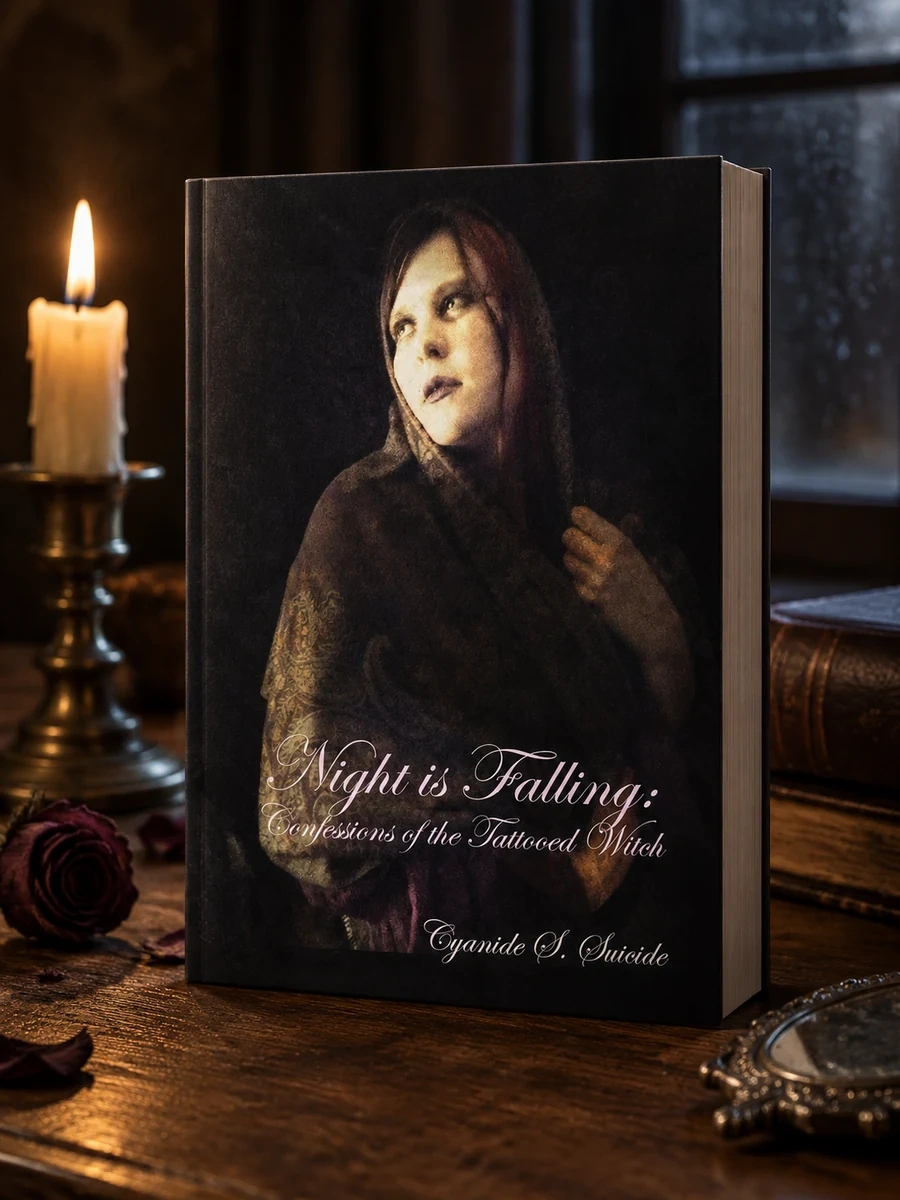
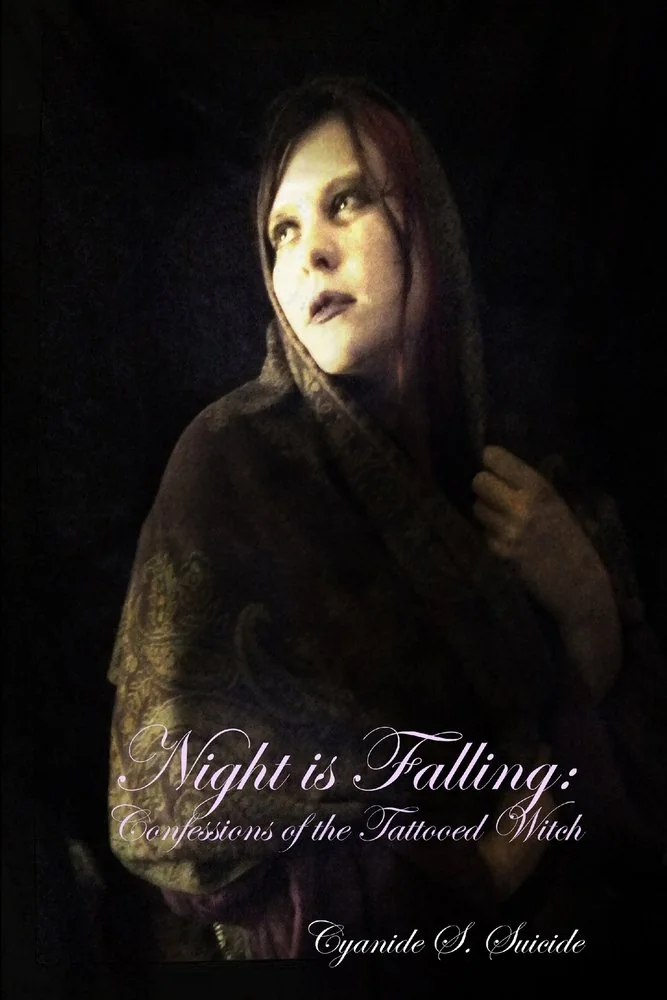
Night is Falling: Confessions of the Tattooed Witch
A dark memoir exploring a witch's twisted marriage and mental state.
This volume offers an intimate look at the life of Darva from the perspective of author Cyanide S Suicide. The text does not focus on spellcasting or magical lore but rather on the emotional weight of being labeled a witch. It details her past secrets and the specific reasons behind her marriage to a monster. The narrative structure follows her internal struggles, highlighting the contrast between her quiet exterior and chaotic interior life. This approach provides a unique angle on supernatural fiction by grounding it in personal confession and psychological realism.
Published in 2013 by Lulu.com, this work sits within the contemporary self-published horror genre. It reflects a period where independent authors explored gothic and supernatural themes through personal confession rather than traditional publishing channels.


📝 Description: Night is Falling: Confessions of the Tattooed Witch
💎 Our verdict on Night is Falling: Confessions of the Tattooed Witch
📖 Why choose it
Why this book is worth reading
Readers seeking a profound, introspective dive into the human psyche will find this book compelling. It offers a unique perspective on the horror of social isolation and the complexity of toxic relationships through the lens of a labeled 'witch.' The narrative appeals to those who prefer psychological depth over action, providing a quiet but intense exploration of guilt, love, and isolation. By grounding supernatural themes in personal confession, it invites readers to examine the emotional weight of being misunderstood. It is ideal for fans of dark character studies who appreciate when horror stems from internal turmoil and twisted affection rather than traditional monster encounters or external battles.
⭐ Reader reviews
Reader rating
Cyanide S Suicide delivers a somber, first-person narrative that redefines supernatural fiction through psychological realism. The book excels in portraying the emotional burden of societal scorn, using the 'witch' label as a vehicle for exploring Darva’s internal chaos. While it lacks traditional spellcasting or folklore, its strength lies in its honest depiction of a corrupt fairy tale marriage and the author's mental state. This approach creates a haunting atmosphere rooted in personal history rather than external threats. The work is best suited for readers who enjoy gothic fiction and dark, introspective character studies. It may disappoint those seeking lighthearted horror or conventional magical battles, but it rewards patience with a nuanced look at isolation and twisted love.