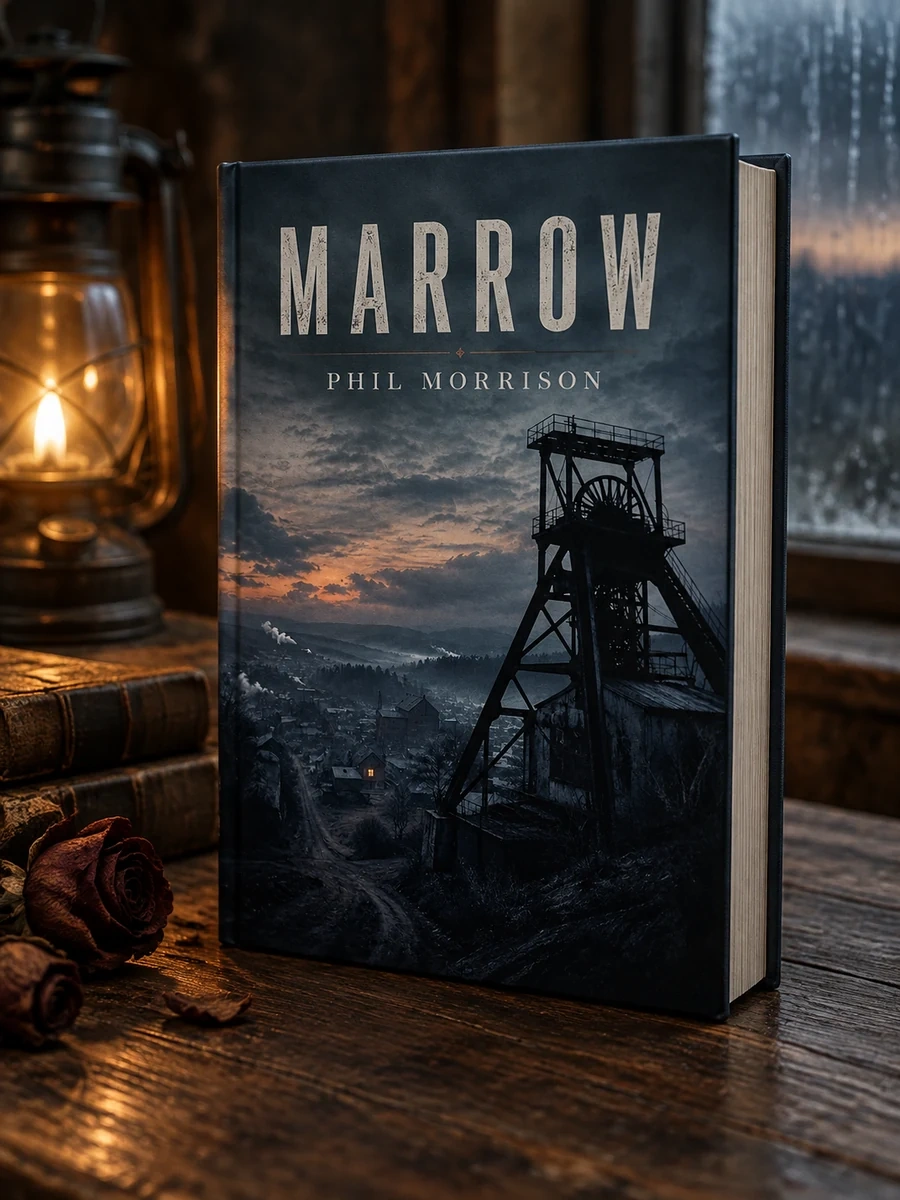
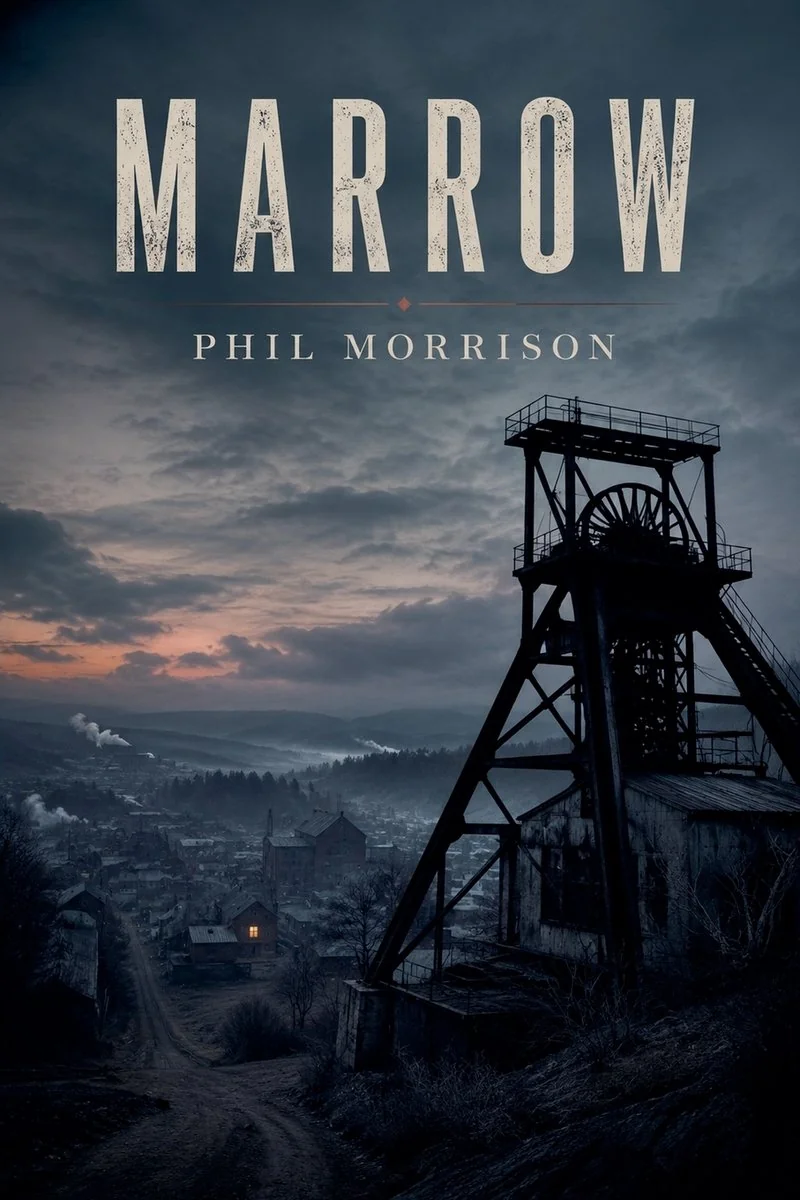
Marrow
A mining town empties while unexplained deaths follow those who try to leave in 1984 Minnesota.
Morrison constructs a tense narrative where evacuation becomes a death sentence. Rae Aho navigates a landscape of silence and fear, discovering that the town’s dead are not truly gone. The plot unfolds through her methodical examination of six accidents, each tied to someone who announced their exit. Her father hides critical information, adding personal tension to the external threat. The muffled sounds beneath the floors serve as a constant reminder of what lies below. This approach creates a claustrophobic atmosphere where every knock carries weight. The story does not rely on jump scares but on the dread of the unknown and the inevitability of the town’s fate.
The narrative is set in Winter 1984 on the Iron Range of Minnesota. It reflects the era’s industrial decline as a mining town empties out. The story draws on the tradition of American classic slasher fiction, emphasizing atmospheric dread and community isolation during a period of economic collapse.


📝 Description: Marrow
💎 Our verdict on Marrow
📖 Why choose it
Why this book is worth reading
Readers who appreciate grounded horror rooted in specific historical moments and industrial decay will find this book compelling. It appeals to those who enjoy methodical investigations and atmospheric dread over high-octane action or jump scares. The narrative offers a claustrophobic experience where every knock carries weight, drawing on concrete details of isolation rather than supernatural exposition. However, the slow, heavy pacing may be difficult for those seeking fast-paced thrillers or explicit supernatural explanations. It is best suited for audiences willing to sustain a tense, silent atmosphere where the environment feels as threatening as any killer, providing a stark look at community collapse and personal secrets.
⭐ Reader reviews
Reader rating
Morrison constructs a tense narrative where evacuation becomes a death sentence, relying on concrete details of isolation rather than supernatural exposition. Rae Aho’s methodical examination of six accidents creates a claustrophobic atmosphere where the environment feels as threatening as any killer. The story draws on old-school atmospheric slasher traditions, treating the setting with equal terror. This approach ensures the dread stems from the unknown and inevitability rather than jump scares. While the slow pacing may deter those seeking fast-paced thrillers or explicit supernatural explanations, it perfectly suits readers who enjoy grounded horror rooted in historical moments. The text remains focused on the physical reality of the town’s collapse, offering a stark, silent investigation into industrial decline and personal secrets without relying on high-octane action.