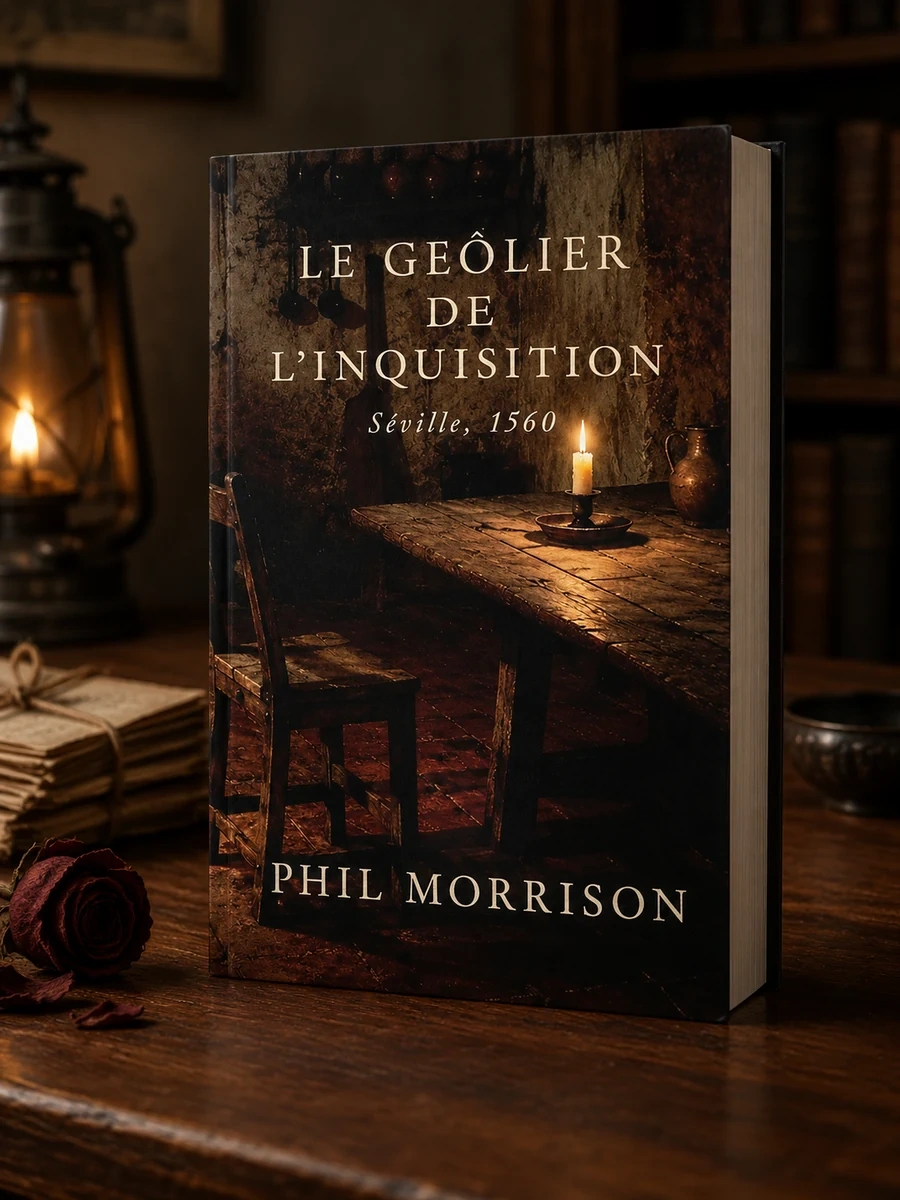
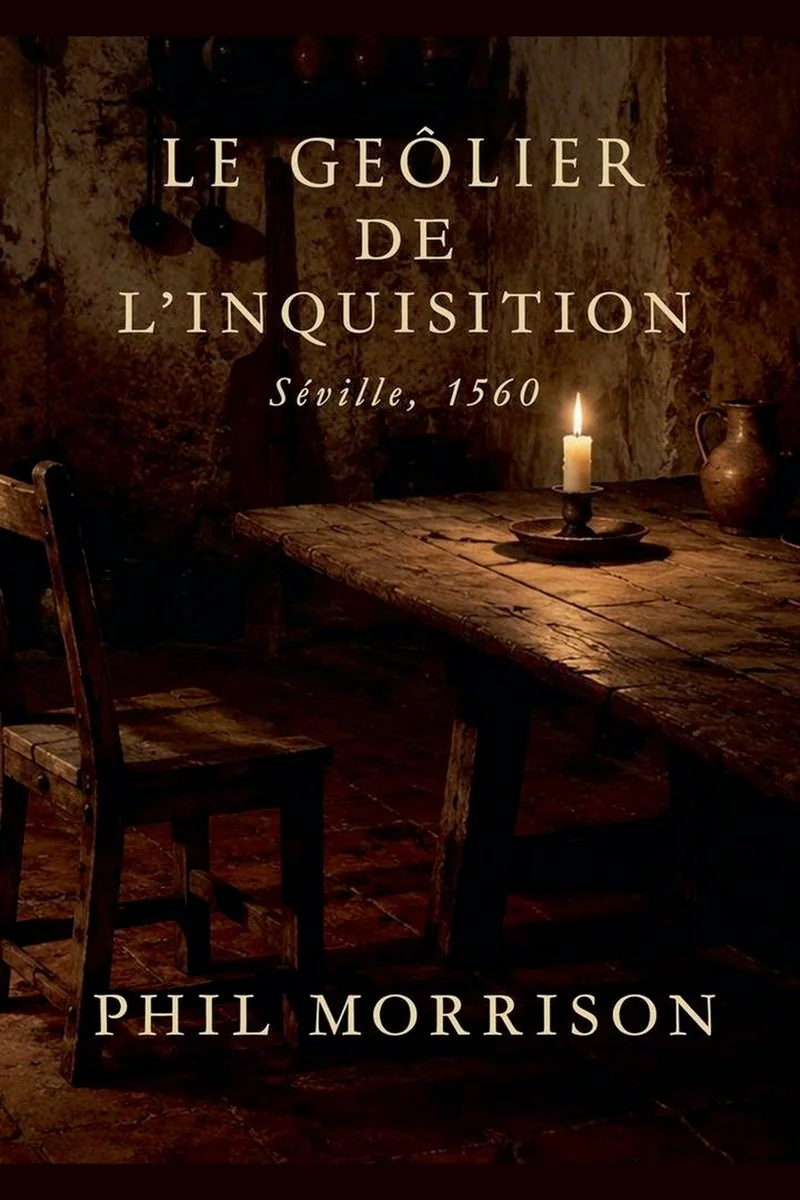
Le Geolier de L'inquisition
A jailer discovers a forbidden cell that claims his name among centuries of victims.
The narrative focuses on Diego Salazar’s descent into terror as he guards the Castillo de San Jorge. He learns that a previous jailer lasted twenty-two years before dying with a satisfied look after confessing his fears. The entity behind the triple-locked door has existed long before the structure itself. It inscribes names of the dead onto stone walls, waiting for responses from the living. Morrison uses this premise to explore themes of eternal punishment and inescapable fate. The story relies on the slow realization of Diego’s role in a cycle that began centuries ago. There are no jumpscares, only the creeping dread of understanding one’s place in a larger, older design. The text avoids graphic violence, focusing instead on the psychological impact of knowing one’s name is already written.
The story is set in September 1560 at the Castillo de San Jorge. It draws on the history of the Spanish Inquisition and its prison systems. The narrative reflects the religious and judicial atmosphere of sixteenth-century Spain, focusing on the isolation and authority of the jailer within a fortified castle.


📝 Description: Le Geolier de L'inquisition
💎 Our verdict on Le Geolier de L'inquisition
📖 Why choose it
Why this book is worth reading
This book is ideal for readers who prefer atmospheric dread over graphic violence or fast-paced action. It offers a unique exploration of eternal punishment and inescapable fate through the slow realization of one’s role in an ancient cycle. Those interested in psychological horror will appreciate the focus on the mental impact of knowing their name is already written by an older design. The narrative avoids jumpscares, delivering instead a creeping sense of doom that lingers long after reading. It suits those who enjoy clinical thrillers where fear stems from comprehension rather than visible horror. Readers seeking clear resolutions or high-octane plots may find the pacing deliberate, but fans of slow-burn terror will find deep satisfaction in the inevitable destiny portrayed.
⭐ Reader reviews
Reader rating
Morrison crafts a masterful study of psychological erosion, anchoring the story in the oppressive atmosphere of the Spanish Inquisition. The premise of a jailer discovering his name among centuries of victims is executed with chilling precision, relying on the weight of fate rather than gore. The narrative excels in building tension through the protagonist's gradual understanding of his place in an older design. This approach appeals strongly to enthusiasts of cosmic and gothic horror who value mood over spectacle. While the lack of action may deter some, the book’s strength lies in its ability to induce fear through slow comprehension. It is a refined entry for those who appreciate the subgenre's focus on inevitable doom and the psychological toll of forbidden knowledge.