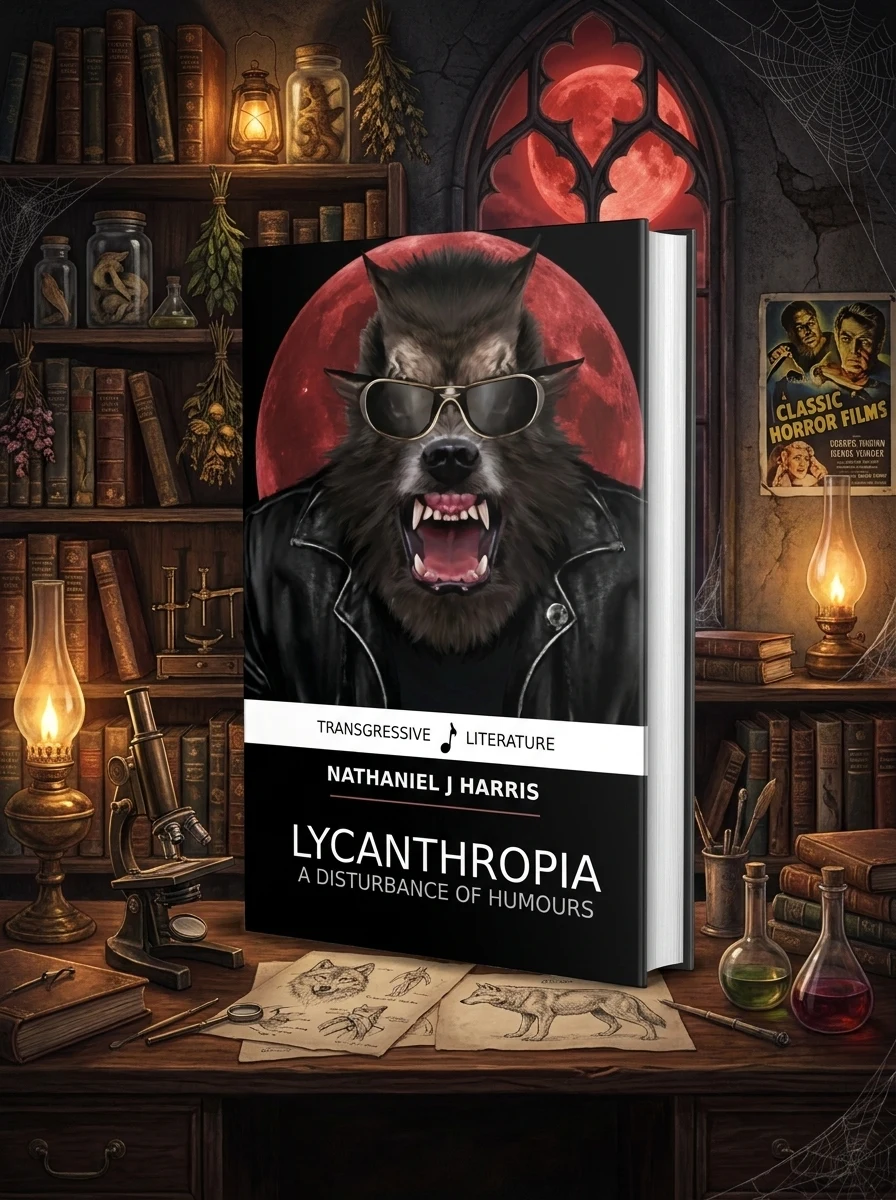
Lycanthropia: A Disturbance of Humours
A first-person account arguing that lycanthropes are real and humans are their prey.
This text operates as a manifesto from the perspective of the hunted becoming the hunter. Harris dismantles the comfort of religious and scientific dogma to reveal a world where transformation is possible and inevitable. The work emphasizes the biological and spiritual superiority of the lycanthrope over humanity. It frames human denial as a clinical delusion rather than rational skepticism. The narrative insists that the only truth is hunger, stripping away all other moral or logical frameworks. Readers encounter a voice that is both threatening and inviting, demanding acceptance of a new order. The argument relies on the inevitability of the red moon and the growing population of these beings. It challenges the reader to stop explaining mysteries and start fearing them. The tone is serious and unyielding, offering no hope for human dominance.
The book engages with traditional folklore and cinema tropes of the werewolf. It references theological concepts regarding God’s creation and biological laws to establish its counter-narrative. The work positions itself against modern skepticism, drawing on historical fears of transformation to create a contemporary sense of dread.


📝 Description: Lycanthropia: A Disturbance of Humours
💎 Our verdict on Lycanthropia: A Disturbance of Humours
📖 Why choose it
Why this book is worth reading
Readers who crave a visceral challenge to their sense of security will find value in this text. It appeals to those interested in the subgenre of psychological horror, specifically where the monster’s perspective is presented as rational and superior. The book offers a unique ideological confrontation, stripping away religious and scientific comfort to reveal a harsh truth about human vulnerability. It suits individuals who enjoy narrative voices that are both inviting and deeply threatening, demanding acceptance of a new, predatory order. By framing humanity as mere livestock, it forces an engagement with the 'Wolf Age' concept without offering hope for dominance.
⭐ Reader reviews
Reader rating
Harris delivers a potent manifesto that successfully dismantles the comfort of human rationality through a serious, unyielding tone. The text excels in its ideological rigor, presenting lycanthropes not as monsters but as superior beings whose hunger defines existence. It avoids traditional tropes, opting instead for a direct, philosophical assault on the reader’s denial of their own vulnerability. This approach makes it ideal for fans of cosmic horror who appreciate when the narrative insists on the inevitability of the unknown. However, it may alienate those seeking conventional plot resolution or scientific debunking. The work stands as a stark reminder that some mysteries should be feared rather than understood.
📖 Read on the blog
🏛 Books from this publisher Independently Published








You might also like
See more →



Have a question about this item?
Ask about the edition, condition, delivery or anything else — we reply by email or phone, usually within a day.
