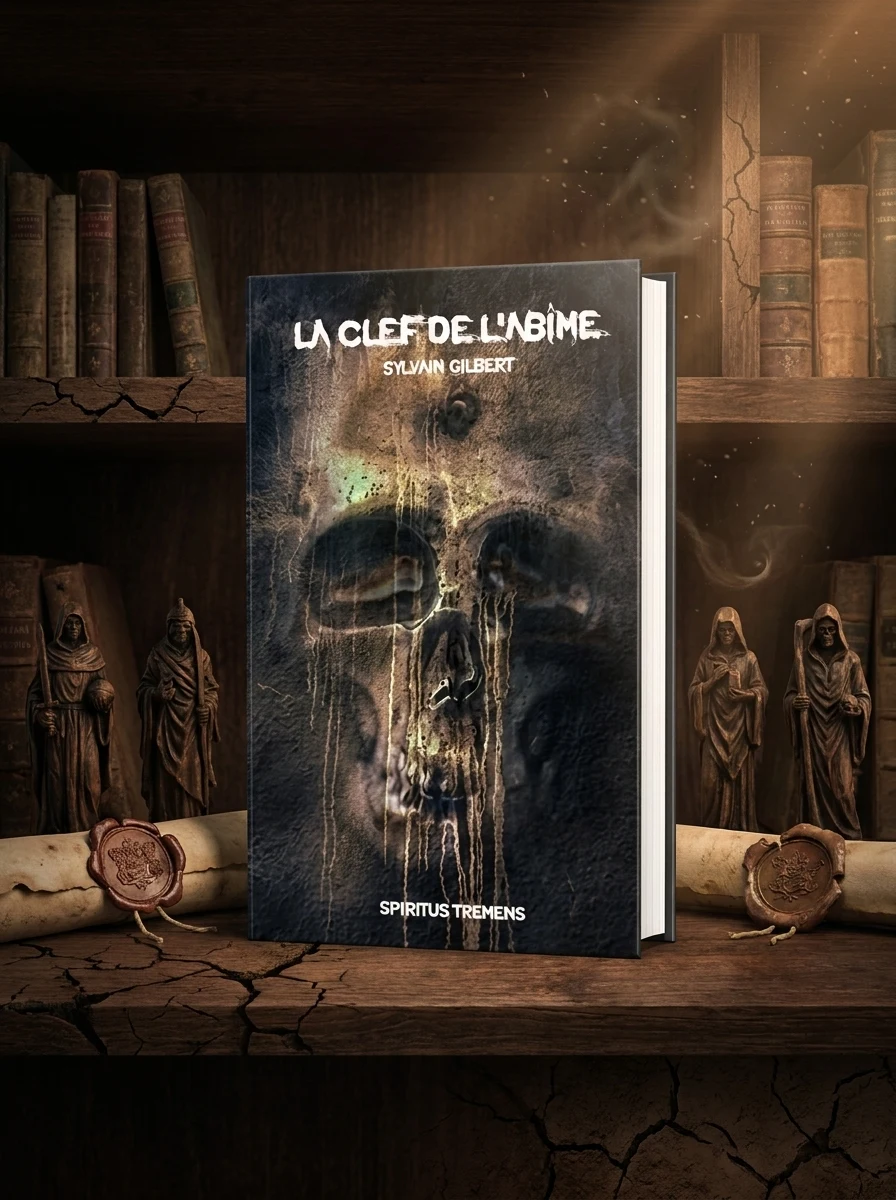
La clef de l'abime
A grief-fueled rewrite of the biblical Apocalypse featuring four divine horsemen.
This work transforms personal tragedy into a cosmic punishment narrative. Gilbert uses the death of Sophie Boisvert as the catalyst for a new version of end-times prophecy. The story focuses on four friends who become instruments of divine judgment. They act without full understanding, driven by the broken seals of the Lamb. The text serves as both a novel and a memorial. It channels anger at the world into a structured apocalyptic tale. The narrative does not offer redemption but rather execution of divine will. The author’s motivation is clear: to make humanity perish for the loss of his friend. This approach creates a unique blend of gothic fiction and theological revisionism.
Published in 2019 by Independently Published, this French-language work sits at the intersection of personal memoir and religious horror. It reinterprets the final book of the Bible through a modern lens of grief. The author connects contemporary loss with ancient prophetic traditions. The text reflects a specific moment in 2004 that reshaped the narrative direction.


📝 Description: La clef de l'abime
💎 Our verdict on La clef de l'abime
📖 Why choose it
Why this book is worth reading
Readers drawn to the intersection of profound personal loss and cosmic horror will find this text compelling. It offers a unique perspective where grief fuels a narrative of divine retribution, appealing to those who appreciate dark theological explorations. The book suits individuals interested in gothic supernatural fiction who enjoy seeing established religious frameworks dismantled through a lens of intense emotional anguish. It provides an experience not of redemption, but of structured execution, catering to audiences comfortable with themes of wrath and the breakdown of human morality under divine command.
⭐ Reader reviews
Reader rating
Gilbert’s novel stands out for its visceral connection between personal tragedy and apocalyptic scale. The narrative effectively channels anger into a coherent, albeit terrifying, theological framework. By casting four friends as unwitting instruments of judgment, the text creates a haunting atmosphere of inevitability. It succeeds in blending gothic fiction with dark fantasy, offering a raw look at grief manifesting as cosmic punishment. The work is best suited for readers who enjoy challenging reinterpretations of religious texts and do not shy away from themes of mass destruction. It avoids traditional horror tropes in favor of a more philosophical, albeit brutal, exploration of divine will and human suffering.
📖 Read on the blog
🏛 Books from this publisher Independently Published








You might also like
See more →



Have a question about this item?
Ask about the edition, condition, delivery or anything else — we reply by email or phone, usually within a day.
