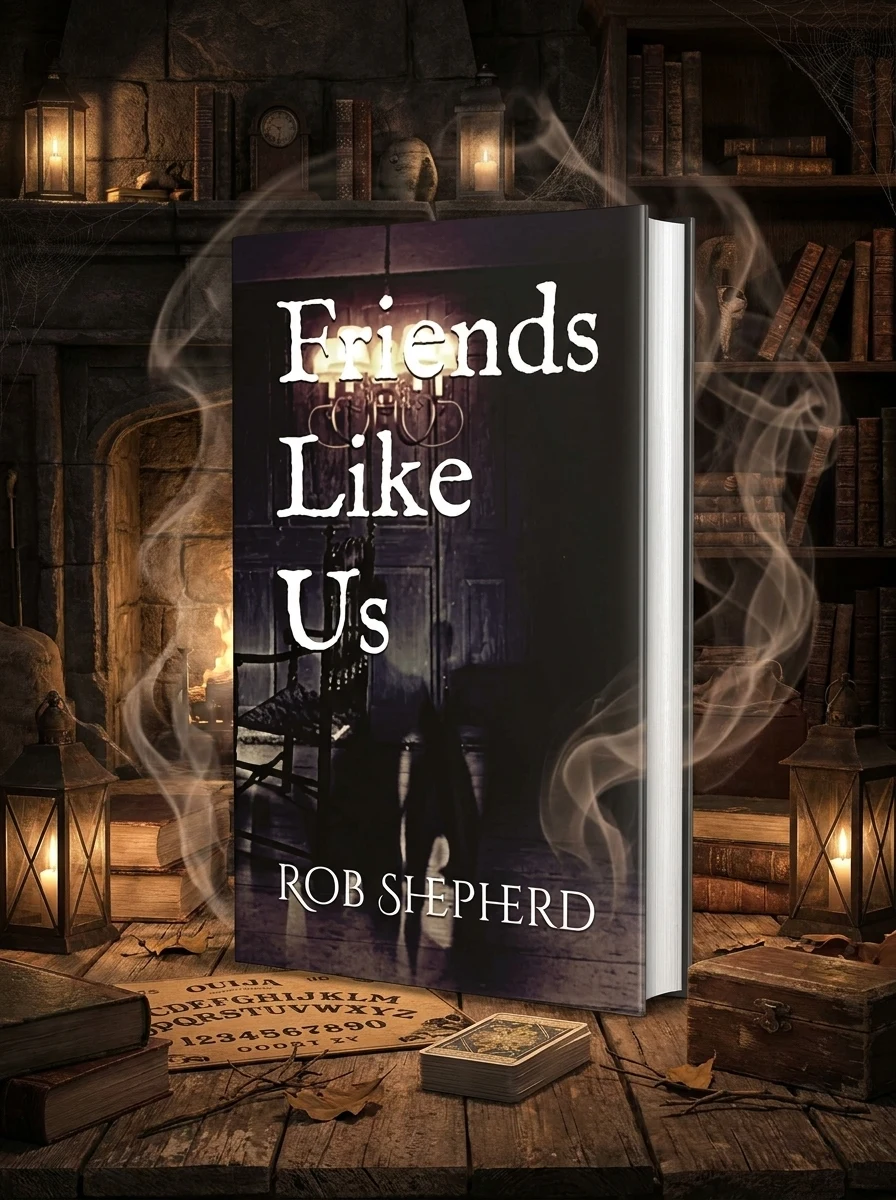
Friends Like Us
A group holiday turns deadly when past demons manifest in a remote lodge.
Shepherd examines the consequences of unresolved trauma through the lens of supernatural horror. The narrative focuses on Oliver and his friends as they attempt to close one chapter of their lives, only to have it violently reopen. The presence of the estranged friend acts as a catalyst for chaos within the isolated setting of the lodge. The story does not rely on external monsters but rather on the internal struggles of the characters becoming externally lethal. This approach highlights the fragility of human perception and physical safety when confronted with one's own history.
This 2015 release from Createspace Independent Publishing Platform fits within the contemporary American horror market. It utilizes the isolated lodge trope common in supernatural fiction to explore personal psychological struggles through a genre lens.


📝 Description: Friends Like Us
💎 Our verdict on Friends Like Us
📖 Why choose it
Why this book is worth reading
Readers seeking a blend of supernatural tension and deep psychological exploration will find this narrative compelling. It offers a unique perspective on how unresolved past traumas can violently intrude upon the present, transforming a simple reunion into a fight for survival. The book appeals to those who prefer horror rooted in character psychology rather than external monsters. By focusing on the fragility of perception and the lethal consequences of ignoring history, it provides an intense, immersive experience that challenges the boundary between mental anguish and physical danger.
⭐ Reader reviews
Reader rating
Rob Shepherd effectively utilizes the isolated lodge setting to amplify the psychological dread surrounding Oliver and his friends. The narrative excels in depicting how personal demons manifest physically, creating a tense atmosphere where internal struggles become externally lethal. The story avoids traditional ghost tropes, instead focusing on the terrifying dissolution of reality when confronted with one's own history. This approach makes it particularly suitable for fans of cosmic and psychological horror who appreciate nuanced character dynamics over jump scares. It is a tight, focused examination of guilt and survival that rewards readers interested in the intersection of trauma and supernatural fiction.