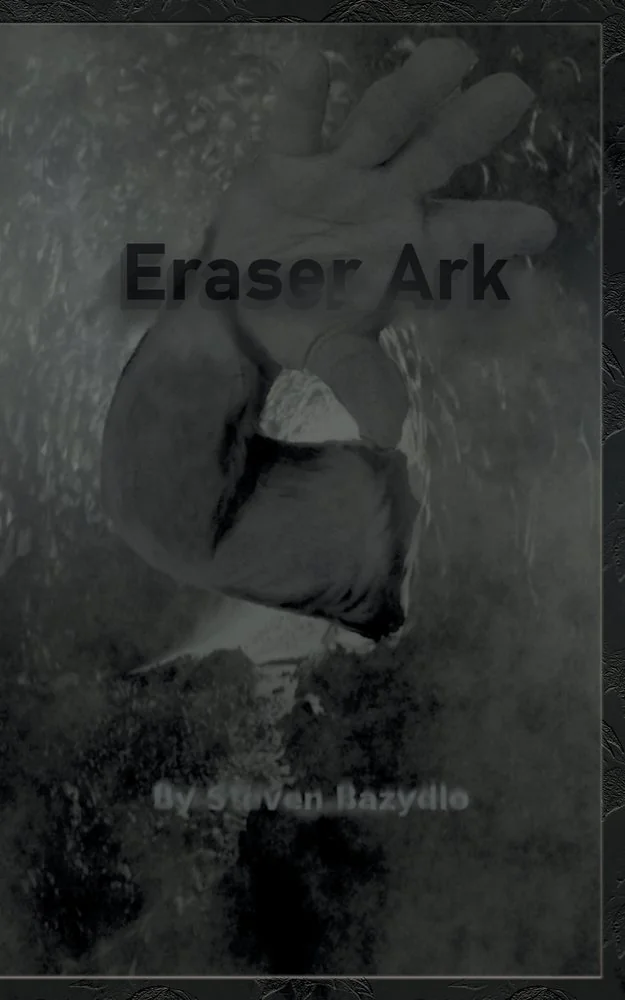
Eraser Ark
A man records his life before the world ends to help future civilizations.
This work is a first-person account of a person facing extinction. The narrator chooses to document his existence rather than fight futilely. He aims to provide guidance for any future civilization that might rise from the ashes. The text includes encounters with various supernatural entities, including demons and multidimensional beings. Bazydlo writes as both author and publisher, controlling the narrative voice. The story is not about saving the world but about leaving a record. It examines the burden of knowledge when all hope is lost. Readers who prefer introspective fiction over plot-driven horror will find value here. It lacks the excitement of typical genre fare but offers depth.
Published in 2022 by Steven Bazydlo, this book sits within the tradition of existential horror fiction. It draws on themes of cosmic dread and the futility of human effort against multidimensional forces. The work reflects a modern approach to gothic despair where the end is inevitable.


📝 Description: Eraser Ark
💎 Our verdict on Eraser Ark
📖 Why choose it
Why this book is worth reading
Readers who prioritize philosophical depth over plot-driven excitement will find value here. The book offers a stark, resigned documentation of survival and failure without offering comfort. It suits those interested in post-apocalyptic reflection and the weight of responsibility when all hope is lost. The narrative avoids sensationalism to focus on the burden of knowledge. Those seeking traditional horror tropes may find the tone too quiet. However, fans of existential dread will appreciate the perspective on leaving a record for future civilizations. It provides an alternative to action-packed thrillers by examining the futility of fighting extinction.
⭐ Reader reviews
Reader rating
Bazydlo presents a narrative centered on the final days of civilization with a protagonist who accepts the end while holding alcohol. The text explores encounters with demons and multidimensional beings, focusing on their origins rather than their defeat. It lacks the excitement of typical genre fare but offers significant depth for those willing to engage with its resigned tone. The work is a personal account rather than an action-packed thriller. Readers seeking clear resolutions or heroic triumphs will likely be disappointed. However, those who enjoy philosophical horror over gore will appreciate the stark documentation of failure and the directive for future societies to avoid past mistakes.