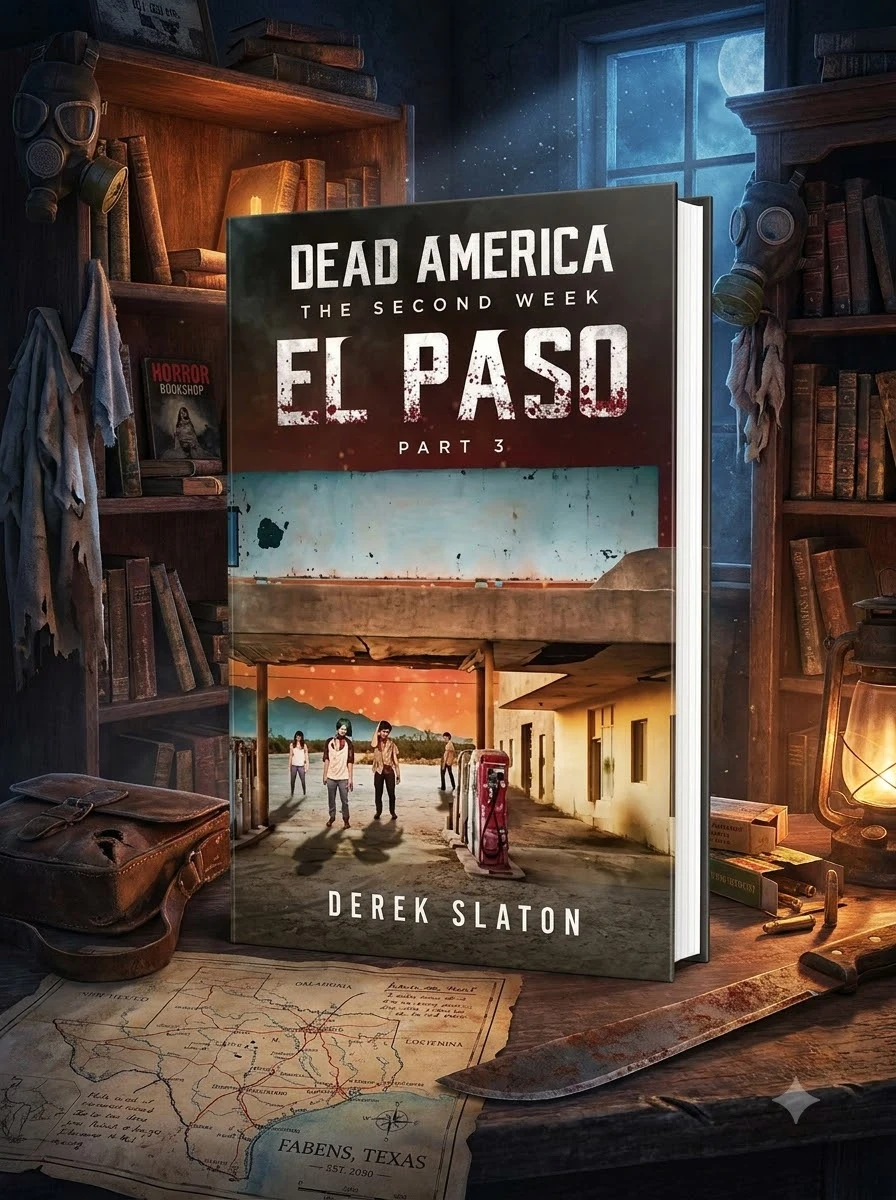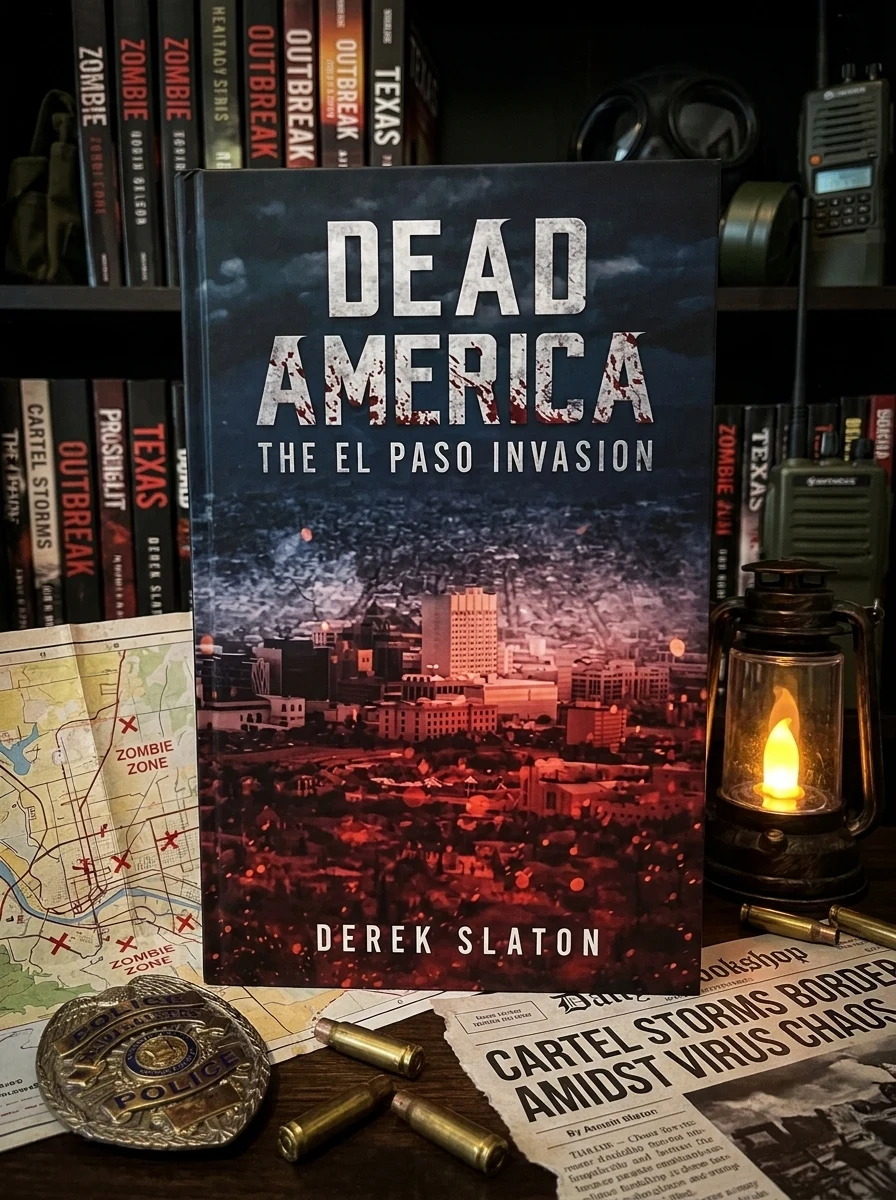
Dead America: The El Paso Invasion
A novel about detectives fighting zombies and cartel members in El Paso.
This volume examines the initial fallout of a zombie outbreak in Texas through the lens of law enforcement. Slaton uses the perspective of homicide detectives to show how local authorities cope with an enemy that is both biological and human. The text highlights the confusion of the first week, focusing on survival rather than cure. It appeals to fans of fast-paced disaster fiction who enjoy seeing institutions crumble under pressure.
Published by VGA in 2019, this work fits into the modern subgenre of regional apocalypse fiction. It reflects contemporary anxieties about border security and infectious disease by setting the conflict in El Paso during a fictional national crisis.


📝 Description: Dead America: The El Paso Invasion
💎 Our verdict on Dead America: The El Paso Invasion
📖 Why choose it
Why this book is worth reading
Readers who enjoy fast-paced disaster fiction will find this account compelling, particularly those interested in seeing how institutions crumble under extreme pressure. The book appeals to fans of survival narratives that blend supernatural horror with geopolitical conflict, offering a tense atmosphere where law enforcement faces dual threats from undead corpses and armed invaders. It is ideal for audiences seeking action-oriented storytelling over scientific analysis or historical accuracy. Those who appreciate the tension between police procedures and external chaos will gain satisfaction from following detectives as they navigate the confusion of the first week, focusing on immediate survival rather than long-term cures or medical explanations.
⭐ Reader reviews
Reader rating
Slaton effectively constructs a chaotic scenario where biological terror collides with human violence in El Paso. The narrative succeeds by grounding its speculative premise in the grounded actions of homicide detectives, creating a tense atmosphere that relies on character interaction rather than scientific exposition. The focus on the first week of crisis highlights institutional struggle, appealing to fans of procedural horror and disaster fiction. While it lacks detailed medical explanations or historical accuracy, its strength lies in the immediate pressure faced by authorities. This volume serves as an engaging entry point for readers who prefer seeing familiar structures break down under the weight of both supernatural and human threats, offering a brisk, action-driven experience without unnecessary complexity.