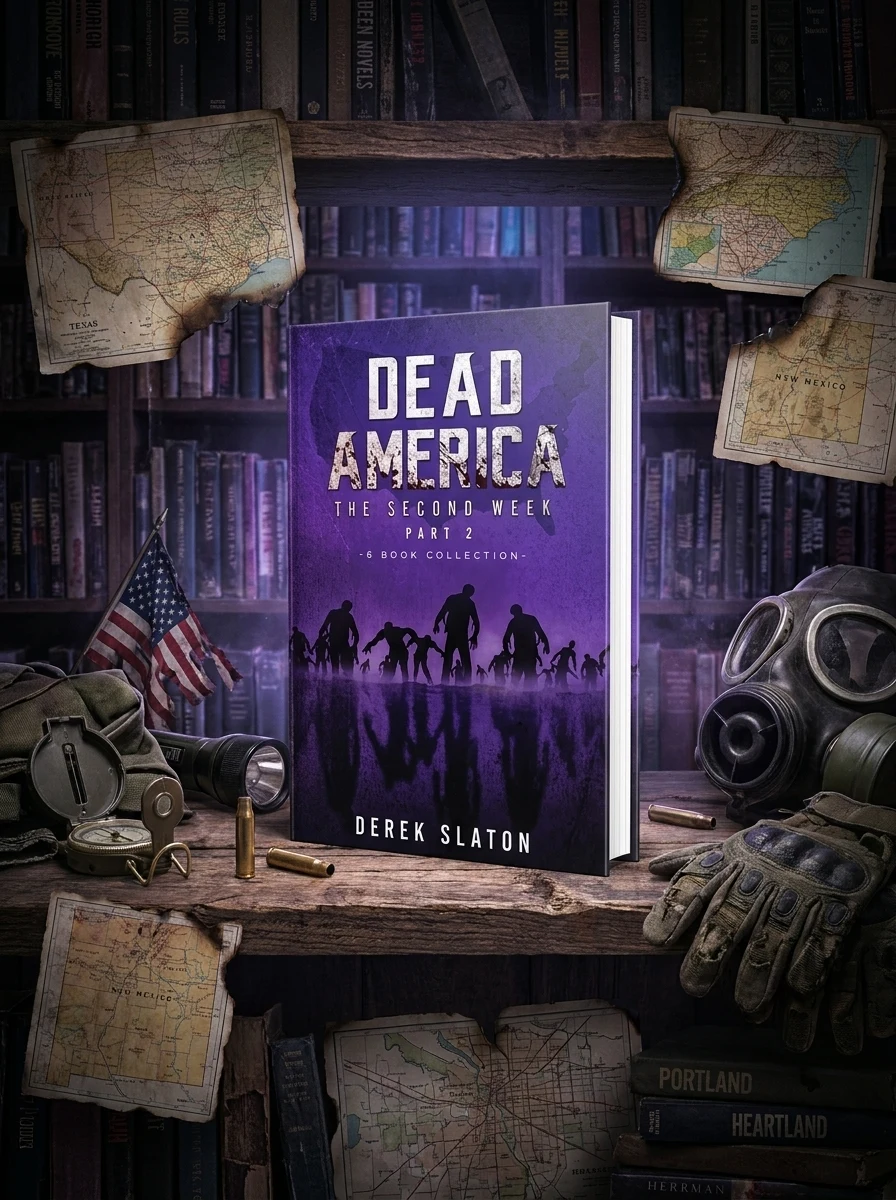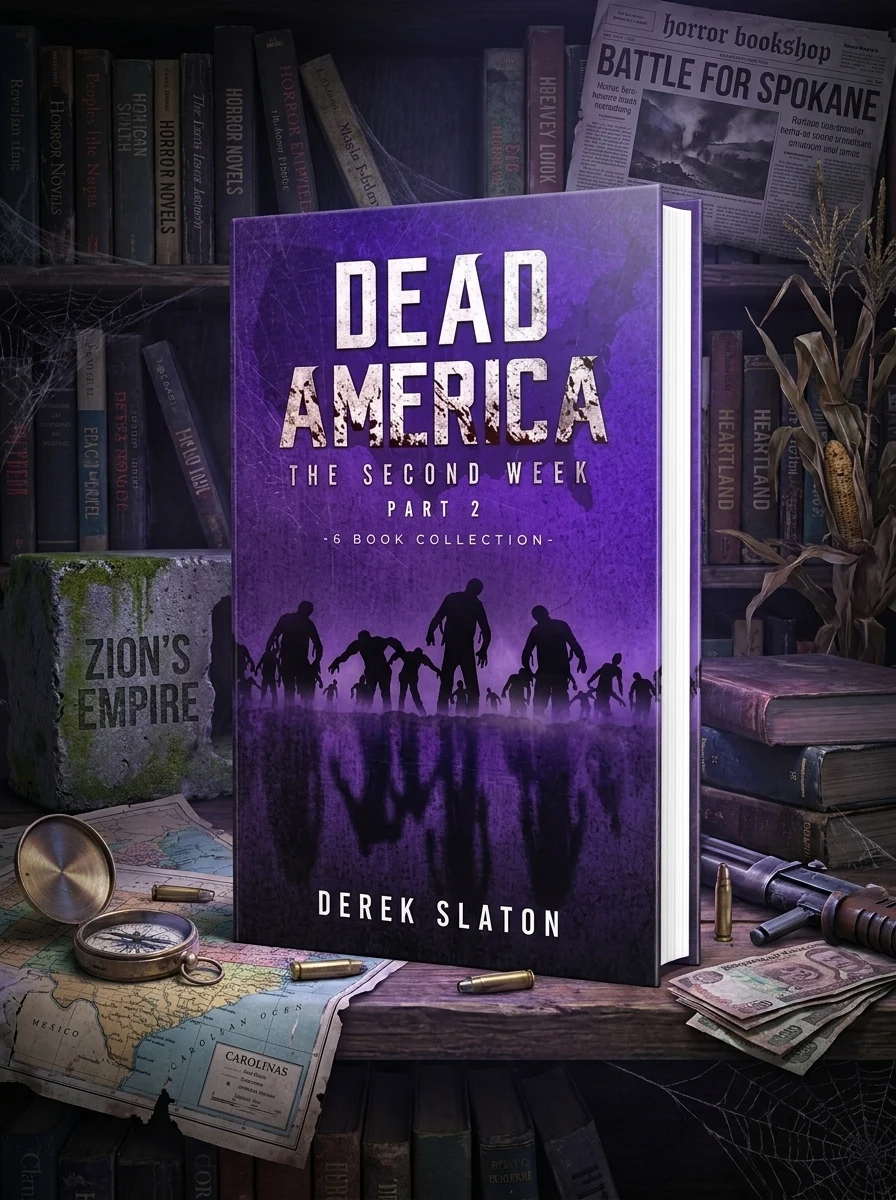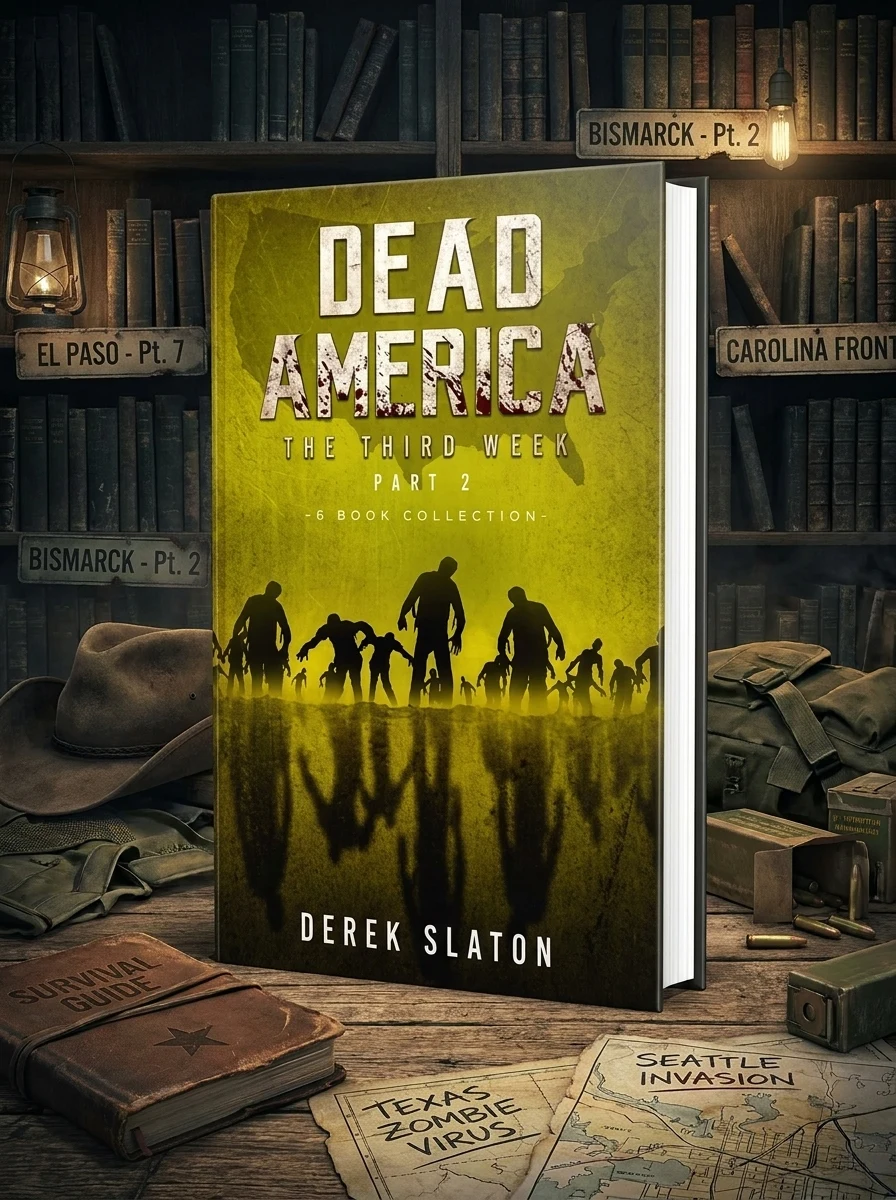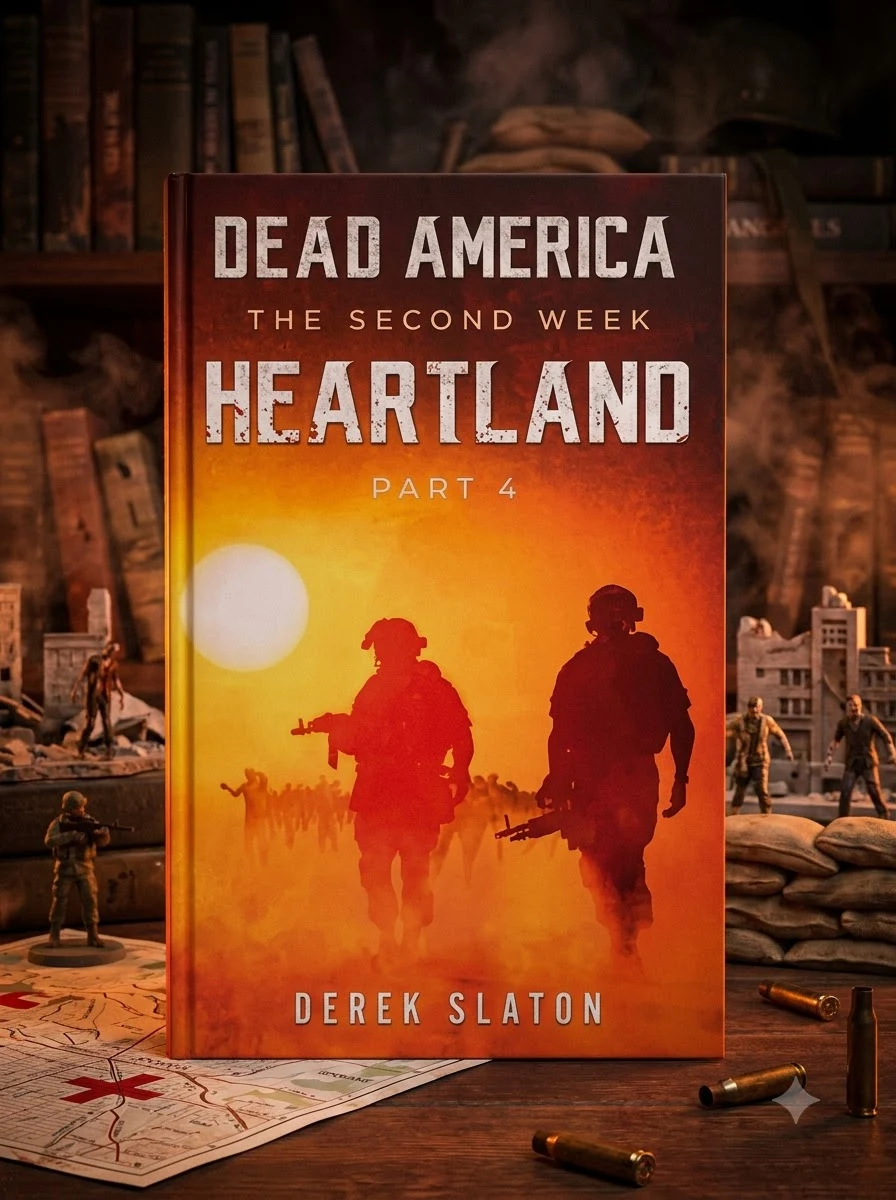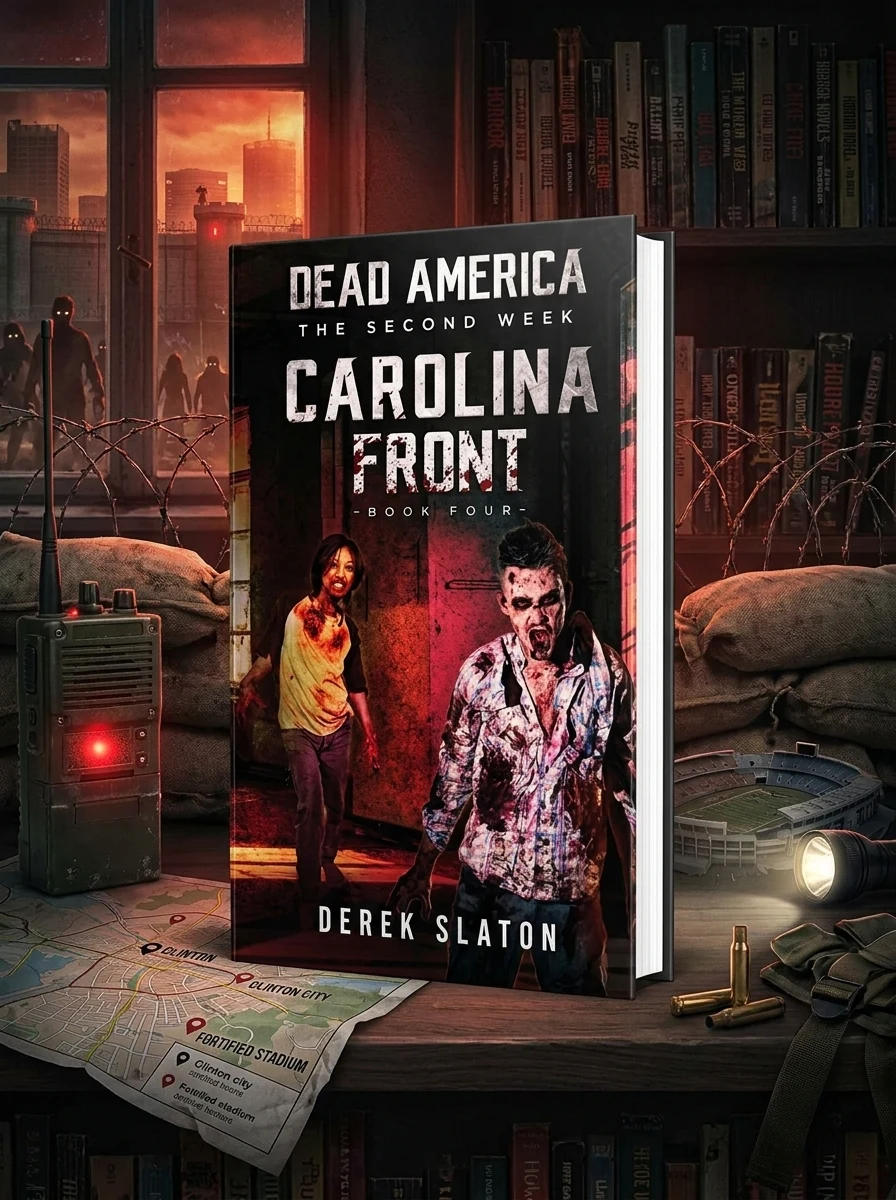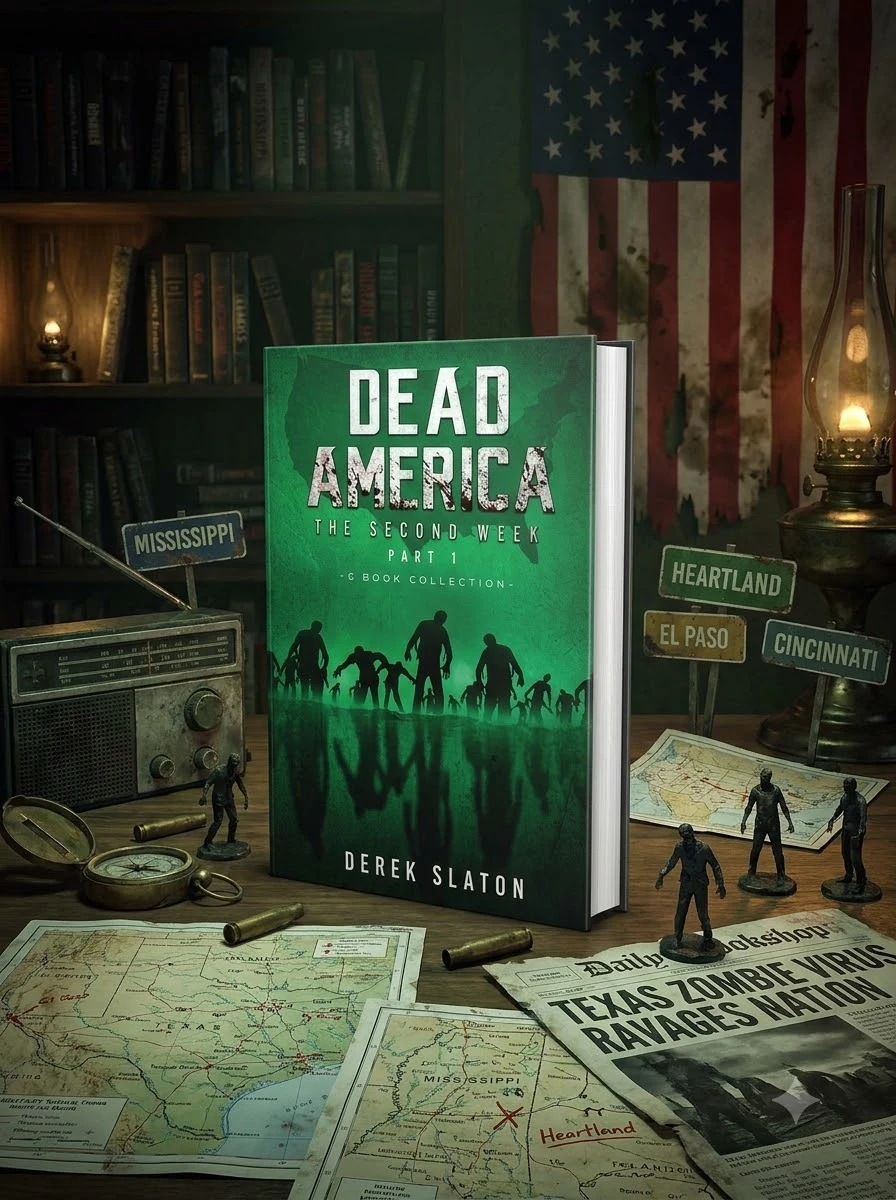
Dead America - The Second Week Part One - 6 Book Collection
A six-book collection covering the early days of the Texas Zombie Virus outbreak.
This compilation brings together the first six entries in Derek Slaton’s Second Week series. The narrative moves from Mississippi to El Paso, Cincinnati, and Nevada, tracking how different groups respond to the crisis. Civilians deal with fallout while military forces execute plans to retake the country. The structure allows for a broad view of the national response rather than focusing on a single protagonist.
Published in 2020 by VGA, this work sits within the contemporary American zombie fiction genre. It reflects modern anxieties about rapid societal collapse and institutional failure during a pandemic-style event.


📝 Description: Dead America - The Second Week Part One - 6 Book Collection
💎 Our verdict on Dead America - The Second Week Part One - 6 Book Collection
📖 Why choose it
Why this book is worth reading
Readers who enjoy broad, multi-perspective views of catastrophic events will find this box set particularly engaging. By shifting between civilians in Mississippi and El Paso alongside military forces in Cincinnati and Nevada, the text offers a comprehensive look at the national response to the Texas Zombie Virus. This structure appeals to those who prefer seeing how different groups manage fallout and execute retaking plans rather than following a single protagonist. It is ideal for fans of rapid adaptation stories who want to witness the immediate consequences of decisions made far away. The collection provides a fast-paced experience suitable for those who appreciate organized military responses and civilian struggles during the early days of an outbreak, offering a wide-angle lens on survival.
⭐ Reader reviews
Reader rating
Slaton effectively utilizes a multi-location narrative to depict the immediate aftermath of the Texas Zombie Virus. The compilation succeeds in showing diverse reactions, from civilian fallout management in Mississippi to military strategies elsewhere. This approach provides a broad view of societal collapse without bogging down in scientific details or slow psychological horror. It suits readers who want fast-paced survival tales with multiple viewpoints on a single catastrophe. The text draws on established post-apocalyptic traditions, highlighting rapid adaptation and organized responses. While it lacks deep character focus, its strength lies in the wide-angle perspective of national impact. This box set is best for those seeking immediate crisis engagement rather than detailed origin stories or slow-burn tension.