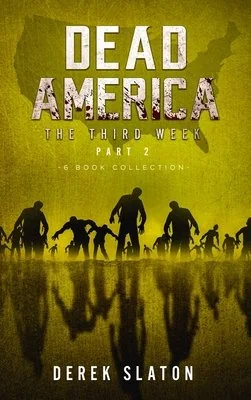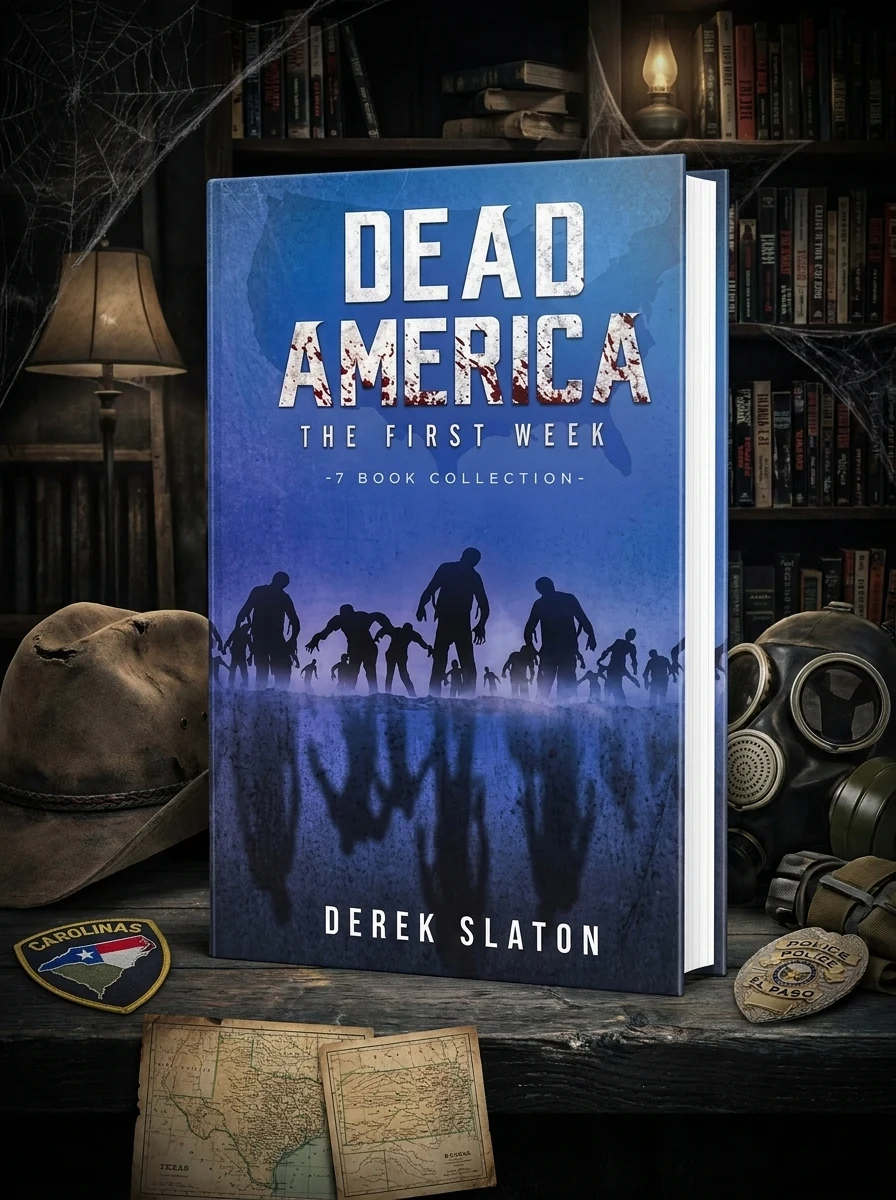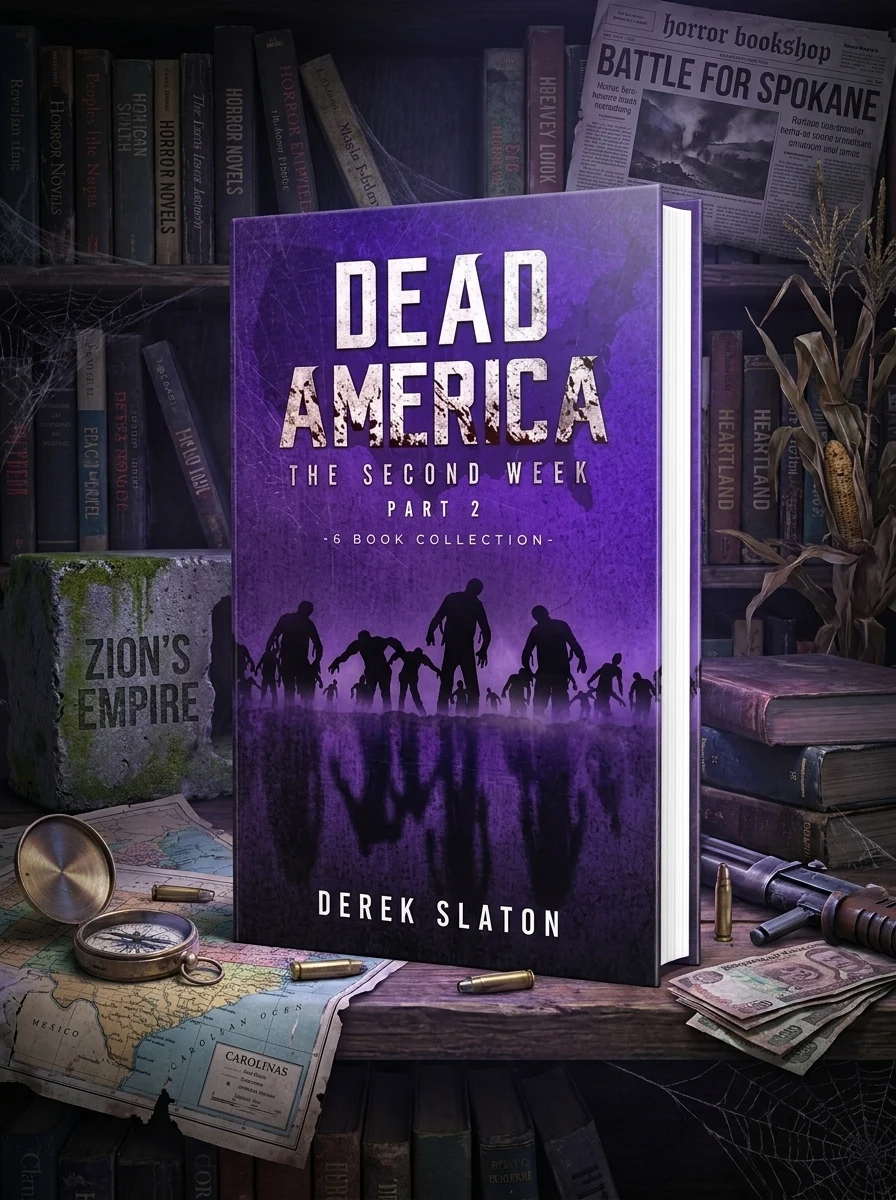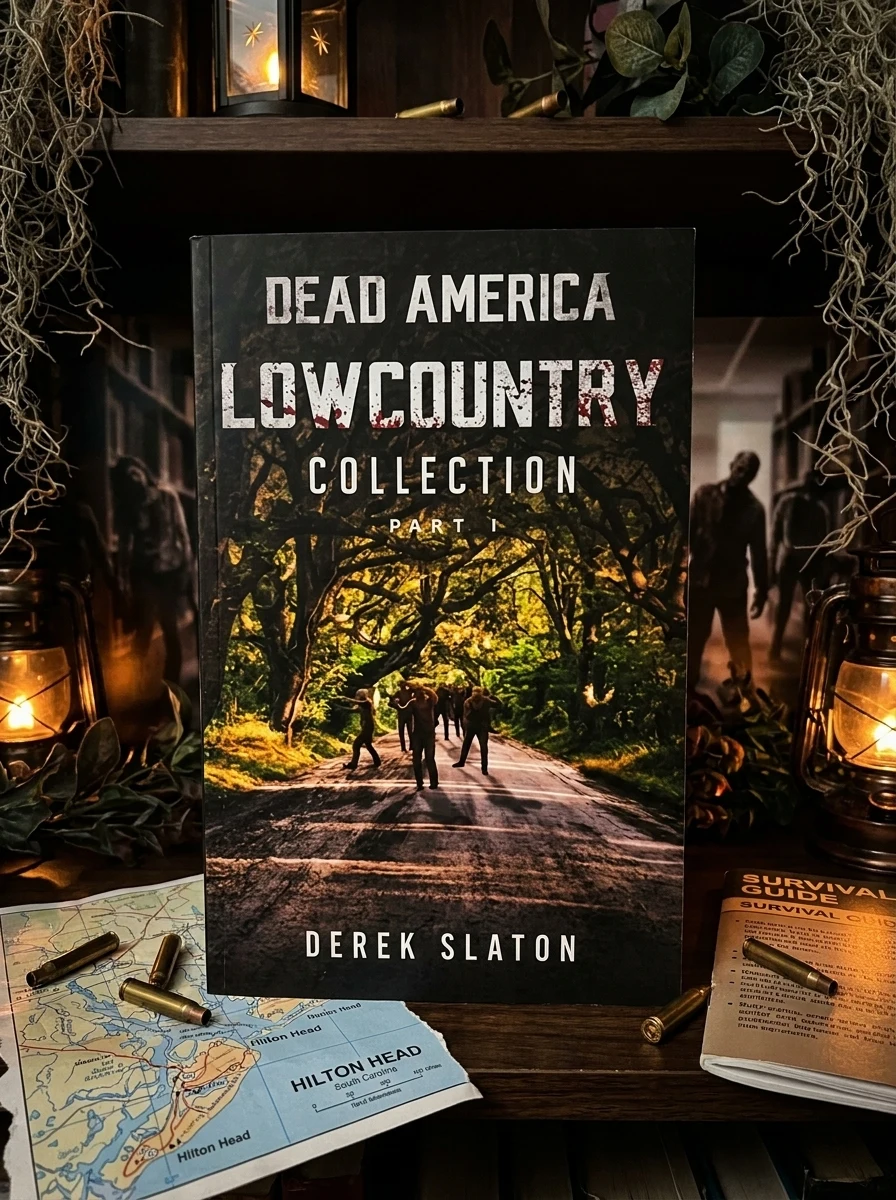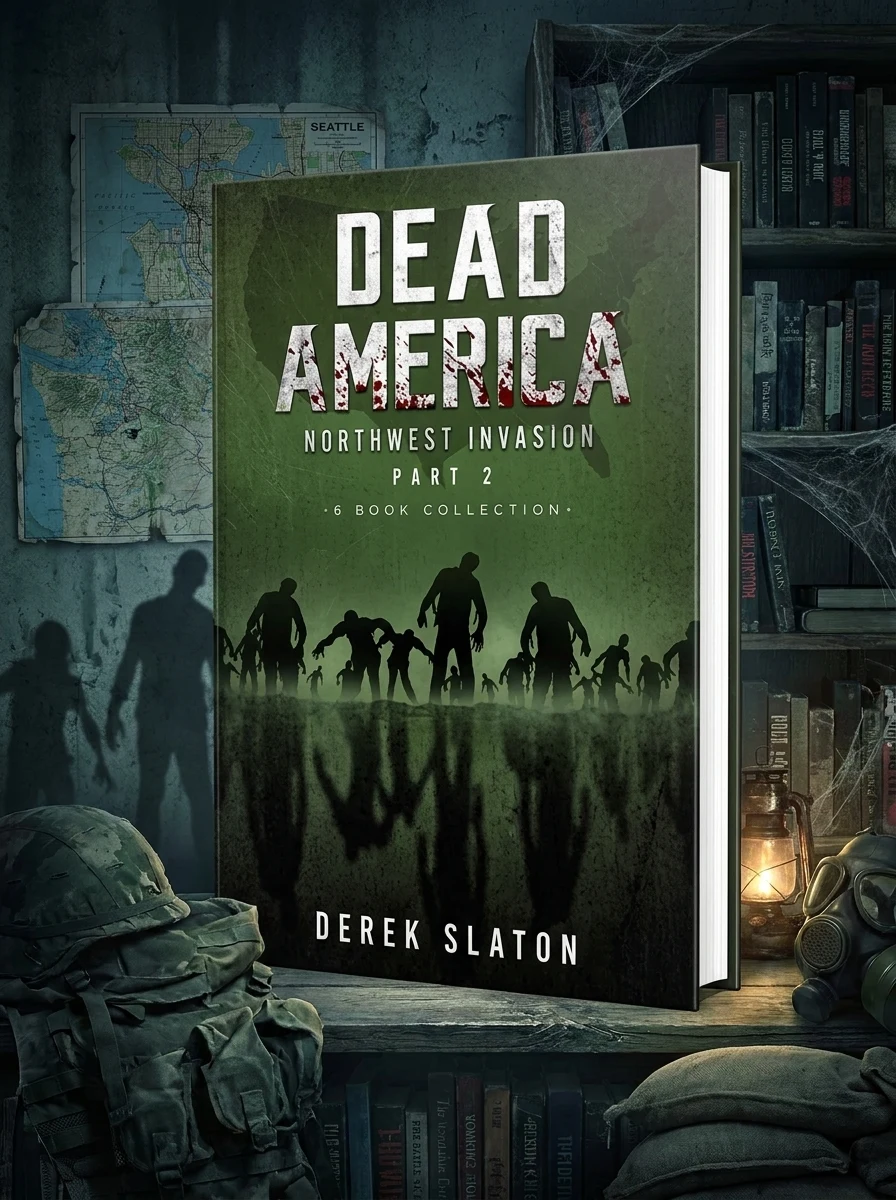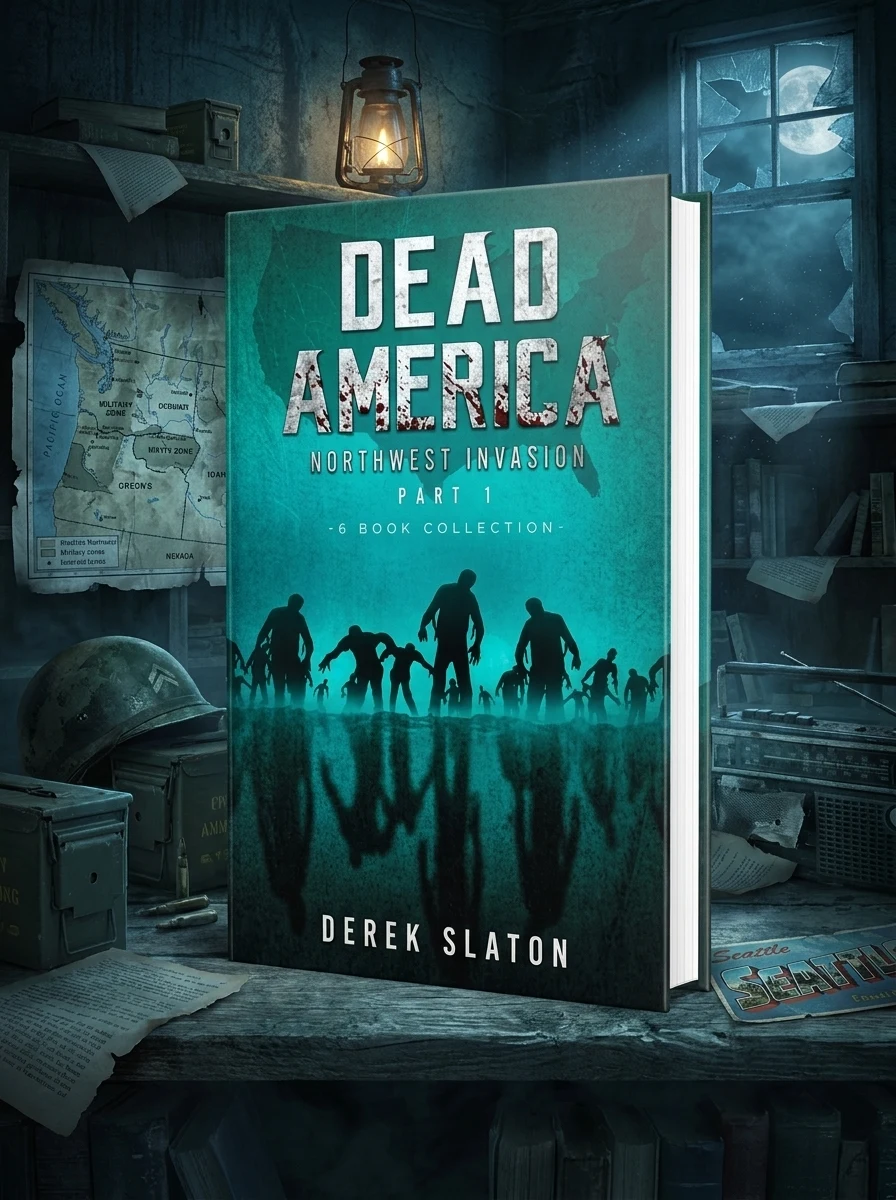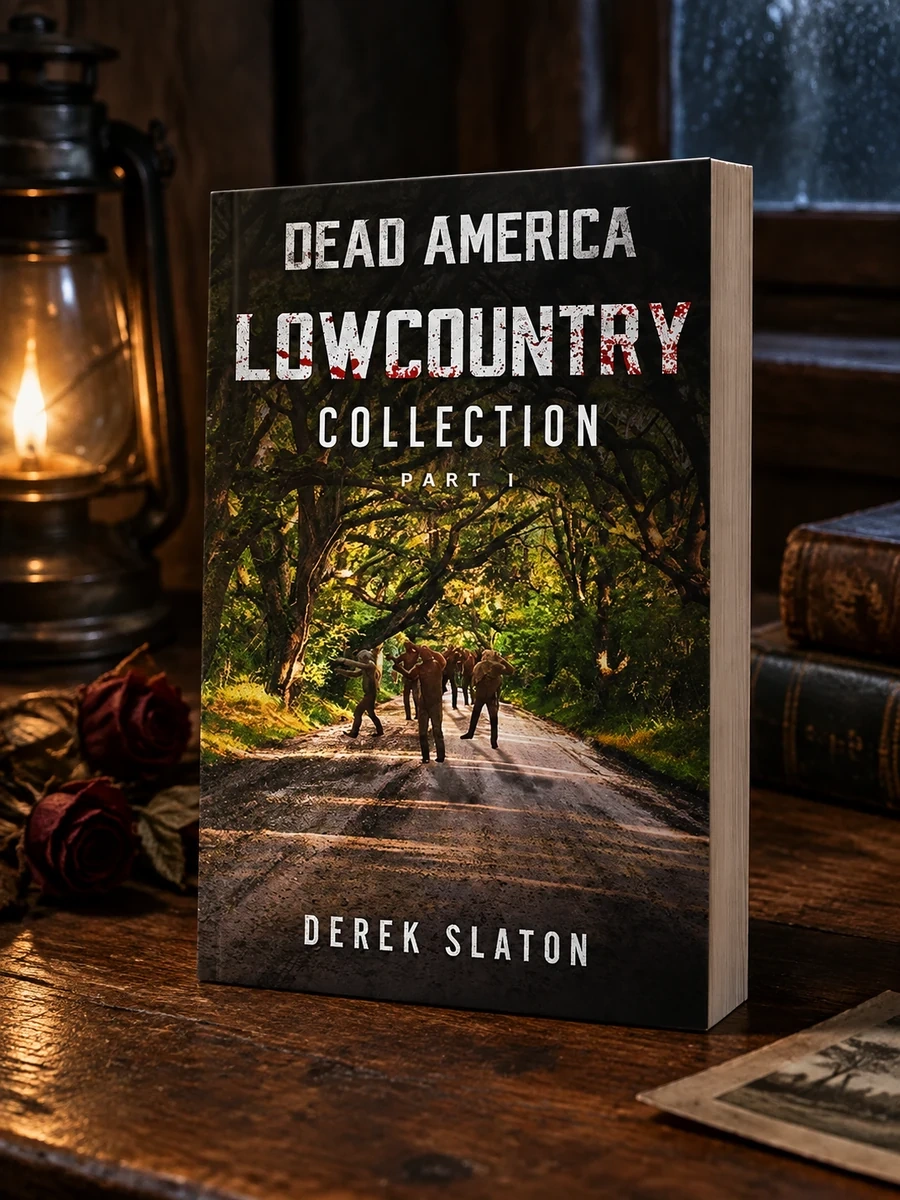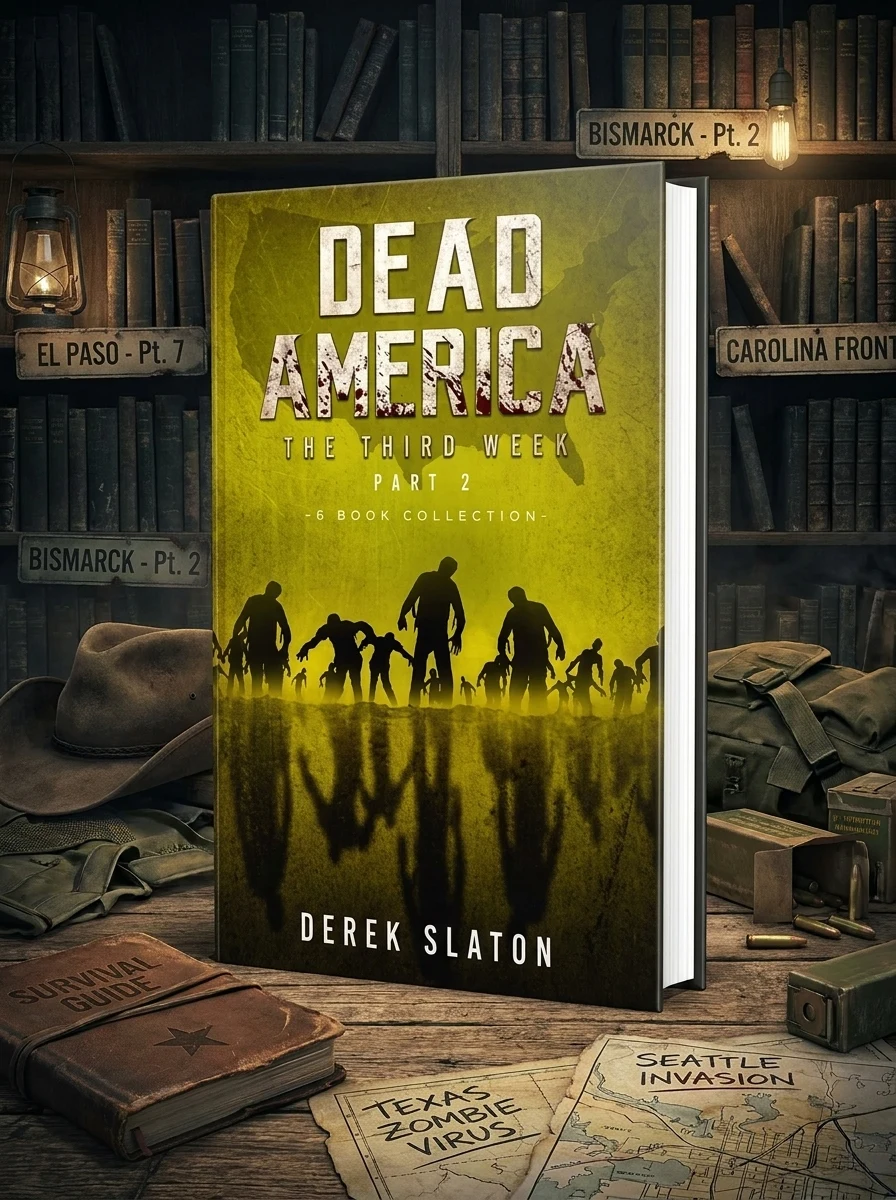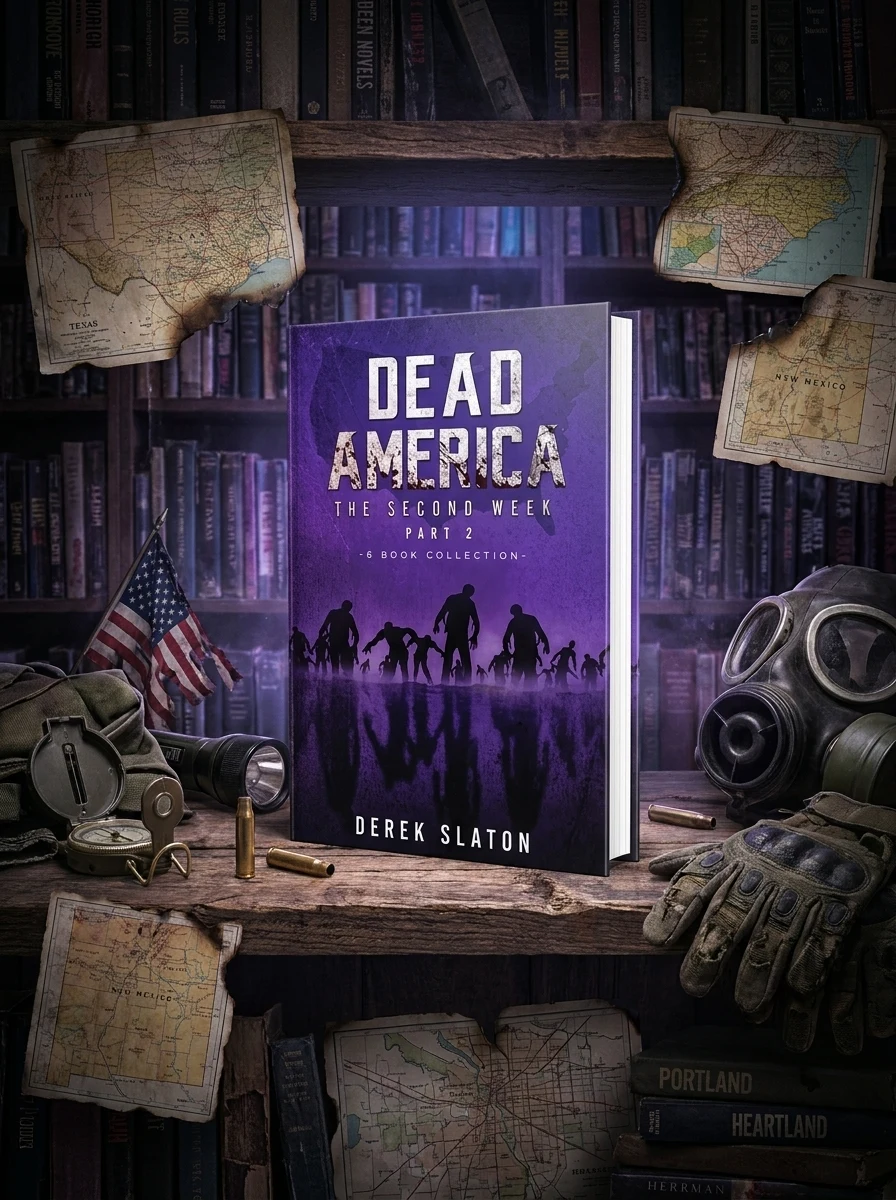
Dead America - The Second Week Part Two - 6 Book Collection
A six-part collection tracking survivors fighting zombies and rival groups across America.
Slaton structures this volume around simultaneous conflicts rather than a single protagonist. The narrative shifts between the Carolinas, El Paso, New Mexico, Portland, and Spokane. Each section addresses a specific challenge, from cartel negotiations to empire building. The Texas Zombie Virus serves as the backdrop for these localized struggles. The text does not offer a unified solution but instead shows the fragmentation of American society. Readers will find concrete details about how different groups adapt to the crisis. The pacing moves quickly between these disparate locations to maintain tension.
This 2020 publication by VGA reflects the American tradition of disaster fiction. It places the Texas Zombie Virus in a contemporary setting where regional identities clash. The work engages with themes of lawlessness and territorial control as seen in El Paso and New Mexico.


📝 Description: Dead America - The Second Week Part Two - 6 Book Collection
💎 Our verdict on Dead America - The Second Week Part Two - 6 Book Collection
📖 Why choose it
Why this book is worth reading
Readers who prefer granular, tactical depictions of societal fragmentation over broad heroic arcs will find this volume compelling. It appeals to those interested in the logistical and political realities of survival, such as cartel negotiations or territorial empire-building. The book offers a distinct perspective on how different communities adapt to the Texas Zombie Virus, focusing on concrete details of conflict rather than abstract themes. It is ideal for fans of military-style horror or geopolitical fiction who want to see how regional identities shift under extreme pressure. By avoiding a single protagonist, it allows for a broader examination of human behavior when laws dissolve.
⭐ Reader reviews
Reader rating
Slaton effectively utilizes a multi-narrative structure to depict the disintegration of American society, shifting focus between distinct geographic regions like the Carolinas and El Paso. The strength lies in its concrete details regarding survival strategies and territorial disputes, offering a gritty look at how groups adapt to crisis. While it lacks a unified protagonist, this approach successfully maintains tension through rapid pacing across disparate locations. It suits readers who enjoy post-apocalyptic fiction focused on regional conflict and the fracturing of social structures. Those seeking quiet character studies may find the combat-heavy narrative unsuitable, but fans of tactical horror will appreciate the detailed exploration of empire-building and local resistance.