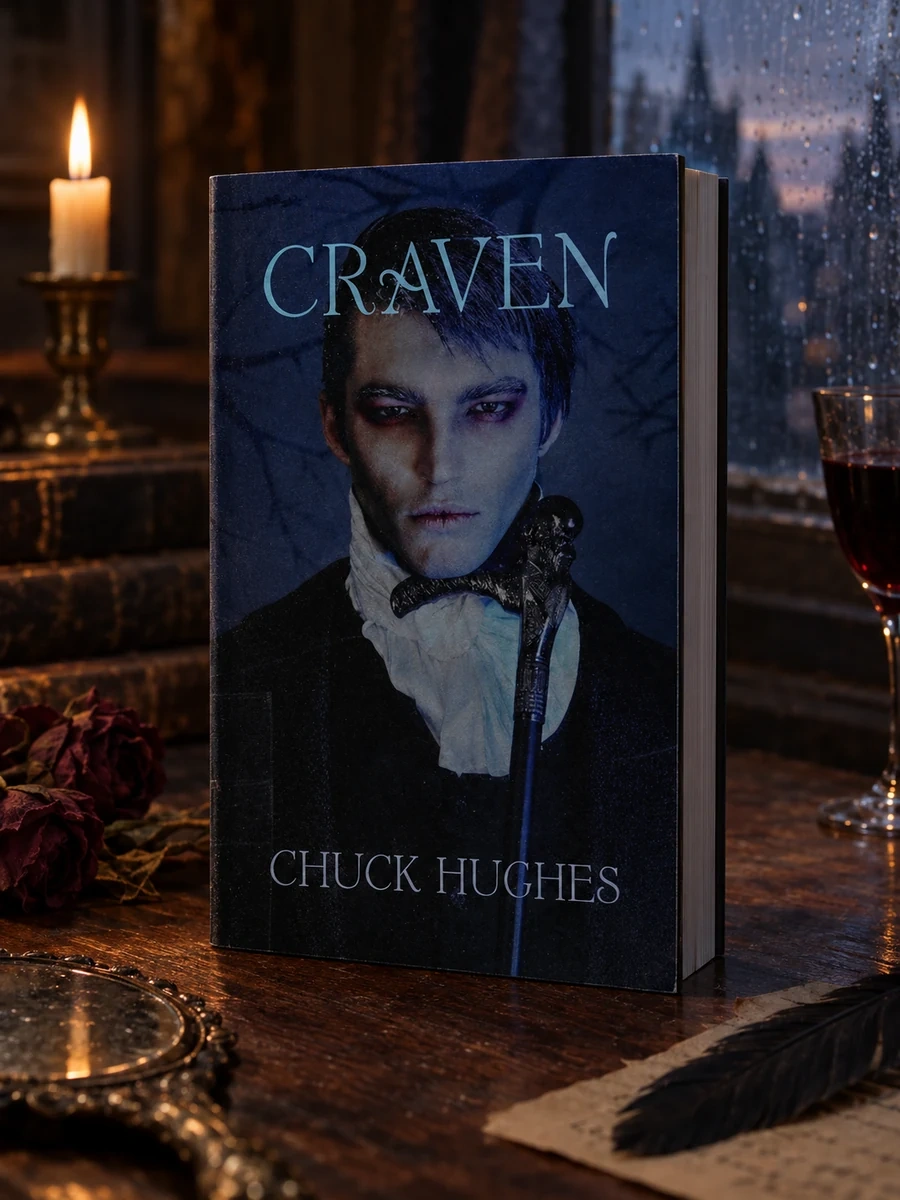

Craven
A gothic tale of a man becoming a vampire to hunt the creature that destroyed his life.
The narrative tracks Craven Arneau from village survivor to undead avenger. His quest for justice is complicated by human cruelty and supernatural manipulation. Hughes uses the figure of the vampire not merely as a monster, but as a lens to examine how trauma distorts identity. The story contrasts the innocence of his youth with the cynicism of his new existence. Key moments include his time in the monastery and his eventual transformation under Maurice Chassell’s guidance. The climax hinges on the revelation of lies by Joseph, forcing Craven to question his entire mission.
This work sits within the tradition of American gothic fiction published in the early twenty-first century. It draws on European vampire myths and historical settings like La Rochelle. The narrative blends medieval-style monastic life with supernatural horror elements common in modern retellings of classic genre tropes.


📝 Description: Craven
💎 Our verdict on Craven
📖 Why choose it
Why this book is worth reading
Readers who appreciate atmospheric, character-driven horror will find value in this exploration of trauma and identity. The narrative offers a deep dive into the psychological costs of vengeance, using the vampire mythos to examine how loss distorts the self. It appeals to those who prefer slow-burn tension and moral ambiguity over simple monster-slaying. By focusing on Craven’s internal corruption as much as his external quest, the book provides a reflective, albeit dark, experience for fans of gothic literature that prioritizes thematic depth and emotional resonance over plot speed.
⭐ Reader reviews
Reader rating
Hughes successfully employs the vampire figure as a lens for examining trauma, creating a narrative that is more introspective than visceral. The structure effectively peels back layers of deception through Craven’s flight, linking personal tragedy with mythical horror. While the absence of fast-paced action may deter some, the atmospheric prose and complex moral questions offer a rewarding experience for patience readers. The text avoids clear resolutions, demanding engagement with its themes of false accusation and loss. It stands as a solid entry in the gothic genre, prioritizing the distortion of identity over traditional horror thrills.
📖 Read on the blog
✍️ More books by this author Chuck Hughes


🏛 Books from this publisher iUniverse
You might also like
See more →
Have a question about this item?
Ask about the edition, condition, delivery or anything else — we reply by email or phone, usually within a day.
