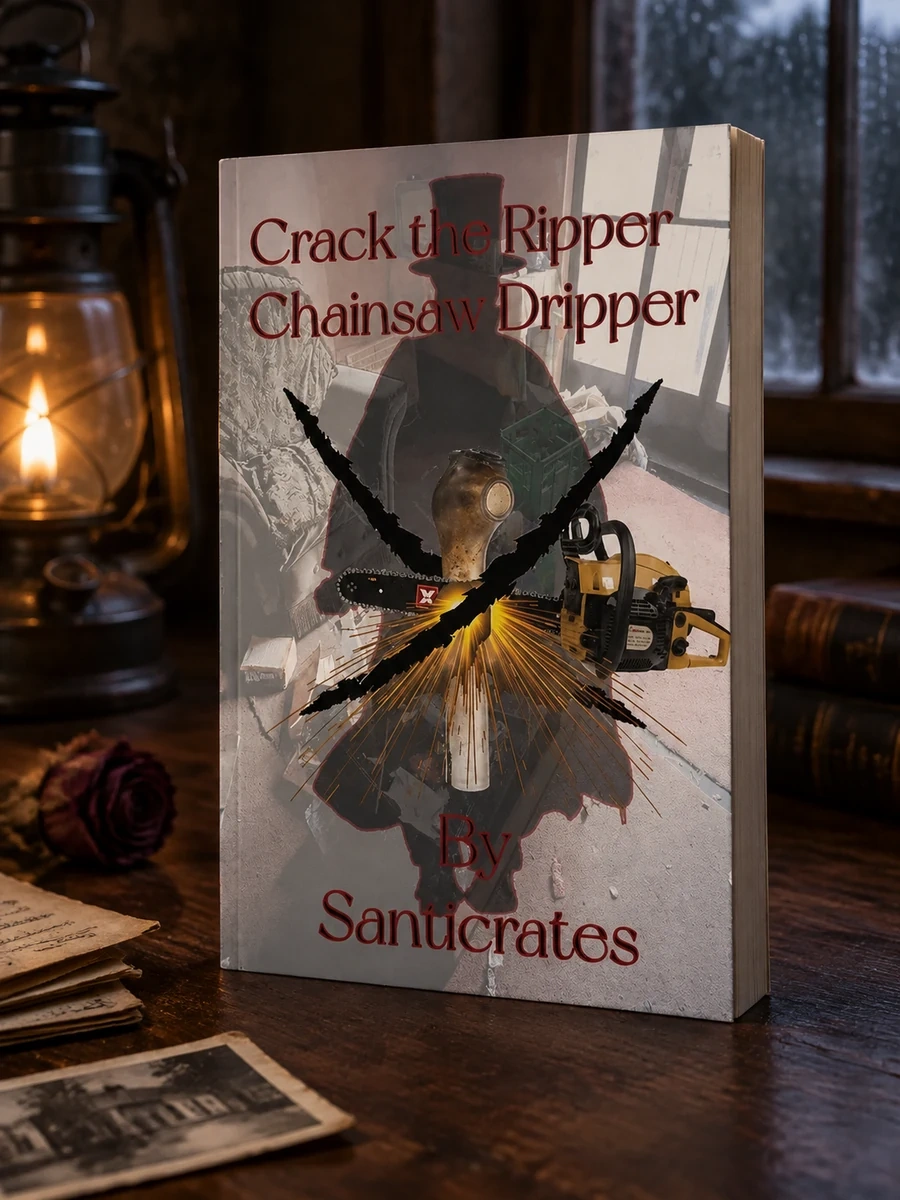
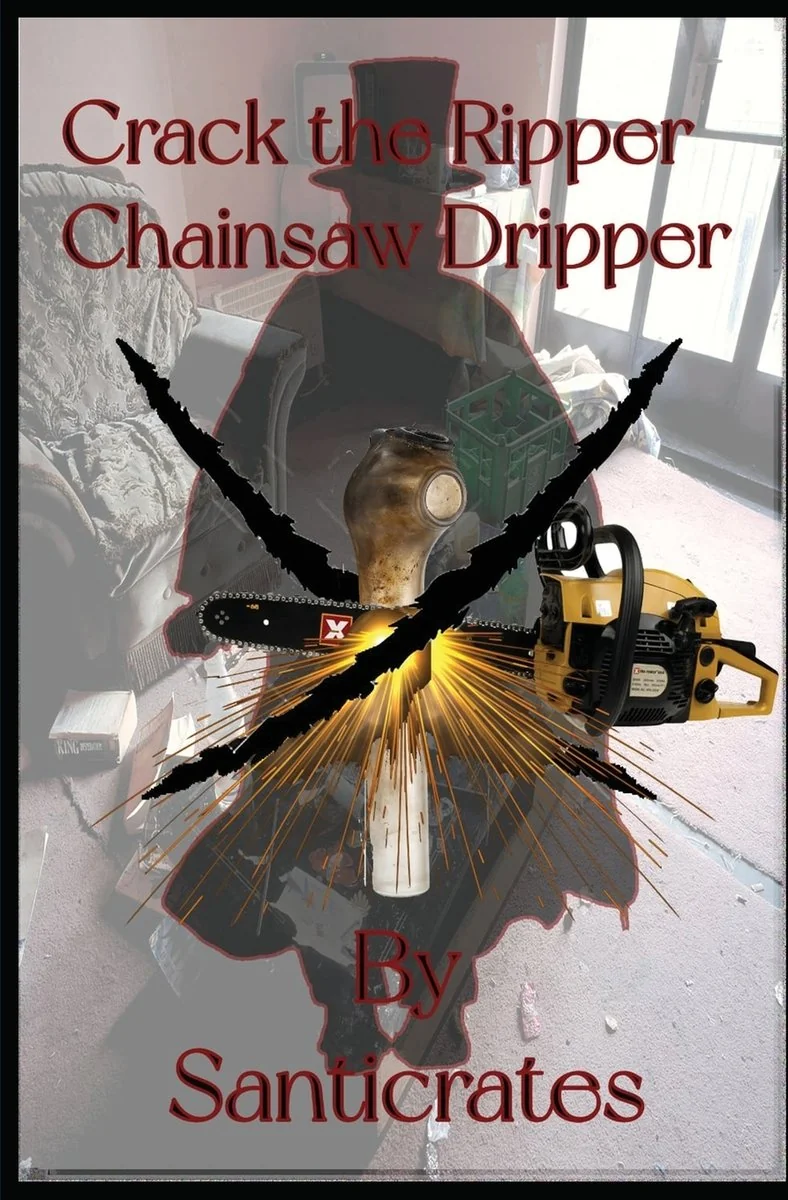
Crack the Ripper: Chainsaw Ripper
A chainsaw-wielding Jack the Ripper possesses a homeless addict in modern New York.
Santicrates reimagines the infamous killer by placing him inside a homeless crack addict navigating contemporary New York. The narrative abandons Victorian London for neon-soaked red-light districts and graffiti-covered streets. This vessel employs a roaring chainsaw rather than traditional knives, creating a distinct visual identity for the slaughter. The plot centers on the intersection of addiction and supernatural possession as various urban figures face carnage. The author draws heavily on 1980s grindhouse cinema to establish the tone and style of the violence.
The book channels the filthy, absurd, and blood-soaked excess of 1980s grindhouse cinema. It transposes a Victorian legend into modern New York City's red-light districts and crack dens. This fusion creates a unique horror landscape that blends historical infamy with contemporary urban decay.


📝 Description: Crack the Ripper: Chainsaw Ripper
💎 Our verdict on Crack the Ripper: Chainsaw Ripper
📖 Why choose it
Why this book is worth reading
Readers seeking a visceral experience rooted in grindhouse aesthetics will find this title aligns with their interests. It offers a distinct visual identity through the fusion of classic horror icons with modern urban settings, specifically focusing on neon-soaked red-light districts and graffiti-covered streets. The narrative explores the intersection of addiction and supernatural possession, providing a gritty look at how the legendary butcher adapts to contemporary New York. This book suits fans of extreme horror who appreciate a direct connection to 1980s cinematic excess and urban decay narratives, delivering aggressive tone and carnage without drifting into other genres.
⭐ Reader reviews
Reader rating
Santicrates delivers a bold reimagining that abandons Victorian London for the harsh realities of modern New York. By placing Jack the Ripper inside a homeless crack addict wielding a roaring chainsaw, the author creates a unique visual identity for the slaughter. The narrative thrives on the cultural fusion of supernatural possession and urban decay, capturing the absurdity of 1980s grindhouse cinema. While those preferring subtle psychological horror or classic gothic atmospheres may find the tone too aggressive, the book excels in its commitment to extreme horror aesthetics. It is a focused exploration of addiction and violence that appeals directly to enthusiasts of blood-soaked excess and cinematic tributes to urban nightmares.
You might also like
See more →


Have a question about this item?
Ask about the edition, condition, delivery or anything else — we reply by email or phone, usually within a day.
