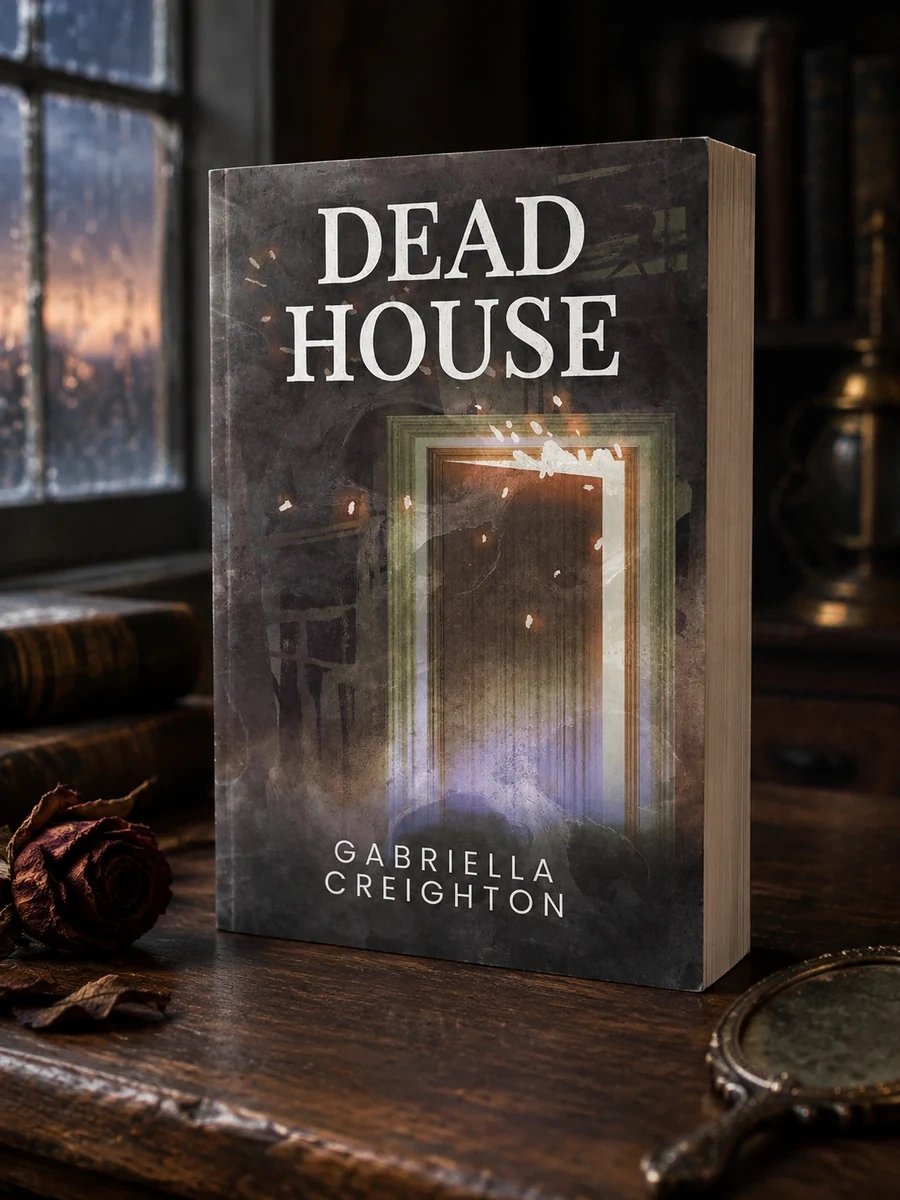
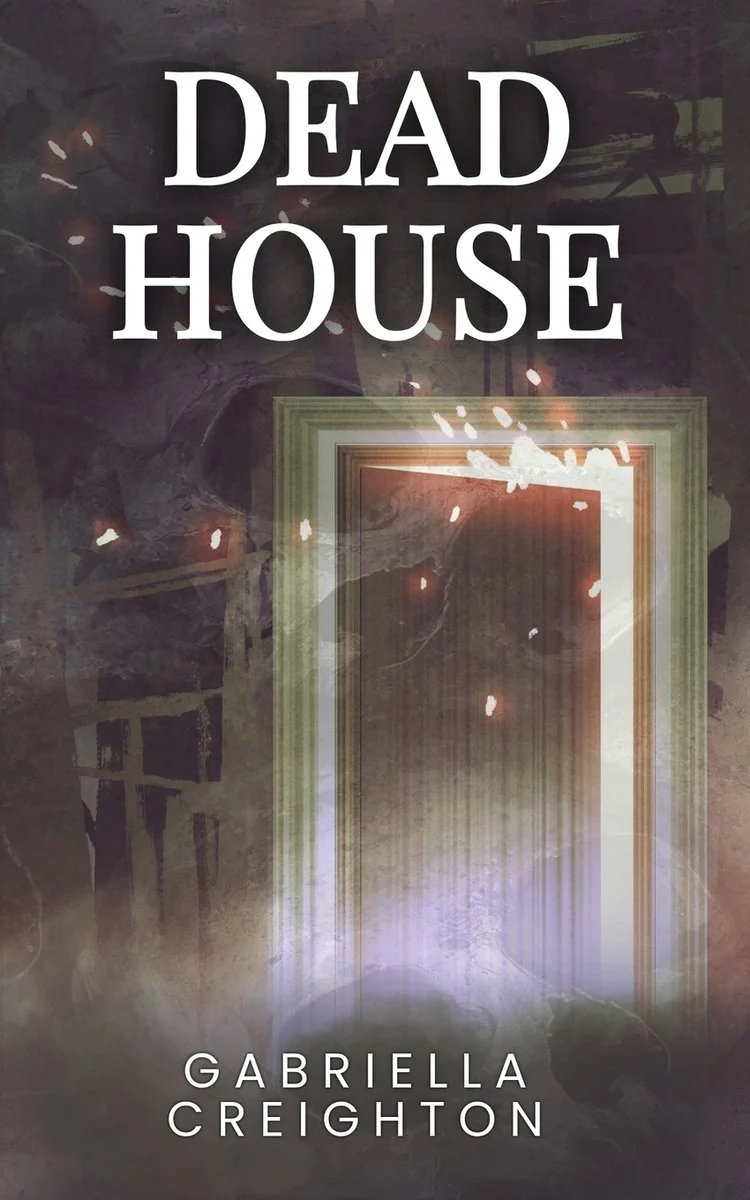
Dead House
A woman finds an impossible house in her rental that feeds on her grief.
Riley Cross moves to Weaver Street for peace but encounters a structural anomaly behind a pantry door. The resulting corridor expands indefinitely, changing its layout based on her presence. Creighton employs a diary found within the house to hint at previous victims who failed to leave. The narrative examines how small-town indifference allows such horrors to persist unnoticed. As Riley ventures further, the walls react to her emotional state, creating a feedback loop of guilt and fear. The story does not offer easy escapes or clear resolutions, instead focusing on the psychological toll of confronting one's past in a space that remembers everything.
The text situates the horror within a small town that pretends not to notice supernatural events. It draws on gothic fiction traditions regarding haunted houses and psychological descent. The narrative focuses on modern isolation and the way grief builds physical spaces when unobserved by society.


📝 Description: Dead House
💎 Our verdict on Dead House
📖 Why choose it
Why this book is worth reading
Readers who appreciate slow-burn atmospheric horror and character-driven psychological tension will find this narrative deeply resonant. It appeals to those interested in stories where the setting acts as a mirror for internal trauma, offering a chilling exploration of guilt and memory. The book is ideal for audiences who enjoy labyrinthe plots constructed through shifting rooms and deceptive details rather than fast-paced action or traditional jump scares. It offers a quiet, creeping realization that doors open both ways, inviting the protagonist home while demanding answers she cannot unhear. For those willing to sit with discomfort, it provides a profound examination of how grief constructs invisible prisons.
⭐ Reader reviews
Reader rating
Creighton effectively merges gothic traditions with psychological horror, creating a chilling narrative where the house feeds on grief rather than blood. The structural anomaly behind the pantry door serves as a brilliant metaphor for unresolved trauma, expanding indefinitely to reflect Riley’s internal state. By utilizing a diary of previous victims, the author hints at small-town indifference without resorting to cliché. The work excels in its focus on the psychological toll of confronting one's past in a space that remembers everything. It suits readers seeking atmospheric depth and emotional weight over action, delivering a tale where the walls react to emotional states, creating a feedback loop of guilt and fear that lingers long after the final page.