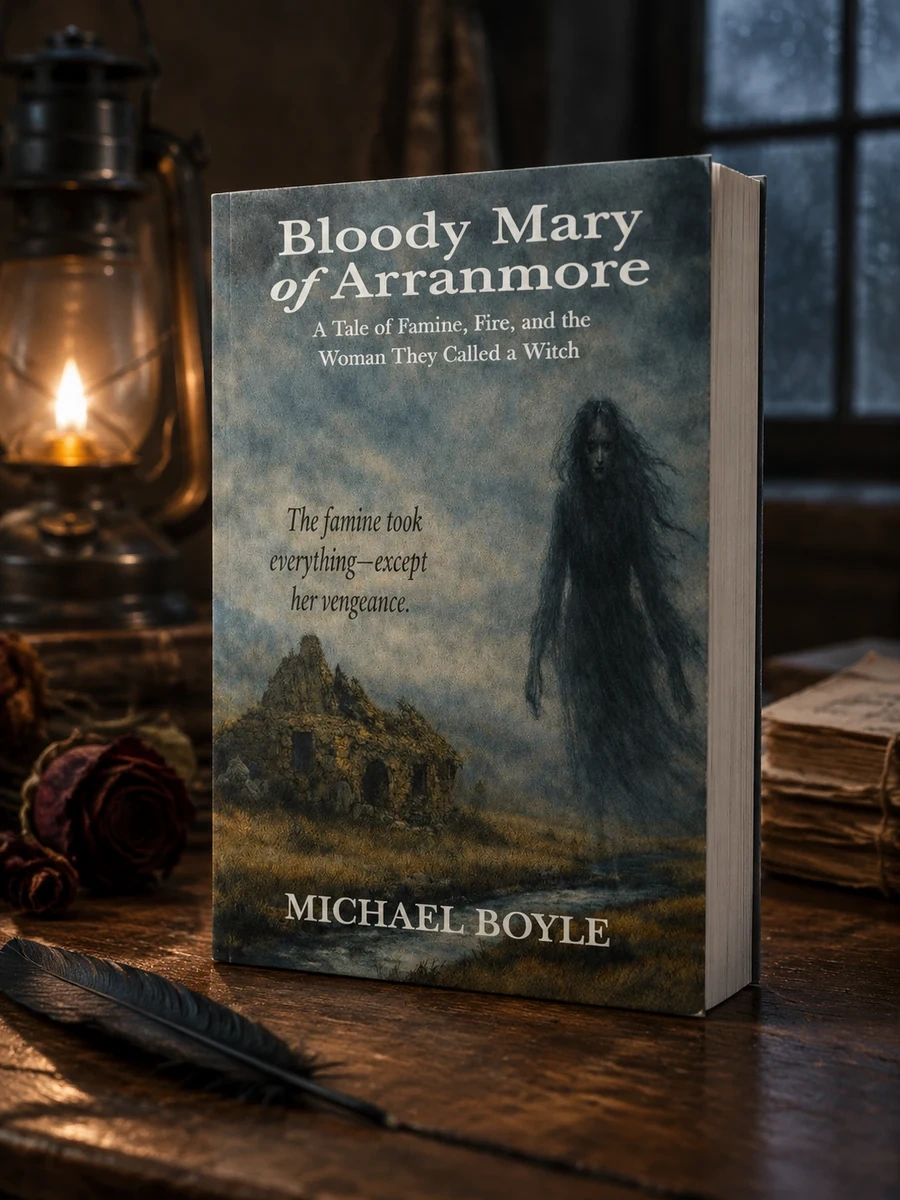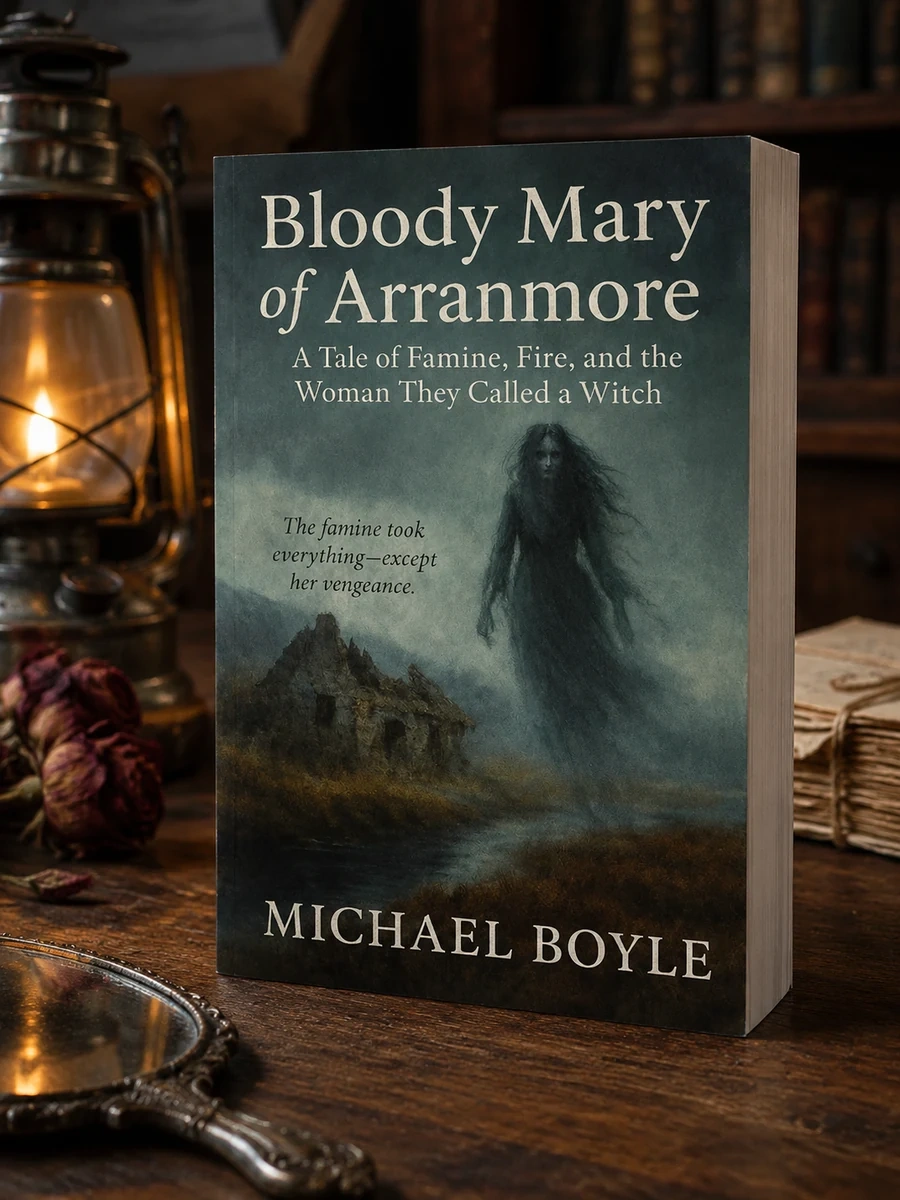
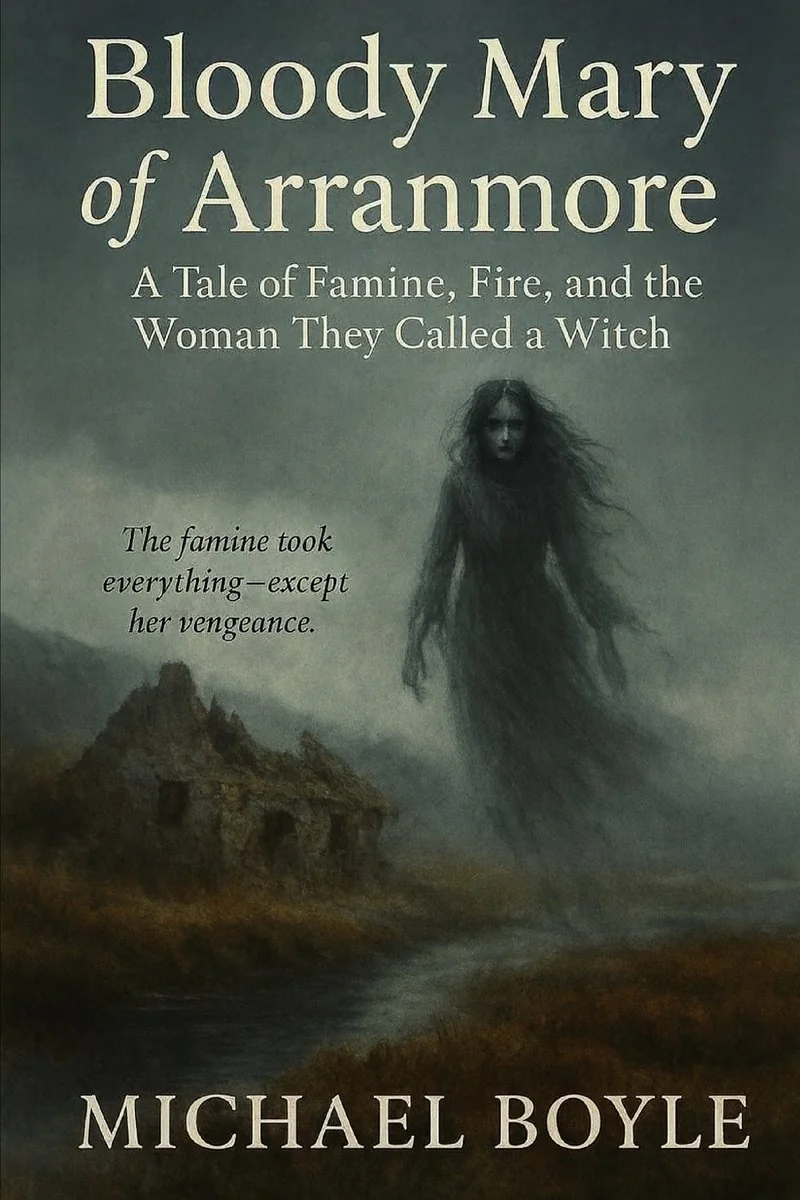
Bloody Mary of Arranmore: A Tale of Famine, Fire, and the Woman They Called a Witch
A historical horror tale of a famine victim who becomes a vengeful spirit on Arranmore Island.
This work examines the transformation of Mary Gallagher from a desperate teenager into a feared entity. Boyle utilizes family archives to detail her punishment for stealing food during the Great Famine. The narrative tracks her rise from death as a figure haunting those who condemned her. It covers the period of starvation on Arranmore Island and the local belief in banshees. The text presents Mary not as a ghost, but as a physical presence seeking justice. Readers will find a story that blends factual famine history with gothic legend. The author avoids romanticizing the violence, instead focusing on the brutal logic of survival and retribution. The result is a chilling account of how community fear can fuel supernatural myth.
The story is set during the Great Famine on Arranmore Island, drawing on Irish traditions of banshees and witchcraft. It reflects the historical period when starvation led to social breakdown and supernatural beliefs.


📝 Description: Bloody Mary of Arranmore: A Tale of Famine, Fire, and the Woman They Called a Witch
💎 Our verdict on Bloody Mary of Arranmore: A Tale of Famine, Fire, and the Woman They Called a Witch
📖 Why choose it
Why this book is worth reading
Readers seeking a visceral blend of historical gravity and supernatural dread will find this title compelling. It appeals to those interested in the intersection of famine history and gothic legend, offering a narrative that avoids romanticizing violence while focusing on the brutal logic of survival. The book is ideal for fans of psychological horror rooted in specific cultural contexts, particularly those fascinated by tales of women condemned by their communities. It provides a chilling exploration of how fear and hunger can transform ordinary individuals into monsters, making it suitable for audiences who appreciate grounded, atmospheric horror over light entertainment or purely academic analysis.
⭐ Reader reviews
Reader rating
Boyle effectively utilizes family archives to construct a narrative that bridges the gap between documented famine history and local supernatural myth. The text succeeds in presenting Mary not merely as a ghost but as a physical presence, maintaining an ambiguous boundary between spirit and flesh that enhances the terror. By focusing on the specific tragedy of one woman and the community that condemned her, the author highlights how desperation fuels retribution. This approach avoids academic detachment while refusing to offer easy comfort, resulting in a chilling account of communal fear. It is best suited for readers who enjoy gothic horror rooted in Irish history and tales of women labeled as witches due to extreme circumstances.