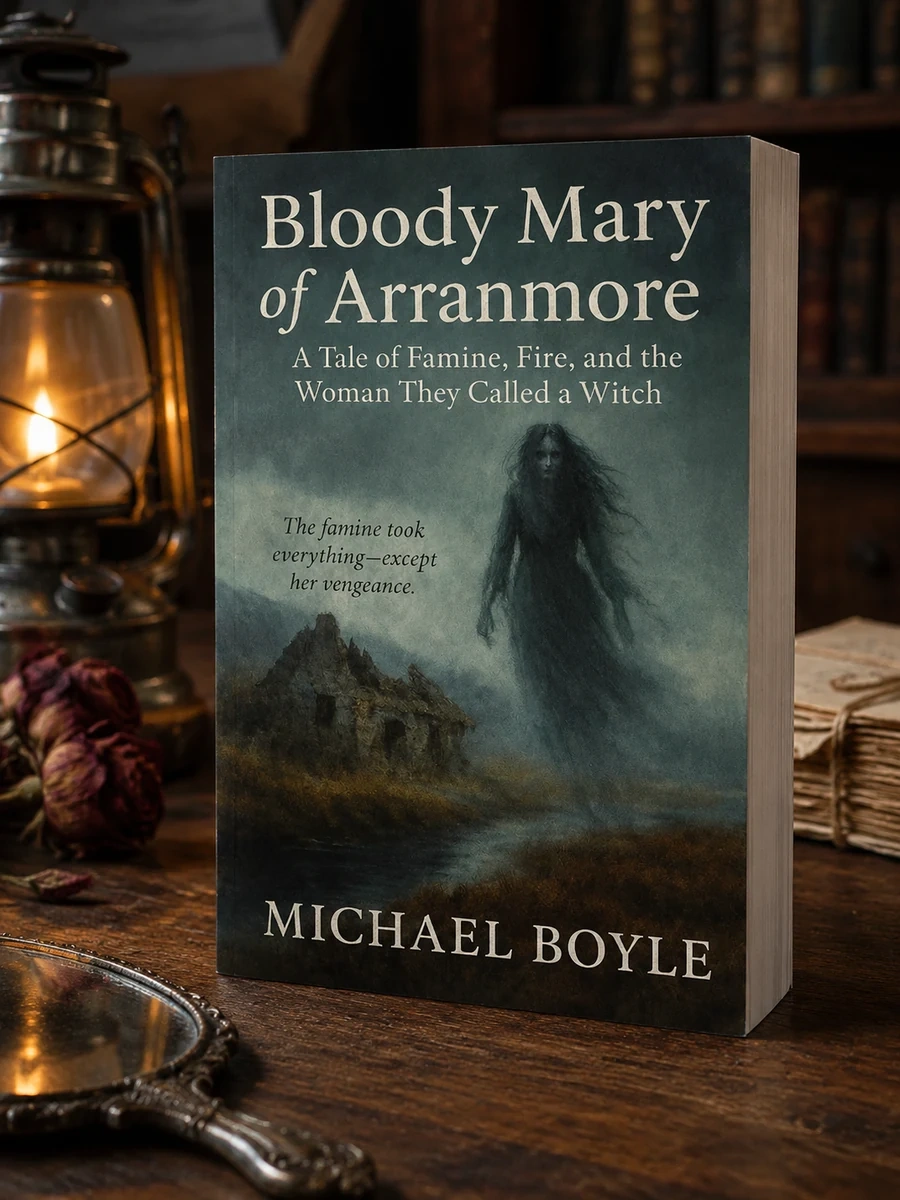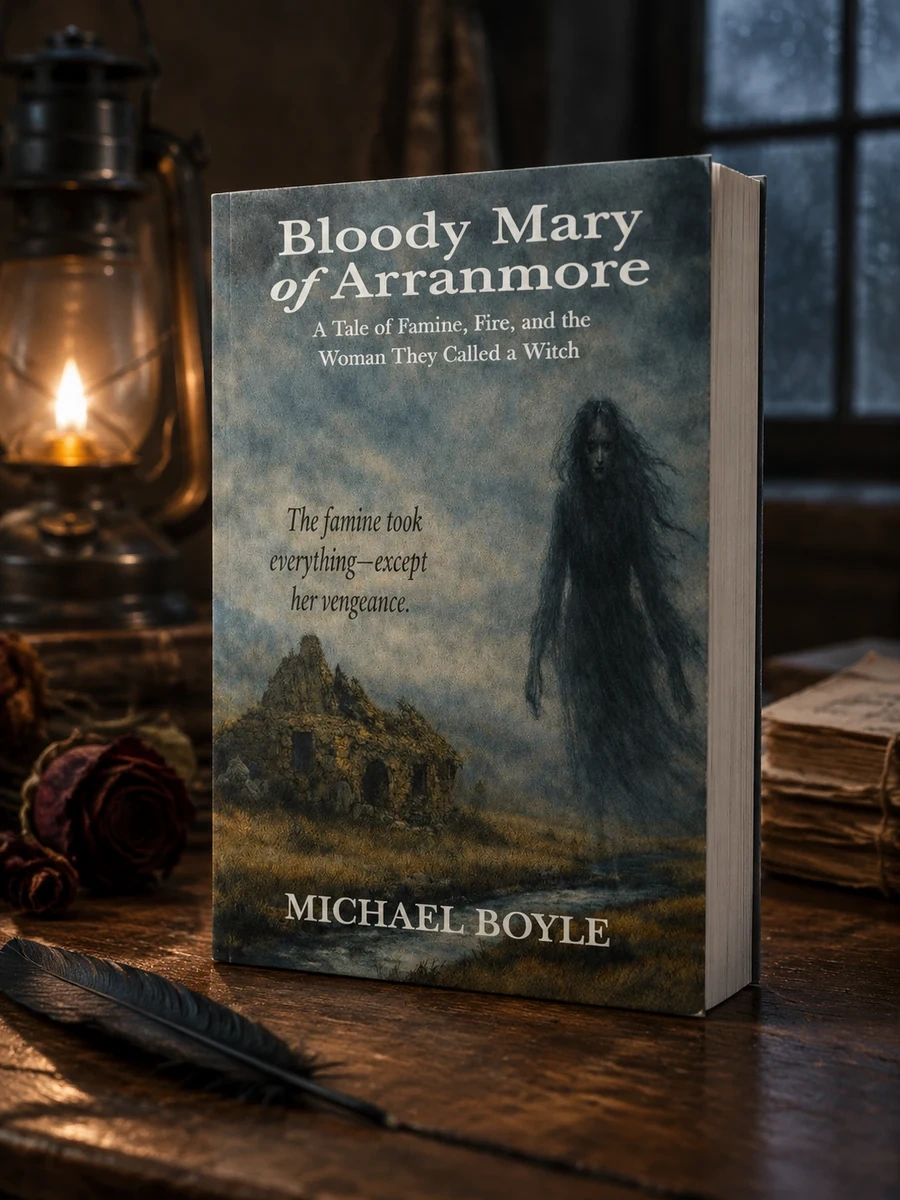
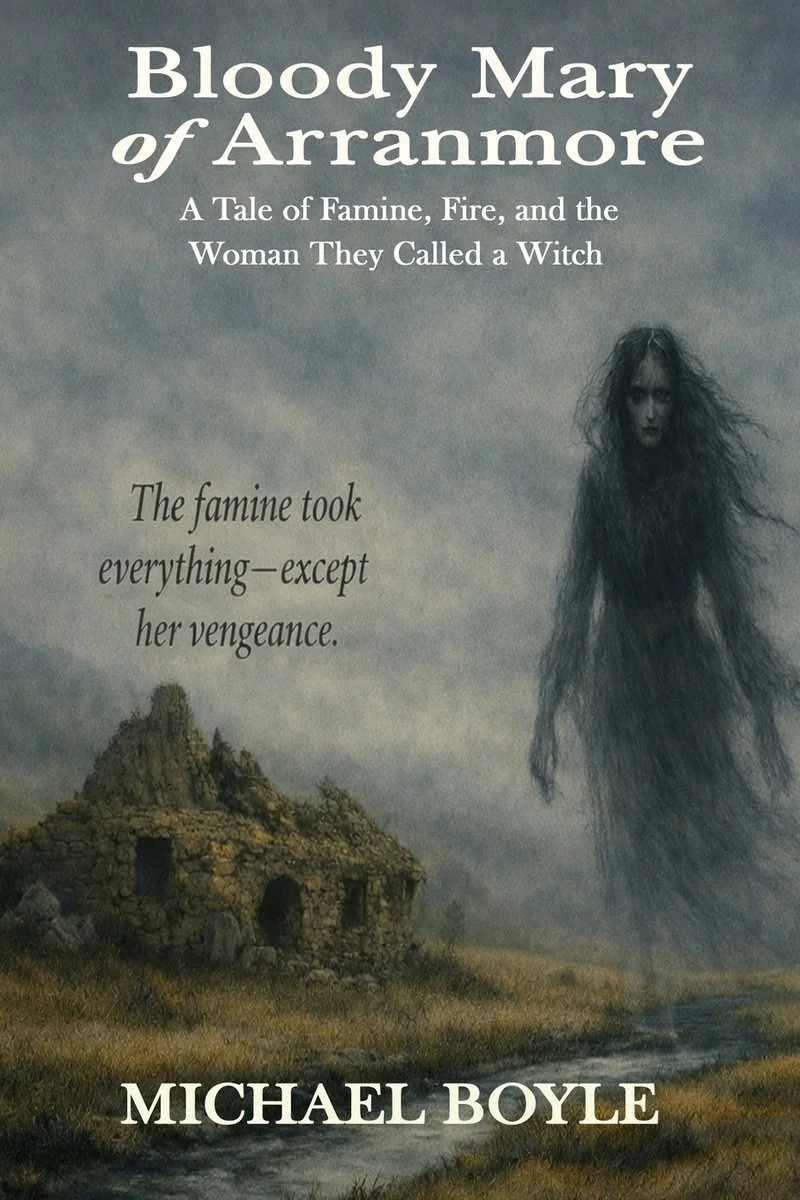
Bloody Mary of Arranmore
A historical horror tale of a famine victim returning as a vengeful spirit on Arranmore Island.
Michael Boyle explores the aftermath of extreme community violence during the Irish famine. The narrative focuses on Mary Gallagher, who faces brutal punishment for stealing food. Instead of remaining silent, she returns from death to haunt her accusers. This book examines how trauma can manifest as a supernatural presence in isolated communities. It traces the transformation of a grieving girl into a feared entity that stalks the bogs and ruins. The author uses this specific case study to illustrate the long shadow of the Great Hunger on local legends.
The story is set in Ireland during 1846, specifically on the island of Arranmore. It draws directly from the buried history of the Great Hunger and incorporates family lore to reconstruct the events surrounding Mary Gallagher's life and death.


📝 Description: Bloody Mary of Arranmore
💎 Our verdict on Bloody Mary of Arranmore
📖 Why choose it
Why this book is worth reading
Readers fascinated by the intersection of historical tragedy and supernatural retribution will find this narrative compelling. It appeals to those interested in how trauma manifests within isolated communities, transforming grief into a terrifying force. The book offers a deep dive into the psychological aftermath of extreme violence during the Irish famine. Those who appreciate stories where the past refuses to remain buried will engage with Mary Gallagher’s transformation from victim to specter. It is ideal for audiences seeking horror rooted in specific cultural history rather than generic scares. The text provides a fierce examination of mercy and betrayal, making it suitable for readers who enjoy complex character studies within a Gothic framework.
⭐ Reader reviews
Reader rating
Boyle crafts a chilling account of survival and vengeance, utilizing family lore to breathe life into the buried history of Arranmore Island. The narrative effectively traces Mary Gallagher’s evolution from a starving teenager into a feared entity that stalks the bogs. The tone is appropriately bleak, emphasizing how community brutality can forge a curse that demands fear rather than pity. This book suits readers who prefer supernatural fiction grounded in specific Irish history and gothic folklore. It avoids lighthearted tropes, focusing instead on the long shadow of the Great Hunger. The author’s use of historical context elevates the horror, making the supernatural elements feel earned and deeply disturbing for those willing to engage with such heavy themes.