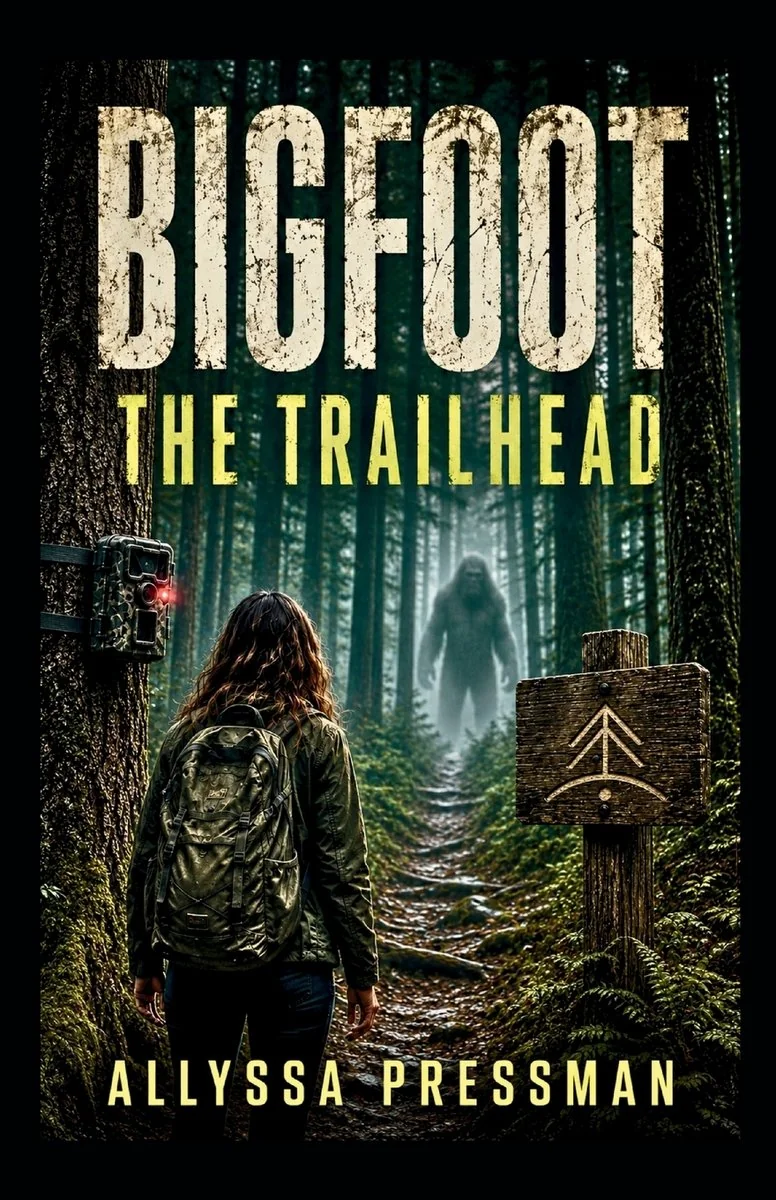
BIGFOOT - Trailhead: An Appalachian Sasquatch Encounter Novel
A sister searches for answers in the woods, finding a protective Sasquatch instead.
The narrative centers on Leanna’s expedition into Colter’s Gap following her sister Brooke’s disappearance. While official channels blame exposure, physical evidence points to something else. The group encounters a towering apex predator that mimics voices and watches through technology. The story shifts from a standard survival thriller to a study of miscommunication between humans and a sentient protector. The tension arises from the burning valley setting and the realization that the creature’s actions are defensive. This approach challenges the reader to view the myth through a new ethical framework.
This work engages with Appalachian Sasquatch legends and American supernatural fiction traditions. It draws on the trope of the missing person in remote wilderness settings. The narrative recontextualizes the classic Bigfoot myth by presenting the creature as a conscious entity rather than a beast.


📝 Description: BIGFOOT - Trailhead: An Appalachian Sasquatch Encounter Novel
💎 Our verdict on BIGFOOT - Trailhead: An Appalachian Sasquatch Encounter Novel
📖 Why choose it
Why this book is worth reading
Readers who enjoy supernatural fiction that subverts classic legends will find this narrative compelling. It appeals to those interested in Appalachian folklore and the psychological tension of miscommunication between humans and sentient entities. Those seeking a relentless experience where the threat is intelligent and protective rather than purely predatory will appreciate the ethical framework. However, readers expecting traditional monster hunts or straightforward horror tropes may find the perspective shift disorienting. The book offers a fresh look at the Sasquatch myth through a lens of defensive action and misunderstood motives.
⭐ Reader reviews
Reader rating
Pressman crafts a relentless experience that shifts the narrative from survival thriller to a study of miscommunication. The tension arises effectively from the burning valley setting and the realization that the apex predator acts as a desperate protector. By having the creature mimic voices and watch through technology, the author builds psychological dread. This approach challenges readers to view the myth through a new ethical framework. While the perspective shift may disorient fans of straightforward horror tropes, it succeeds in creating a unique atmosphere. The novel suits those interested in Appalachian folklore and complex moral dilemmas rather than simple monster hunting.