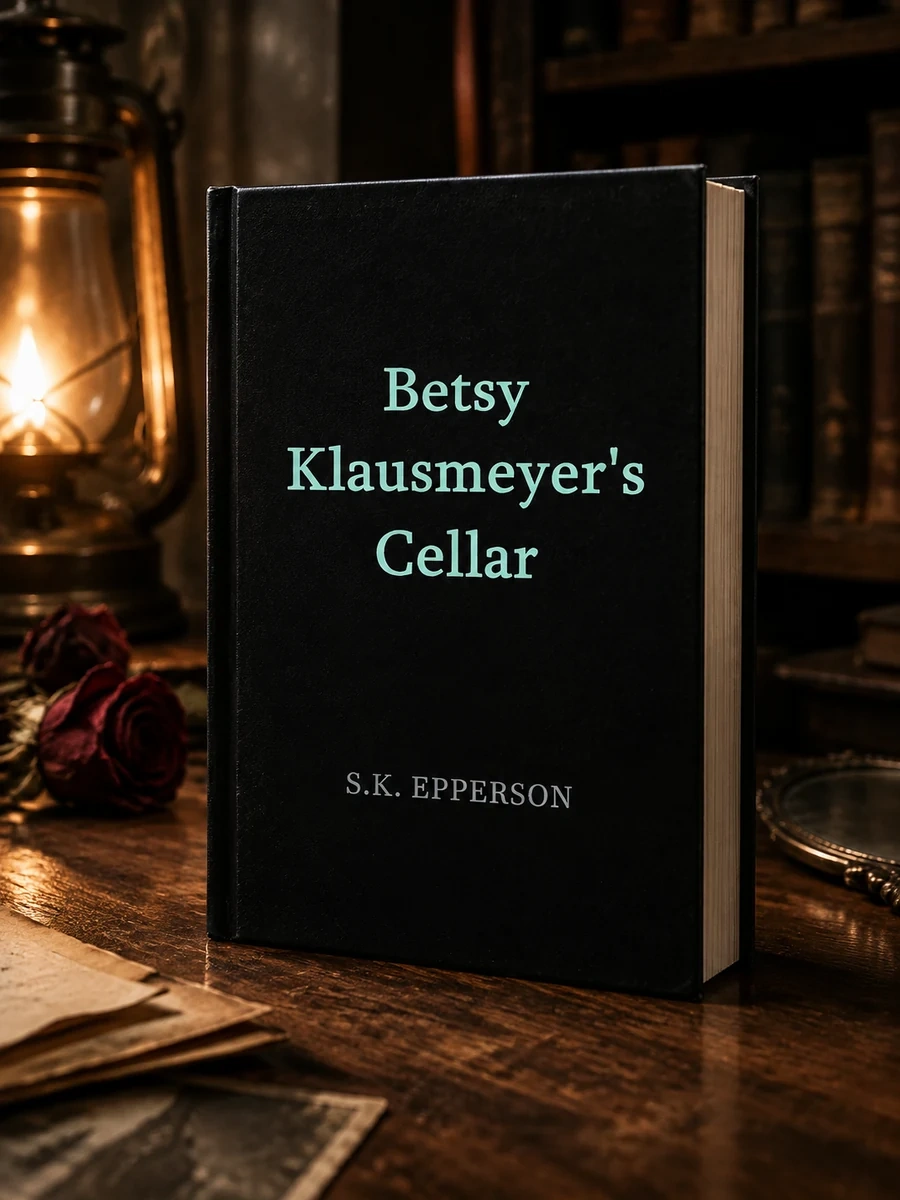

Betsy Klausmeyer's Cellar
A father's hidden past collides with a girlfriend's trauma in this supernatural mystery.
This story examines how unresolved childhood events continue to impact adult relationships. The tax attorney’s reaction to a simple visual cue reveals a deep, buried secret that threatens his current life. His son’s intervention brings the girlfriend into the fold, creating a shared mission driven by mutual suspicion and fear. The narrative explores the connection between their respective traumas, suggesting that the father’s past actions are directly linked to the girl’s family history. Epperson uses this dual perspective to build suspense around the cellar, which serves as the physical and metaphorical site of the original crime. The plot moves forward through the characters’ determination to face what they have avoided for years.
Published in 2017 by Independently Published, this work sits within the contemporary independent horror market. It targets American readers who enjoy gothic fiction and supernatural narratives that blend psychological tension with traditional horror elements.


📝 Description: Betsy Klausmeyer's Cellar
💎 Our verdict on Betsy Klausmeyer's Cellar
📖 Why choose it
Why this book is worth reading
Readers interested in the intersection of supernatural mystery and deep psychological trauma will find this narrative compelling. It appeals to those who enjoy exploring how unresolved childhood events shape adult relationships and identities. The story offers a tense examination of mutual suspicion and fear as characters confront their pasts. By focusing on the difficult pursuit of truth rather than easy resolutions, it provides a heavy, atmospheric experience for fans of gothic fiction. Those seeking lighthearted entertainment should look elsewhere, but this book rewards patients with a suspenseful journey into the metaphorical cellar of buried secrets and familial connections.
⭐ Reader reviews
Reader rating
Epperson constructs a tense narrative where a visual cue triggers a father’s repressed memories, linking his past to his girlfriend’s family trauma. The dual perspective effectively builds suspense around the cellar as a site of original crime. While the tone is heavy and avoids easy resolutions, it succeeds in examining how hidden histories impact present lives. This book suits readers who appreciate psychological horror and gothic traditions that delve into the lasting effects of early trauma. It is not for those seeking quick thrills but offers a profound look at the intersection of fear, suspicion, and the relentless pursuit of truth within a family dynamic.