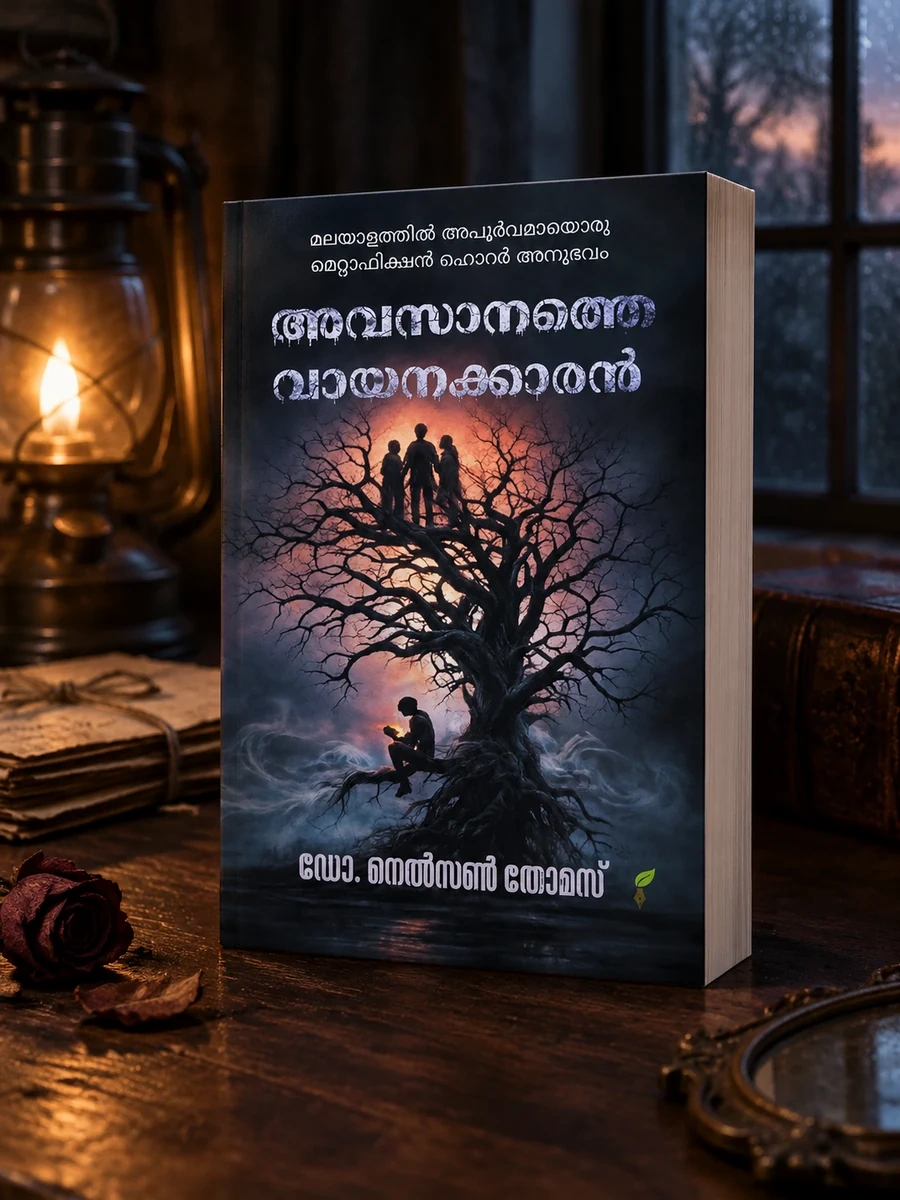
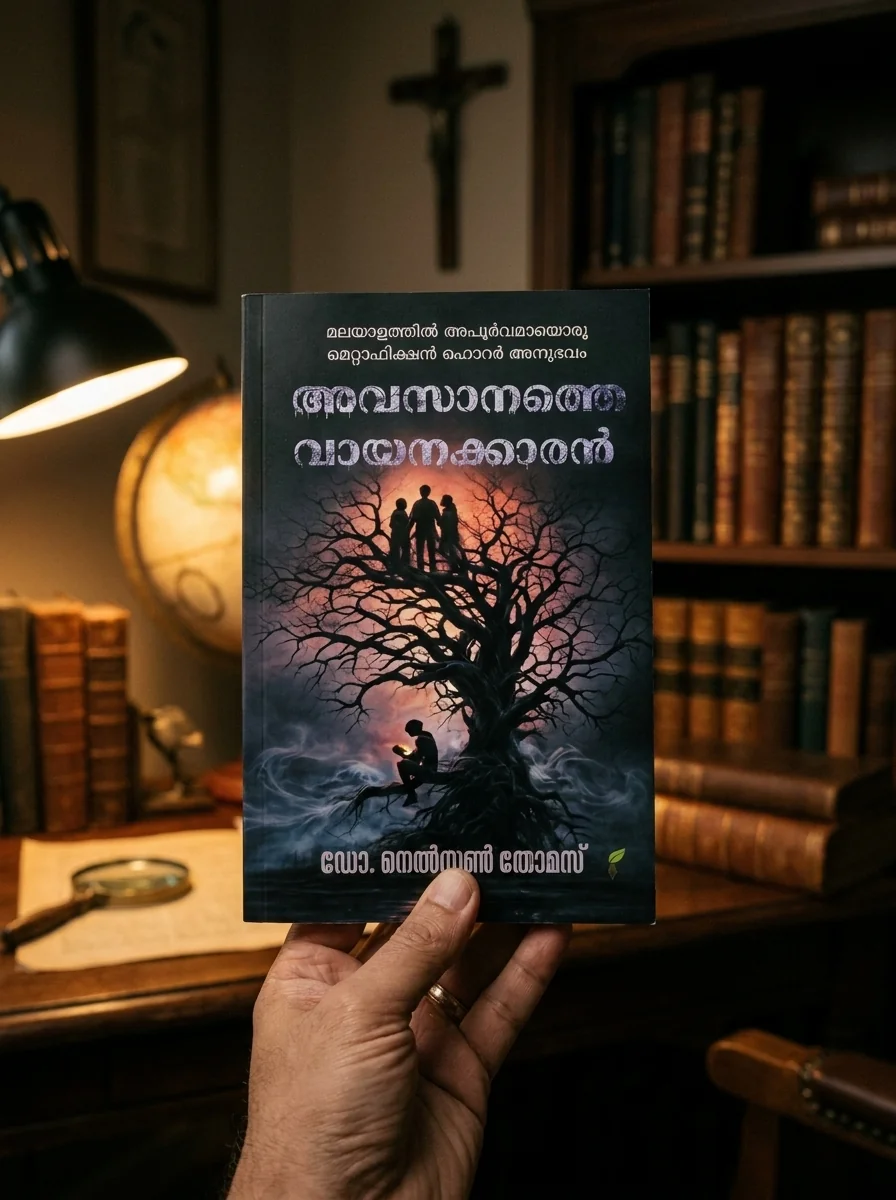
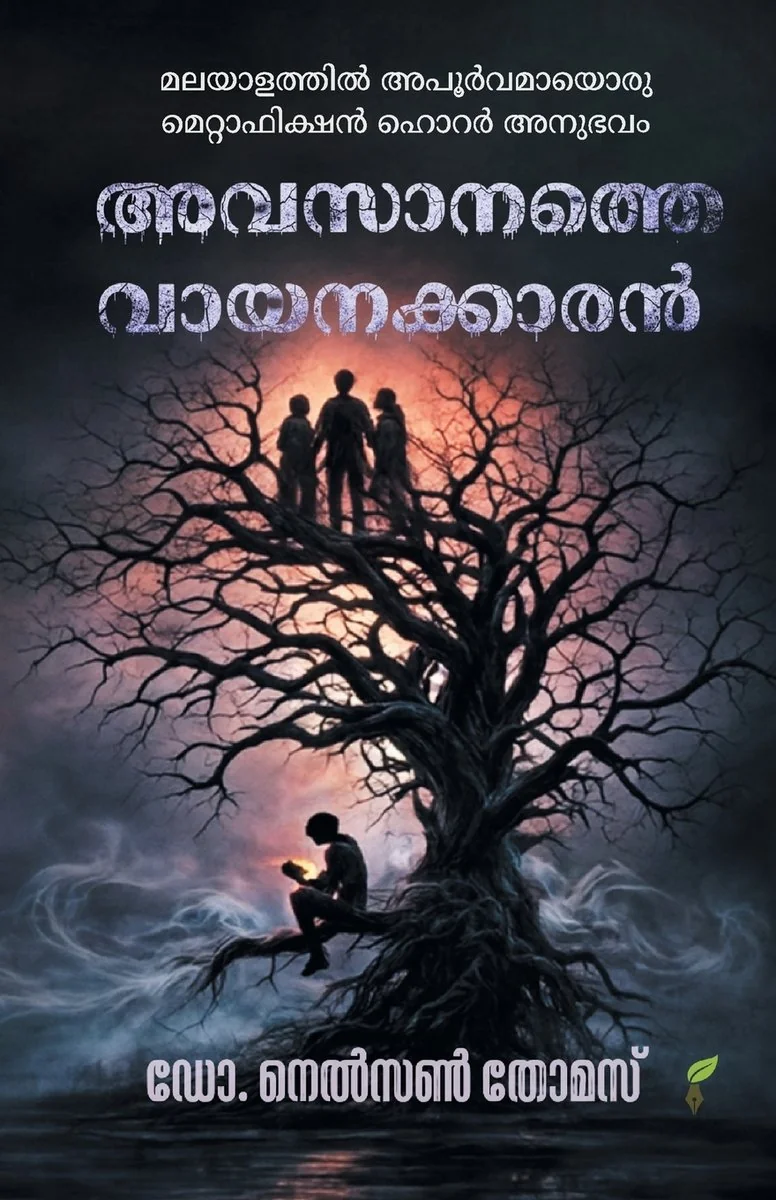
Avasanathe Vayanakkaran
A novel where reading a manuscript summons a demon into the real world.
Thomas constructs a layered narrative that begins with an editor receiving a dangerous document. The core story involves Fr. Zachariah Vattakunnel fighting a cunning entity tied to corruption. This inner tale bleeds into the outer frame, affecting Alex directly. The structure forces the audience to confront their own complicity in the horror. The demon targets those with hidden sins, making the reading experience personal and threatening. The text operates as both a memoir of an exorcist and a trap for the modern reader. This dual nature defines the book's unique approach to the genre.
This work originates from Malayalam literature, published by Scriptleaf in 2025. It draws on Catholic priestly traditions and exorcism practices within that specific cultural framework. The narrative engages with themes of unjust wealth and spiritual accountability relevant to that context.


📝 Description: Avasanathe Vayanakkaran
💎 Our verdict on Avasanathe Vayanakkaran
📖 Why choose it
Why this book is worth reading
Readers who crave intellectual dread and psychological complexity will find this novel deeply rewarding. It appeals to those who enjoy horror that implicates the audience, transforming the passive act of reading into an active confrontation with hidden sins. Fans of meta-narrative techniques and theological horror will appreciate how Thomas blurs the line between fiction and reality. The book offers a unique experience for anyone interested in stories where the text itself is a trap. It is ideal for readers who prefer their horror to be cerebral and uncomfortable, challenging their complicity rather than just relying on jump scares or traditional monster tropes.
⭐ Reader reviews
Reader rating
Thomas delivers a sophisticated theological horror that operates as both memoir and mechanism. The layered narrative structure effectively induces immediate dread by dissolving the boundary between the protagonist’s apartment and the reader’s space. The exploration of corruption and hidden sins adds moral weight to the supernatural elements, making the threat feel personal rather than abstract. This approach suits readers who appreciate experimental forms and psychological intensity over straightforward plot progression. While it may alienate those seeking traditional exorcism tales, it rewards engagement with its sharp critique of modern complicity. The work stands out for its ability to make the reading experience itself threatening.
You might also like
See more →


Have a question about this item?
Ask about the edition, condition, delivery or anything else — we reply by email or phone, usually within a day.
