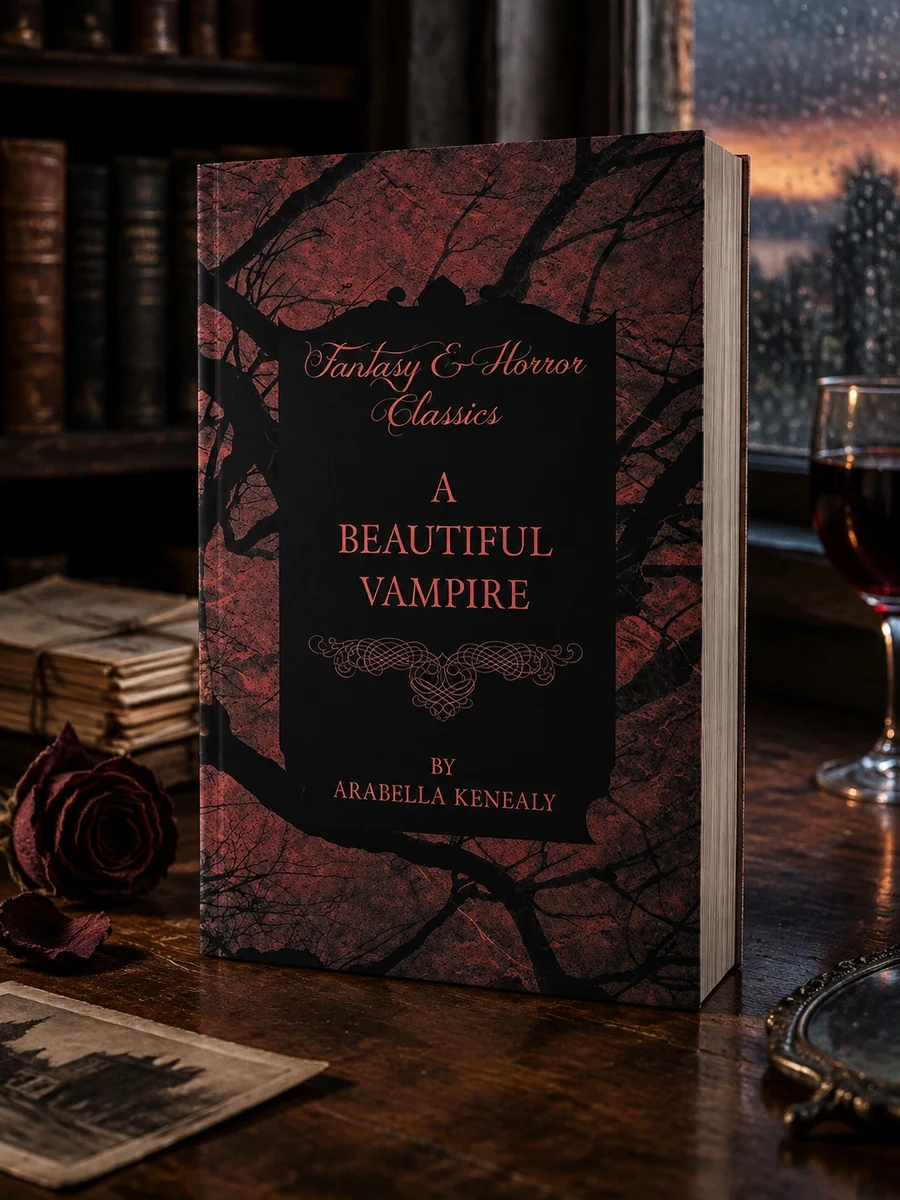

A Beautiful Vampire (Fantasy and Horror Classics)
A 1896 story about a woman who drains life force through charm.
Kenealy presents Lady Deverish as a magnetic figure whose beauty exacts a terrible price. Her victims do not die immediately but suffer a gradual loss of vitality. The medical narrator observes this drain with confusion before uncovering the truth. The story frames vampirism as a psychological condition rather than a supernatural curse. This approach highlights fears regarding social health and the dangers of charismatic individuals. The text remains a fascinating look at late nineteenth-century anxieties about energy and influence.
This 1896 short story sits within the tradition of Victorian horror fiction. It reflects late nineteenth-century concerns about social health and vitality. The work predates modern psychological thriller conventions by decades.


📝 Description: A Beautiful Vampire (Fantasy and Horror Classics)
💎 Our verdict on A Beautiful Vampire (Fantasy and Horror Classics)
📖 Why choose it
Why this book is worth reading
Readers interested in the evolution of the vampire mythos will find this text compelling for its unique departure from blood-drinking tropes. It appeals to those who enjoy psychological horror and subtle, chilling tales about seductive women who consume men through charm rather than violence. The narrative offers an early exploration of the psychic vampire trope, focusing on the invisible menace of vitality theft. Those fascinated by late nineteenth-century anxieties about social health and energy will appreciate this sophisticated take on a familiar genre. It is ideal for fans of gothic fiction who prefer intellectual dread over physical gore.
⭐ Reader reviews
Reader rating
Kenealy presents a fascinating variant of the vampire mythos, framing vampirism as a psychological condition rather than a supernatural curse. The narrative follows a medical narrator observing Lady Deverish, whose magnetic beauty exacts a terrible price through gradual vitality loss. This approach highlights fears regarding social health and the dangers of charismatic individuals. The text remains a chilling look at late nineteenth-century anxieties about energy and influence. It suits readers interested in Victorian horror and supernatural fiction who enjoy subtle tales. Those seeking traditional gore may find this work too psychological, as it focuses on the insidious drain of will and energy rather than physical terror.
📖 Read on the blog
🏛 Books from this publisher Fantasy and Horror Classics


You might also like
See more →
Have a question about this item?
Ask about the edition, condition, delivery or anything else — we reply by email or phone, usually within a day.
