🩸Horror Tradition
Yūrei
A traditional Japanese ghost rooted in classic folklore, the yūrei is an embittered spirit of the dead that returns to the mortal realm to exact vengeance.
Etymology & Origin
Where the word comes from
Derived from the Japanese words for dark or faint (yu) and spirit or soul (rei).
Full Definition
In depth
Origins The concept of the yūrei traces back to traditional Japanese folklore and Shinto beliefs regarding death and the afterlife. In these ancient traditions, when a person dies suddenly, violently, or with unresolved emotional turmoil—such as deep anger, intense grief, or a broken vow—their spirit cannot transition peacefully into the ancestral realm. Instead, the soul lingers in a liminal state, eventually transforming into a yūrei. While ancestral spirits in Japan were historically revered during festivals like Obon, the yūrei represents the disruptive, unsettling side of the spirit world, dating back centuries in classical literature, ghost stories, and Edo-period kabuki theater.
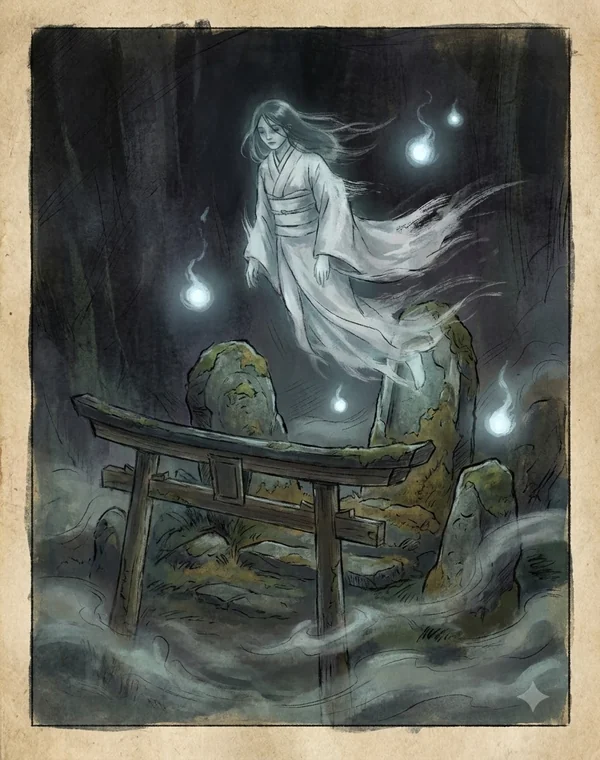
What It Is Said to Do According to traditional folklore, yūrei are typically depicted wearing a white burial kimono known as a katabira and lack visible legs, floating menacingly above the ground with their arms hanging limp or outstretched. They are often accompanied by hitodama, which are eerie, glowing ghost-fires. Unlike Western spirits that might haunt physical locations indiscriminately, a yūrei is usually bound to a specific person, place, or object connected to its earthly trauma or grievance. They possess supernatural powers to manipulate the environment, cause phantom illnesses, or curse the living. To protect against or appease a restless spirit, families and communities historically performed specialized Buddhist memorial rites, offered prayers at shrines, or attempted to resolve the underlying injustice that caused the haunting.
In Horror Fiction In horror literature and narrative fiction, writers utilize the yūrei to explore themes of inescapable guilt, karmic retribution, and psychological haunting. Unlike hyper-aggressive monsters that rely on physical violence, the horror of the yūrei lies in its persistent, sorrowful presence and moral weight, reflecting societal anxieties surrounding unspoken wrongs. Writers often construct slow-burn narratives where the boundaries between the living world and the spirit realm dissolve completely. Landmark works in Japanese literature, such as Lafcadio Hearn's classic collections of ghost stories like Kwaidan, brilliantly captured these atmospheric traditions for broader audiences, laying the groundwork for modern psychological ghost stories.
Why It Still Frightens The yūrei remains deeply terrifying because it reminds us that human emotions like hatred and sorrow can transcend physical death, making past wrongs impossible to bury.
Connected Concepts
Related horror terms
Further Study