🩸Horror Tradition
Shoggoth
A colossal, amorphous mass of iridescent protoplasm originating from the Cthulhu Mythos created by American pulp writer H. P. Lovecraft.
Etymology & Origin
Where the word comes from
The name is a fictional term coined by H. P. Lovecraft, likely designed to sound archaic, bubbling, and alien to mimic the unnatural nature of the creature.
Full Definition
In depth
Origins The shoggoth originates from the cosmic horror fiction of American author H. P. Lovecraft, first appearing in his seminal 1936 novella At the Mountains of Madness. Unlike traditional folkloric creatures rooted in centuries-old regional or cultural traditions, the shoggoth is a literary invention of twentieth-century weird fiction. Within Lovecraft's fictional universe, they were artificially engineered by the ancient extraterrestrial race known as the Elder Things as versatile, adaptable biological laborers during the early epochs of Earth's history. Over immense spans of geological time, these monstrous entities developed a terrifying primitive consciousness, eventually culminating in a catastrophic rebellion against their cosmic masters that devastated the Elder Things' Antarctic civilization.
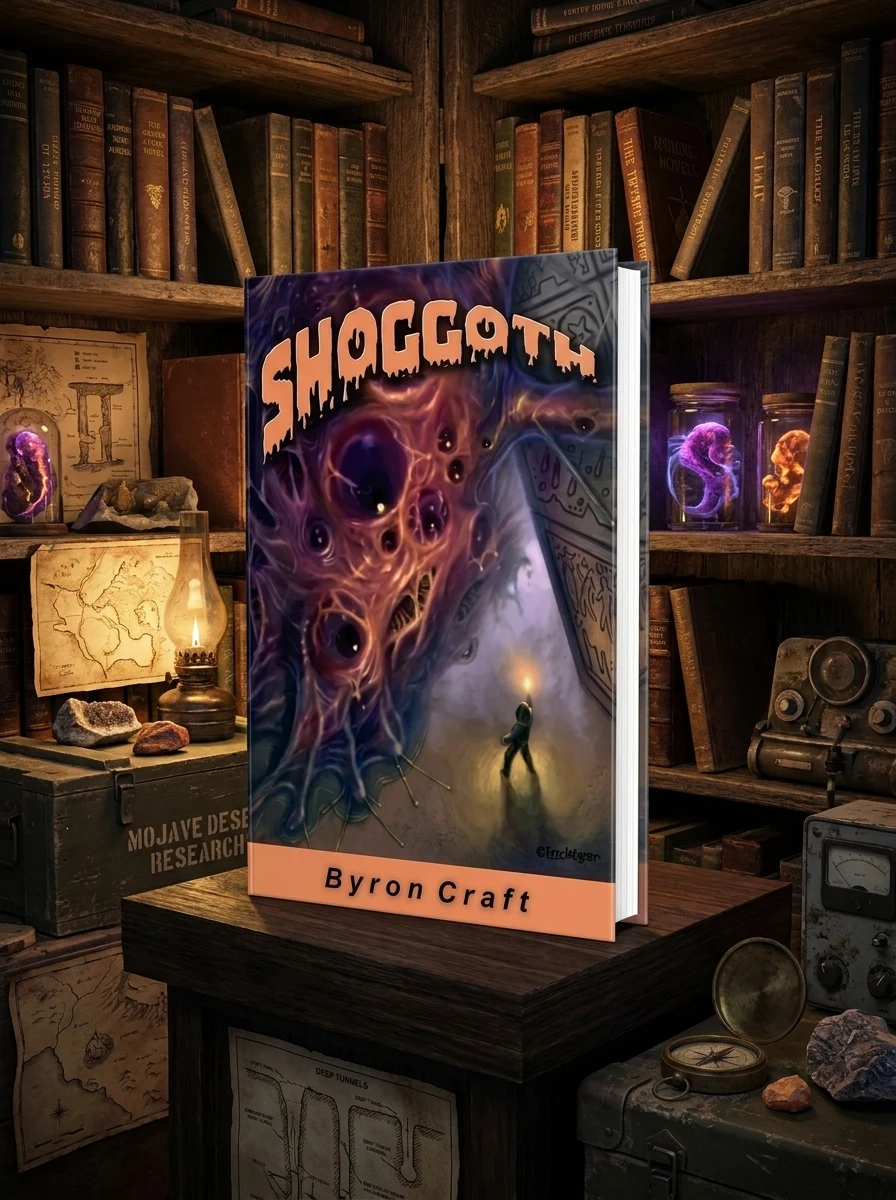
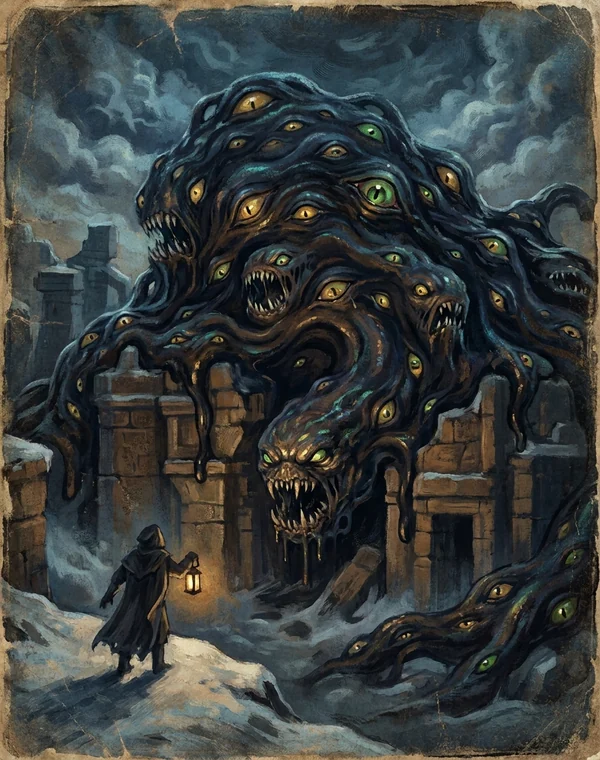
What It Is Said to Do A shoggoth is described as a titanic, shapeless bulk of black, iridescent protoplasm that can reach staggering proportions, often spanning many tons and filling massive subterranean tunnels. While normally lacking a fixed anatomy, it possesses the horrifying ability to rapidly sprout temporary organs, limbs, eyes, and mouths at will, allowing it to manipulate objects, engulf prey, and mimic the sounds and language of its creators with a chilling, echoing resonance. The creature moves with irresistible, crushing momentum, flattening everything in its path. Traditional protective measures are virtually nonexistent against a shoggoth due to its sheer mass, terrifying resilience, and unpredictable mutability, making flight or evasion the only viable survival strategies.
In Horror Fiction Horror writers and contributors to the Cthulhu Mythos use the shoggoth to evoke profound existential dread, representing the ultimate horror of servitude turning against its master and the nightmarish consequences of playing creator with forces beyond human comprehension. Because it is a shapeless entity lacking individual identity or human emotion, it embodies an alien indifference that defies reason. Landmark works featuring the entity include H. P. Lovecraft's At the Mountains of Madness, where the protagonists discover the chilling architectural and historical remnants of the shoggoth's violent rebellion, as well as later cosmic horror expansions by writers such as August Derleth and modern weird fiction authors who expanded upon the Mythos.
Why It Still Frightens The shoggoth remains enduringly frightening because it exploits our deepest primal fears of losing bodily integrity, being consumed by an overwhelming formless mass, and facing the horrifying reality that our creations might inevitably rise up to destroy us.
Connected Concepts
Related horror terms
Further Study