🩸Horror Tradition
Vetala
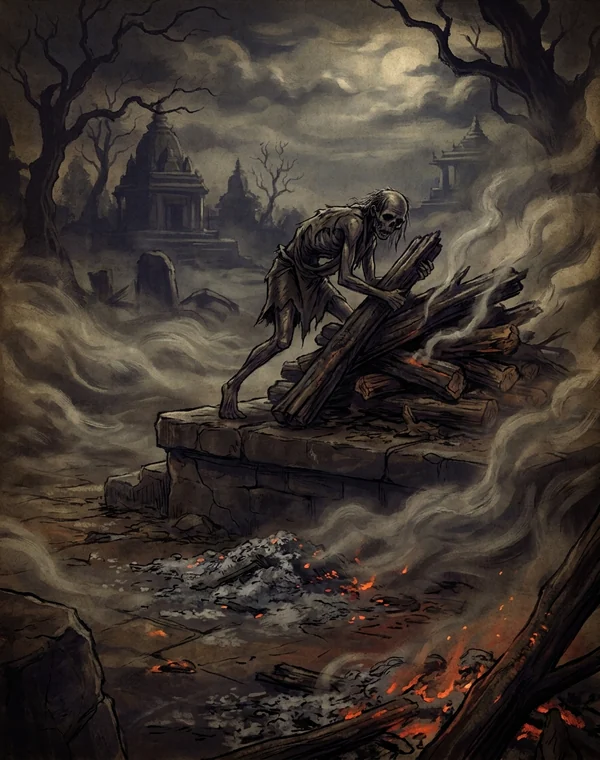
A vetala is a malicious, corpse-possessing vampire-like spirit originating in ancient Hindu folklore and mythology, known for haunting cremation grounds and tormenting the living.
Etymology & Origin
Where the word comes from
Derived from the Sanskrit word vetala, meaning a spirit that possesses dead bodies.
Full Definition
In depth
Origins The vetala is a prominent creature within ancient Hindu mythology and South Asian folklore, with its earliest recorded descriptions dating back thousands of years. Rooted deeply in early Sanskrit literature, these complex entities are frequently mentioned in classical epics and medieval story collections, most notably the famous Sanskrit frame narrative known as the Vetala Panchavimshati, or Twenty Tales of the Vetala. Traditionally believed to be restless spirits of the dead, vetalas originate from a cultural worldview where funerary rites and the proper transition of the soul were paramount. When funeral rituals were neglected, or when individuals died with violent, unfulfilled desires, their spirits risked becoming trapped between planes of existence.
What It Is Said to Do According to traditional lore, vetalas possess terrifying physical characteristics and supernatural abilities, often described as undead or corpse-like beings that inhabit cremation grounds and cemeteries. They are said to possess human corpses, using them as physical vessels to stalk the living, manipulate physical objects, and perform dark sorcery. While occupying a body, a vetala does not decompose, lending it incredible strength, shapeshifting capabilities, and the power to drive humans insane with fear. To protect themselves or banish the spirit, mortals historically relied on sacred mantras, protective talismans, and rituals performed by holy ascetics to force the entity out of the inhabited corpse.
In Horror Fiction In horror fiction and modern weird literature, writers draw upon the vetala to evoke deep primal dread regarding bodily violation, decomposition, and the blurring lines between life and death. Unlike standard cinematic vampires, the vetala introduces a uniquely psychological and atmospheric brand of terror by hijacking the human form, turning a familiar corpse into an uncanny, predatory puppet. Authors utilize its association with cremation grounds to establish oppressive, grim settings saturated with the scent of ash and decay, playing on human anxieties surrounding corpse desecration and spiritual corruption.
Why It Still Frightens Even in contemporary horror, the vetala remains deeply unsettling because it exploits our fundamental horror at the violation of bodily autonomy and the terrifying thought of the dead refusing to stay buried.
Connected Concepts
Related horror terms
Further Study