🩸Horror Tradition
Leshy
A shape-shifting guardian spirit of the deep woods originating from Slavic folklore, known for leading travelers astray and protecting wild beasts.
Etymology & Origin
Where the word comes from
Derived from the old Slavic root word for forest or wood.
Full Definition
In depth
Origins The legend of the leshy originates deep within Slavic folklore, stretching back centuries into the pre-Christian oral traditions of Eastern Europe, particularly among Russian, Polish, and Ukrainian cultures. As ancient agrarian communities lived in close proximity to vast, untamed primeval forests, they conceptualized these dense woods as living, willful entities. The leshy emerged as the sovereign spirit or lord of this domain, an ancient embodiment of the wilderness that existed long before human axes ever touched bark. Rural populations regarded the forest not merely as a resource, but as a sacred, perilous boundary inhabited by supernatural keepers who demanded profound respect and cautious observance.
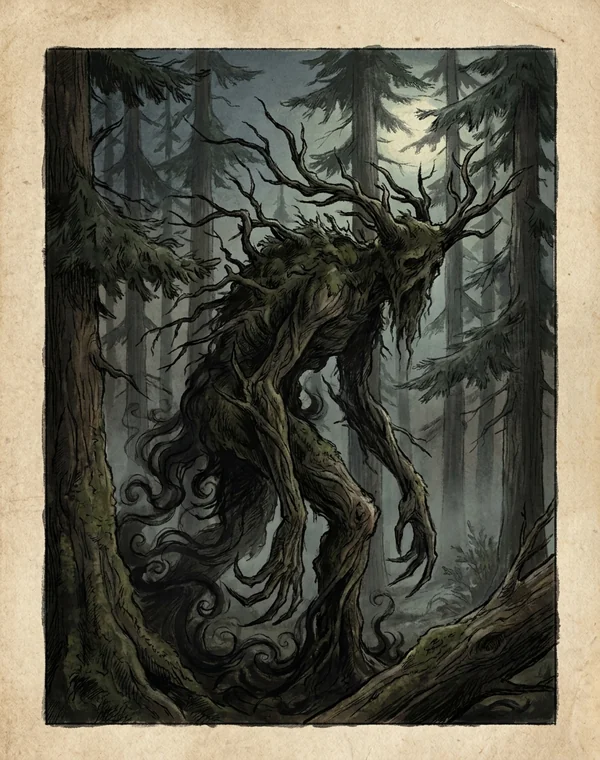
What It Is Said to Do In traditional folklore, the leshy is famously a shape-shifter capable of altering its stature to match the canopy of the trees or shrinking to hide beneath a single blade of grass. Its appearance often shifts between that of a towering peasant, an animal, or a composite of vegetation, featuring glowing eyes, hair and beard made of living moss, and an absence of shadows. The spirit is said to use its uncanny powers to disorient travelers, mimicking familiar voices or animal cries to lure victims deep into impenetrable thickets until they are hopelessly lost. To protect themselves, peasants entering the woods would turn their clothing inside out, wear their shoes on the wrong feet, or offer bread and salt to appease the volatile guardian.
In Horror Fiction Modern horror and dark fantasy writers use the leshy to evoke the primal terror of nature turning hostile against human intrusion, tapping into the deep-seated dread of being swallowed by the woods. Unlike mindless monsters, the leshy represents an intelligent, malicious ecological malice that plays psychological games with its prey, exploiting isolation and human hubris. While many contemporary works weave the spirit into broader fantasy frameworks, horror authors emphasize its alien indifference to human morality, portraying it as a force that treats human life with cruel caprice. The terror it carries is rooted in claustrophobia, disorientation, and the agonizing realization that civilization is merely a fragile clearing surrounded by an ancient, watchful dark.
Why It Still Frightens The leshy endures as a terrifying figure because it personifies our instinctive fear of the unknown wilderness, reminding us that nature is neither benign nor truly conquered by modern humanity.
Connected Concepts
Related horror terms
Further Study