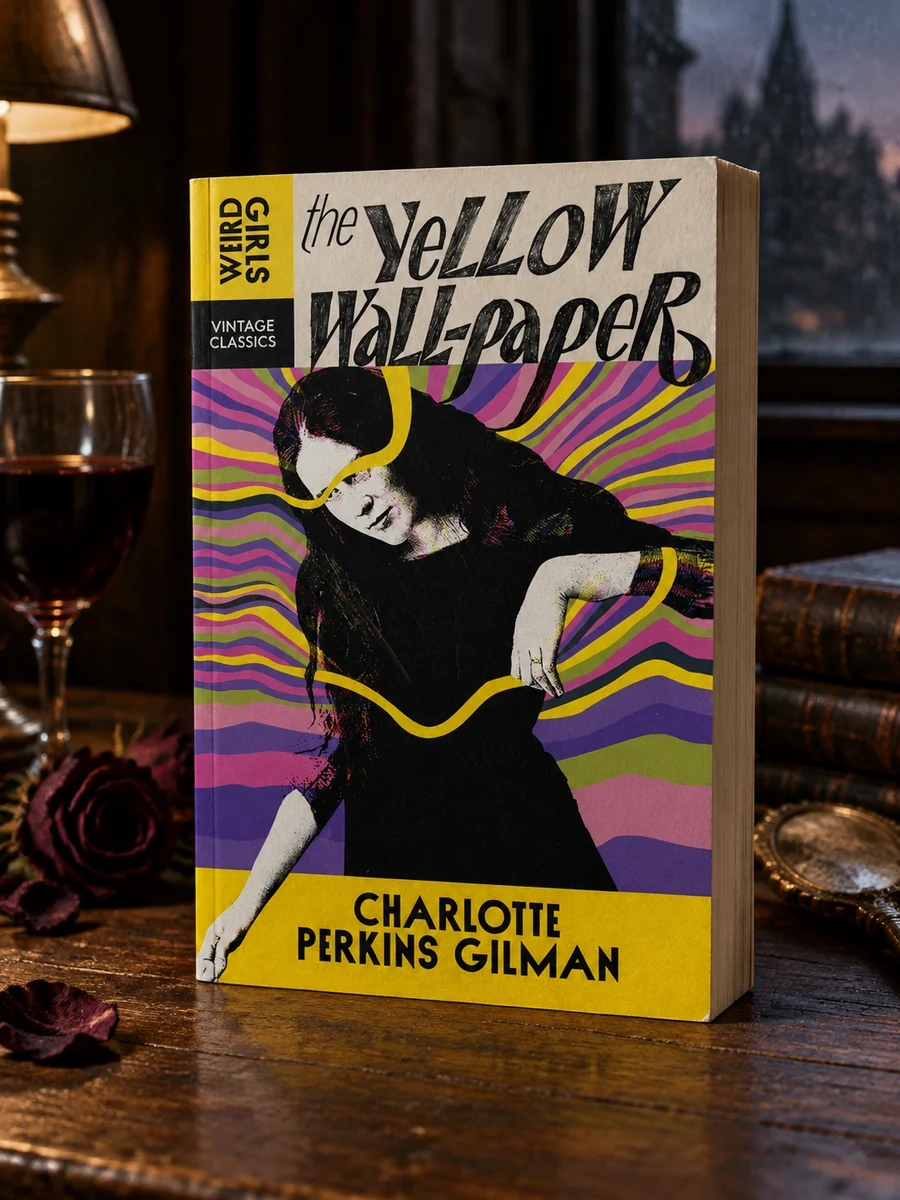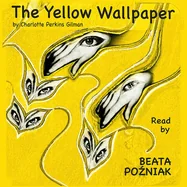
The Yellow Wallpaper Lib/E
A woman's descent into madness triggered by forced rest in a colonial nursery.
The text presents a first-person account of a wife confined to a room by her doctor husband. He claims she suffers from a slight hysterical tendency after giving birth. The setting is an old colonial mansion where she must avoid all creative or physical labor. Her environment includes a former nursery with distinct architectural flaws like barred windows. The central focus becomes the deteriorating yellow wallpaper in that specific room. As she watches the pattern shift under moonlight, she perceives a figure struggling behind the design. This perception drives her to investigate the paper's secrets. The narrative structure relies on her unreliable perspective to show how isolation and lack of agency erode mental stability. Gilman critiques the medical establishment's dismissal of women's voices during this period.
Gilman wrote this work as a critique of late nineteenth-century medical treatments for women. It stands as a cornerstone of American feminist literature and gothic fiction. The story reflects the historical context of domestic confinement and the dismissal of female health concerns by male physicians.


📝 Description: The Yellow Wallpaper Lib/E
💎 Our verdict on The Yellow Wallpaper Lib/E
📖 Why choose it
Why this book is worth reading
Readers seeking profound psychological horror and feminist critique will find this text essential. It appeals to those interested in the history of medical treatment for women, offering a visceral look at how isolation erodes mental stability. The narrative provides a masterclass in unreliable storytelling, depicting a descent into madness triggered by forced confinement. It is ideal for scholars studying domestic confinement narratives and gothic fiction traditions. Those who appreciate subgenres like cosmic or psychological horror will value its exploration of the mind breaking under patriarchal suppression. It offers no comfort, but rather a chilling examination of lost agency.
⭐ Reader reviews
Reader rating
Gilman crafts a terrifying portrait of mental deterioration through the lens of domestic confinement. The unreliable narrator’s obsession with the yellow wallpaper creates an atmosphere of creeping dread, effectively merging gothic elements with psychological horror. The text excels in its critique of medical dismissal and patriarchal control, making it relevant beyond its literary merit. It suits readers who enjoy dark fantasy, true crime-adjacent societal critiques, and complex character studies. Those seeking lighthearted entertainment will find this unsuitable, but devotees of challenging, atmospheric horror will appreciate its groundbreaking narrative structure and enduring cultural impact.