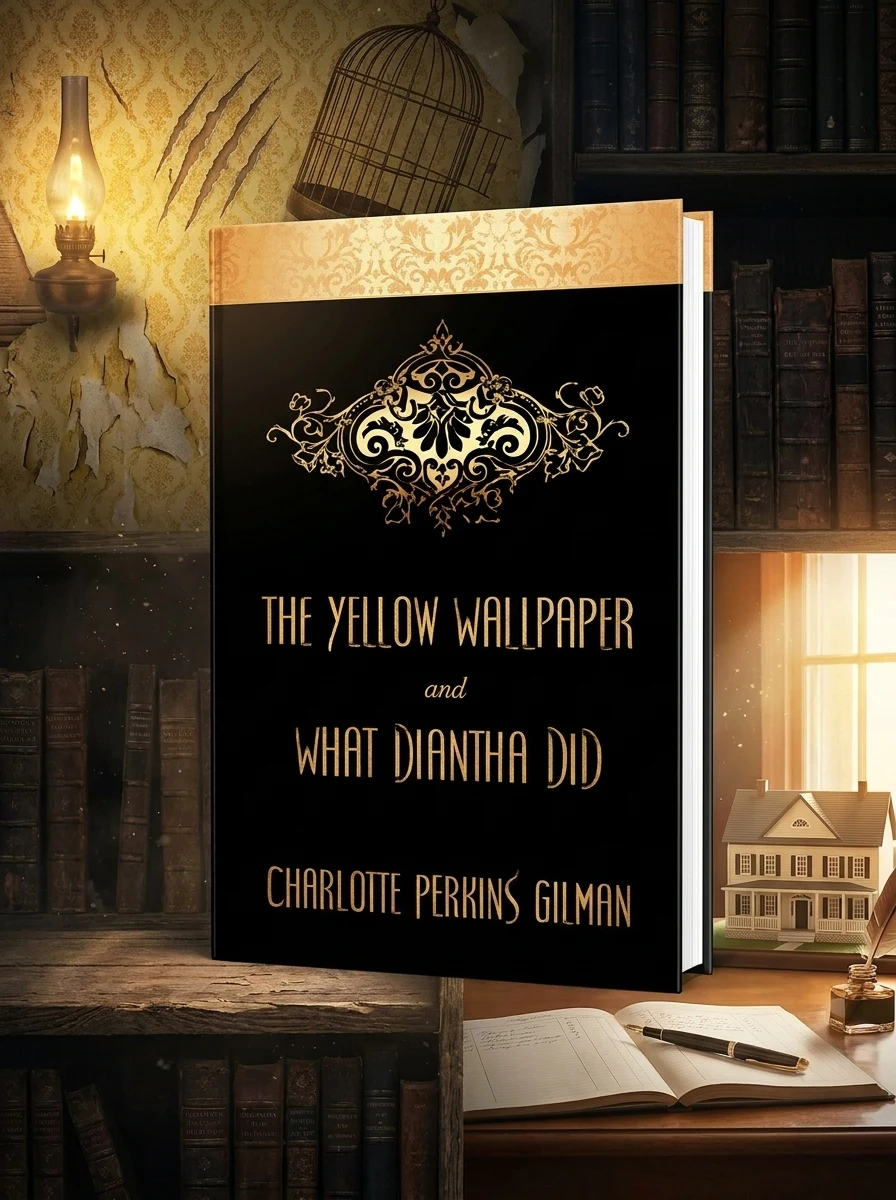
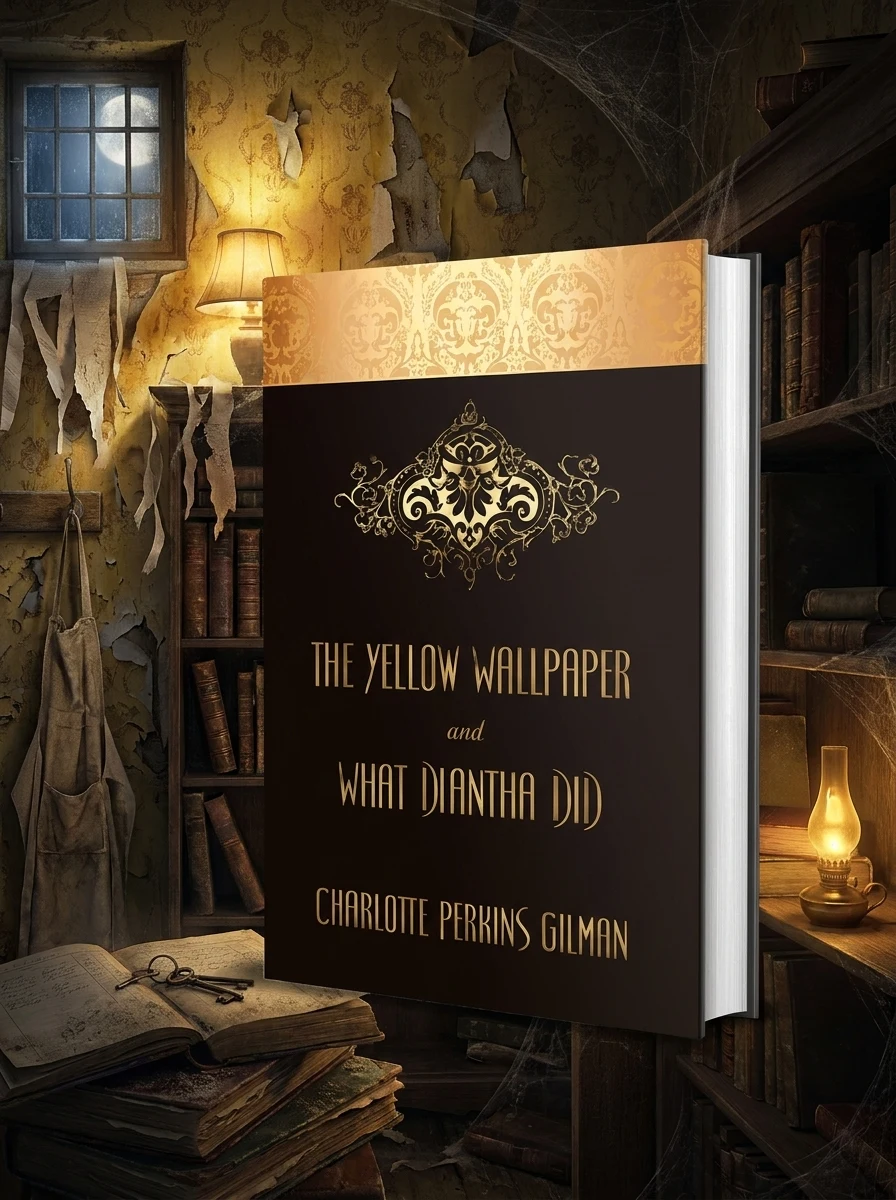
The Yellow Wallpaper and What Diantha Did
Gilman pairs a psychological horror tale with a feminist story about labor reform.
This collection contrasts two views on women's lives. One narrative shows the crushing weight of medical oppression. The other depicts a woman gaining power through work. Gilman, known for her social reform ideas, connects these themes. The book examines how society restricts women and how they can resist. It is not a single continuous story but two separate works bound together. Readers will find a clear link between mental health struggles and economic independence in these texts.
Published in 2025 by Brownstone Books, this volume revives Gilman's late nineteenth-century works. It sits within the tradition of American feminist literature and psychological horror. The collection addresses social reform debates of her time regarding women's rights and medical treatment.


📝 Description: The Yellow Wallpaper and What Diantha Did
💎 Our verdict on The Yellow Wallpaper and What Diantha Did
📖 Why choose it
Why this book is worth reading
Readers interested in the intersection of mental health narratives and feminist theory will find profound value here. The collection offers a dual exploration of women's lives, contrasting the crushing weight of medical oppression with the empowerment found through labor reform. It appeals to those seeking historical feminist literature that critiques patriarchal structures without relying on supernatural elements for its horror. The text provides insight into how societal restrictions can be resisted, making it essential for students of gothic fiction and social history who wish to understand the roots of psychological terror in domestic settings.
⭐ Reader reviews
Reader rating
Gilman masterfully juxtaposes two distinct narratives to examine female autonomy and mental decline. 'The Yellow Wallpaper' delivers a chilling account of isolation and obsession caused by forced rest cures, while 'What Diantha Did' presents a realistic counterpoint regarding economic independence. The book succeeds in linking psychological horror with social critique, offering a clear view into the era's gender politics. It is best suited for readers who appreciate gothic fiction that engages with serious social commentary rather than pure supernatural thrills. The arrangement highlights Gilman’s dual approach to women's issues effectively.
📖 Read on the blog
✍️ More books by this author Charlotte Perkins Gilman


🏛 Books from this publisher Brownstone Books
You might also like
See more →




Have a question about this item?
Ask about the edition, condition, delivery or anything else — we reply by email or phone, usually within a day.
