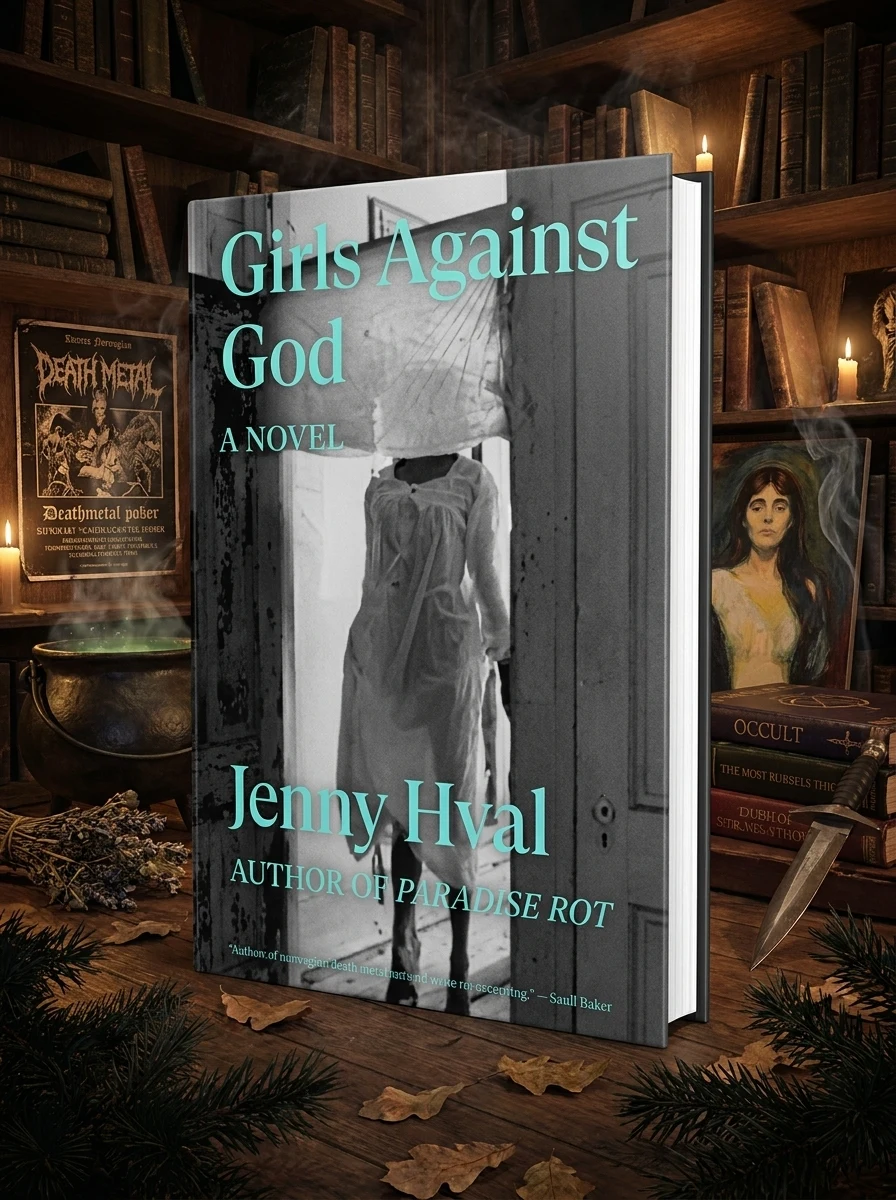
Girls Against God
Currently unavailable
This book is sold out right now. Leave your email — we'll let you know if it comes back, and you'll get 10% off any book today.
In stock now — readers of this book also loved:




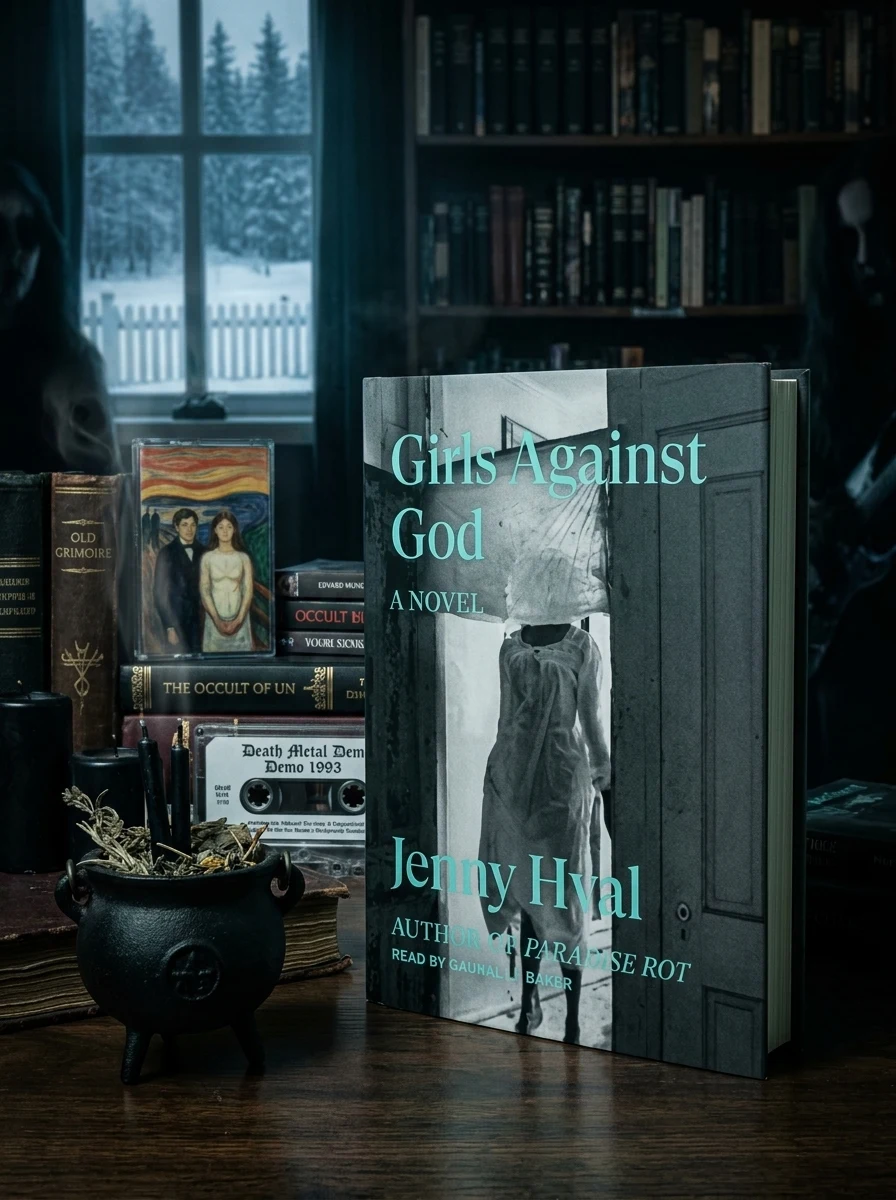
A time-traveling feminist horror novel set in 1990s Norway involving witches and Edvard Munch.
Hval constructs a surreal landscape where historical art meets modern metal music. The presence of Edvard Munch creates tension with the girl from Puberty, who seeks revenge. This personal vendetta mirrors the broader societal unrest caused by the local witch coven. The forest scenes provide a stark contrast to the suburban order, introducing elements of the supernatural that defy explanation. The book uses these collisions to critique the conservative norms of its setting.
The narrative is rooted in 1990s Norway, specifically Oslo and surrounding forests. It engages with the tension between white picket fence domesticity and deep-seated Christian conservatism of that era.


📝 Description: Girls Against God
💎 Our verdict on Girls Against God
📖 Why choose it
Why this book is worth reading
Readers seeking a provocative fusion of horror and feminist manifesto will find this book essential. It appeals to those interested in surreal narratives that disrupt linear plot conventions, offering instead a symbolic exploration of time, art, and vengeance. The text is ideal for audiences who enjoy dense, atmospheric writing that demands engagement with its thematic layers rather than simple resolution. By intertwining the lives of witches, a time-traveling artist, and lost schoolgirls, it provides a stark critique of suburban order and religious conservatism. Those comfortable with challenging genre structures will appreciate the intellectual and visceral satisfaction derived from its complex interplay of historical reference and contemporary metal aesthetics.
⭐ Reader reviews
Reader rating
Hval delivers a potent, surreal horror experience that prioritizes symbolic resonance over traditional storytelling. The narrative effectively critiques 1990s Norwegian conservatism by juxtaposing rigid social norms with chaotic supernatural elements. While the structure may alienate readers seeking conventional ghost stories or clear linear plots, it rewards those willing to engage with its dense imagery and feminist undertones. The integration of Edvard Munch’s legacy adds a unique historical weight, enhancing the eerie atmosphere. This book is best suited for fans of literary horror who appreciate genre-warping experiments. It succeeds in creating a memorable, unsettling landscape where art, music, and witchcraft collide to expose deep-seated societal tensions.