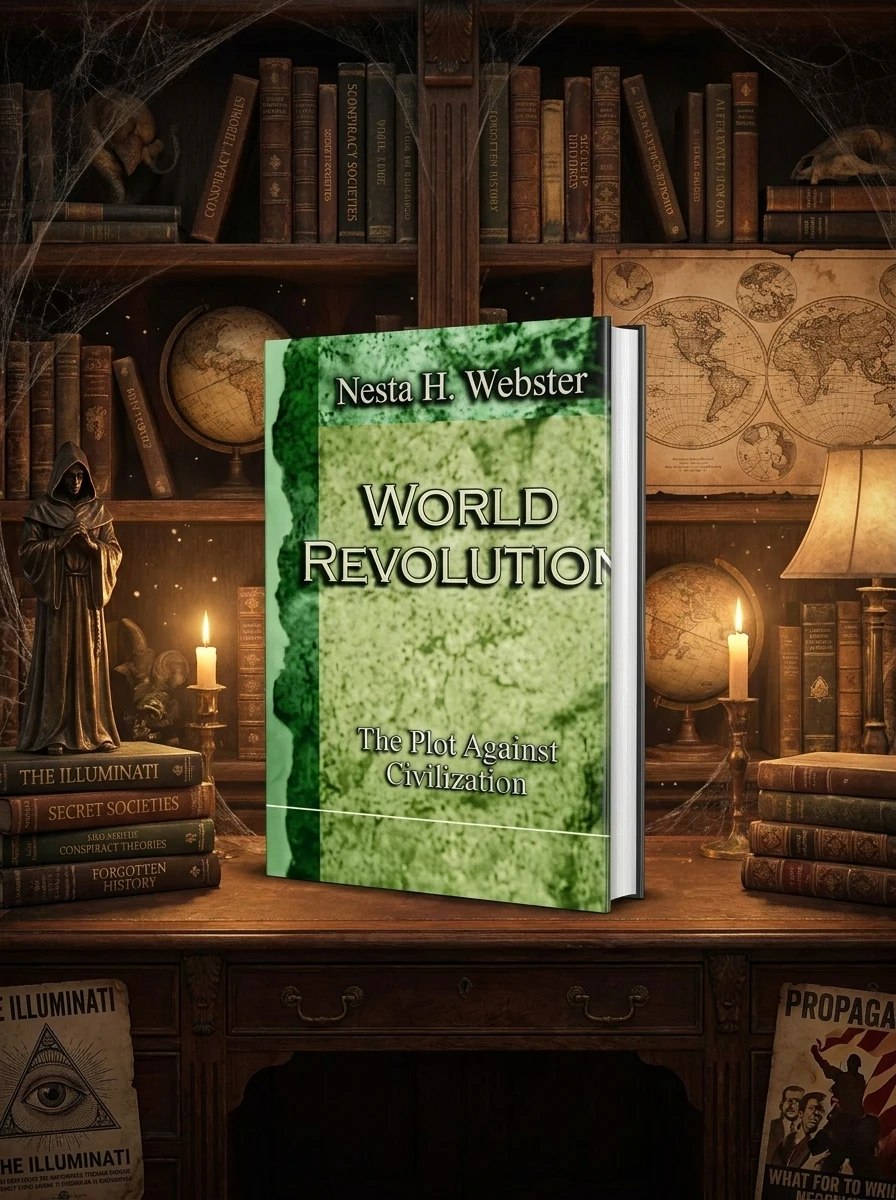

World Revolution The Plot Against Civilization (1921)
A 1921 analysis of global political shifts by Nesta H Webster, reissued in 2006.
Webster argues that socialistic, communistic, and democratic revolutions share common origins. The book investigates the underlying causes that led to these widespread uprisings. It examines how resulting governments evolved and what they reveal about a potential New World Order. The text suggests that these political changes are interconnected rather than isolated incidents. Readers can explore how past events shape current societal structures. The work challenges readers to consider the implications of these developments for future generations. It presents a view of history where coincidence plays a minimal role in world affairs. The analysis focuses on the strategic nature of these ideological movements.
This text originates from 1921, reflecting early twentieth-century political anxieties. The 2006 Book Jungle edition makes this historical perspective available to modern readers interested in alternative interpretations of global history and political theory.


📝 Description: World Revolution The Plot Against Civilization (1921)
💎 Our verdict on World Revolution The Plot Against Civilization (1921)
📖 Why choose it
Why this book is worth reading
This text appeals to readers who view history through a lens of interconnected malevolence rather than chance. It is ideal for those fascinated by the intersection of political ideology and existential dread, offering a framework where socialistic, communistic, and democratic movements are seen as facets of a singular revolutionary force. The book serves individuals seeking alternative explanations for global shifts, providing a dense analysis that challenges conventional historical narratives. By tracing how these ideologies evolved into new governmental structures, it offers insight into the strategic nature of modern societal changes. It is particularly valuable for those who question standard accounts of world events and wish to understand the continuity of revolutionary thought across different eras, framing political upheaval as a deliberate plot against civilization itself.
⭐ Reader reviews
Reader rating
Webster’s analysis constructs a compelling narrative where political upheavals are not isolated incidents but components of a coordinated effort to reshape society. The work excels in linking past uprisings to contemporary governance models, presenting history as a strategic rather than random process. This perspective resonates with readers interested in the underlying causes of global political shifts and the potential implications for future generations. While it may not suit those seeking straightforward biographical accounts or purely academic economic analysis, it offers a unique view on the continuity of revolutionary thought. The book effectively challenges standard historical narratives, inviting readers to consider the minimal role of coincidence in world affairs. It is best suited for those who enjoy dense, interpretive histories that explore the darker undercurrents of ideological movements and their impact on civilization.
📖 Read on the blog
🏛 Books from this publisher Book Jungle







You might also like
See more →




Have a question about this item?
Ask about the edition, condition, delivery or anything else — we reply by email or phone, usually within a day.
