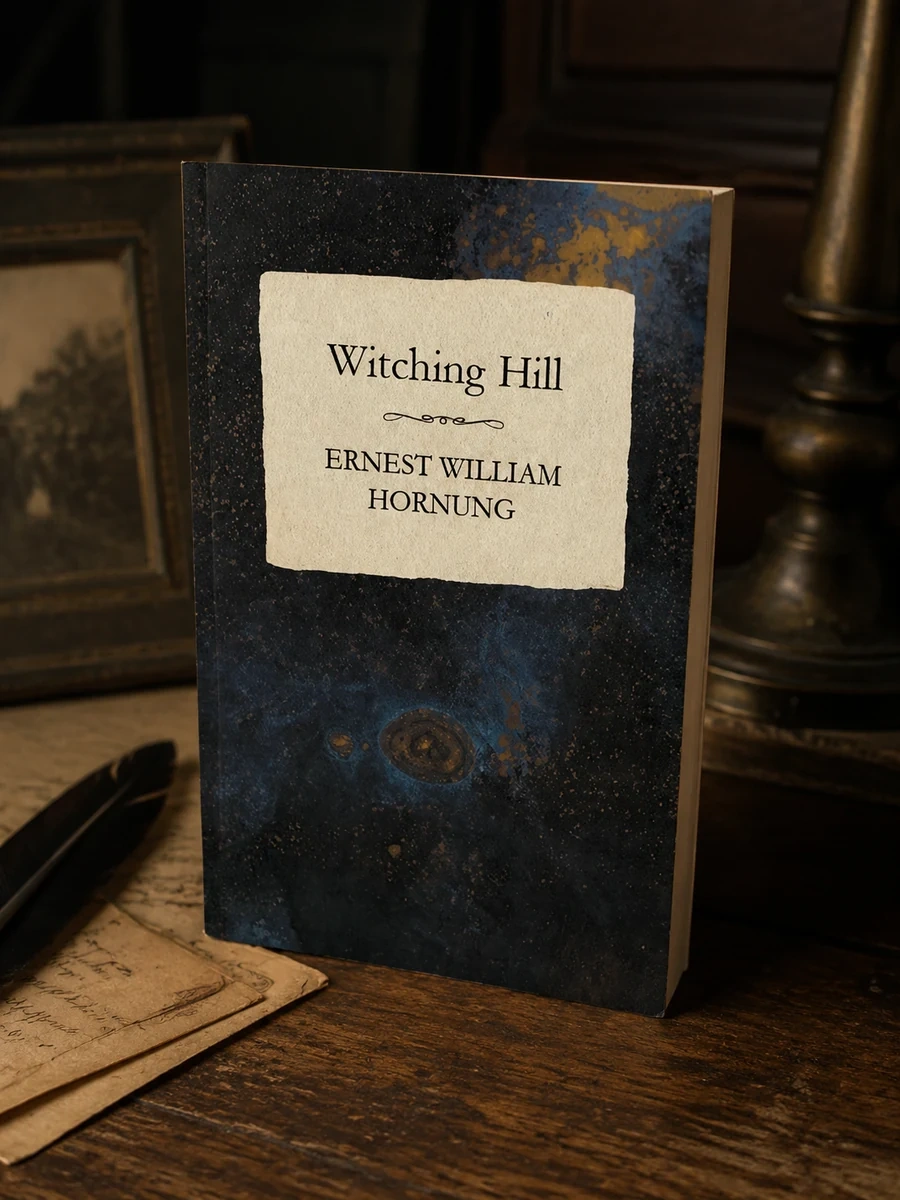
Witching Hill
A 1913 gothic novel about a cursed estate and inherited supernatural malice.
This edition presents Hornung's early exploration of supernatural inheritance. The plot centers on an estate where the evil actions of a former nobleman continue to affect its inhabitants. The narrative demonstrates how spiritual corruption spreads through a community. White Press has updated the text with a fresh biography, providing insight into the author's life in Middlesbrough and his time as a journalist. This context helps readers understand the development of Hornung's literary voice before he achieved fame with his Raffles series. The book offers a look at early twentieth-century attitudes toward class and morality.
Hornung wrote this during the transition from Victorian to Edwardian eras. His birth in Middlesbrough and work as a journalist shaped his perspective. The novel reflects early twentieth-century interest in gothic horror and the lingering power of aristocratic sin.


📝 Description: Witching Hill
💎 Our verdict on Witching Hill
📖 Why choose it
Why this book is worth reading
Readers interested in the historical development of gothic fiction will find this volume essential for understanding Ernest William Hornung’s literary evolution prior to his fame with the Raffles series. It offers a unique window into early twentieth-century perspectives on inherited guilt and spectral influence. Those who appreciate atmospheric tension over rapid plot progression will enjoy the deliberate pacing and sharp observational style informed by Hornung’s journalistic background. The inclusion of biographical context provides valuable insight into the author's life in Middlesbrough, helping to clarify his voice. It serves as a historical artifact for scholars and fans of classic supernatural tales who wish to explore how past sins were conceptualized in period horror.
⭐ Reader reviews
Reader rating
Witching Hill successfully channels a chilling atmosphere rooted firmly in gothic tradition, making it a compelling entry for enthusiasts of early supernatural fiction. Hornung’s background as a journalist lends the narrative a distinct observational sharpness that enhances the eerie mood surrounding the cursed estate. While the pacing is deliberate and may not suit those seeking fast-paced action or modern psychological thrills, fans of classic horror will appreciate its exploration of spiritual corruption and aristocratic malice. The work stands alongside other genre pieces examining the link between nobility and the occult. This edition provides necessary context through biographical material, aiding readers unfamiliar with Hornung’s broader career. It is a solid choice for those valuing historical texture and atmospheric depth in their reading selections.
📖 Read on the blog
🏛 Books from this publisher White Press


You might also like
See more →
Have a question about this item?
Ask about the edition, condition, delivery or anything else — we reply by email or phone, usually within a day.
