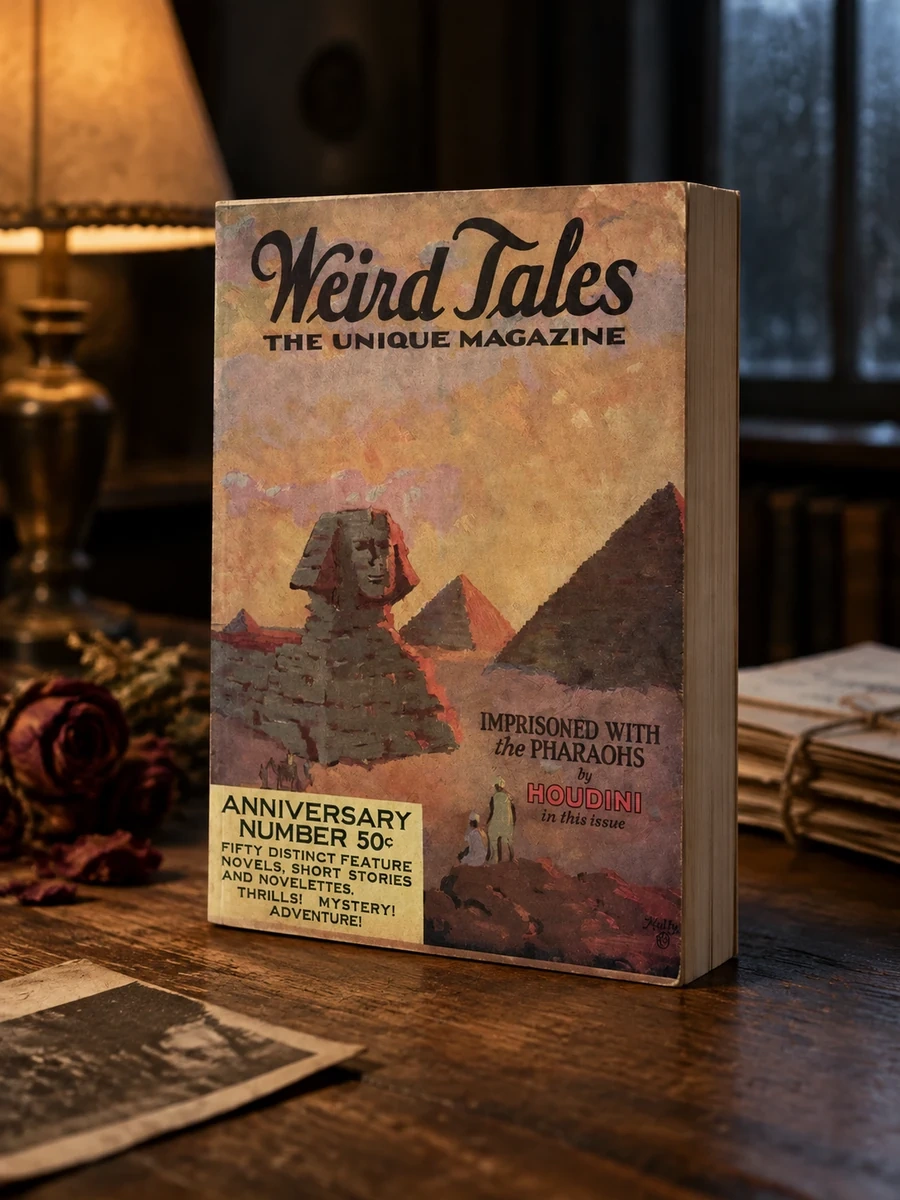
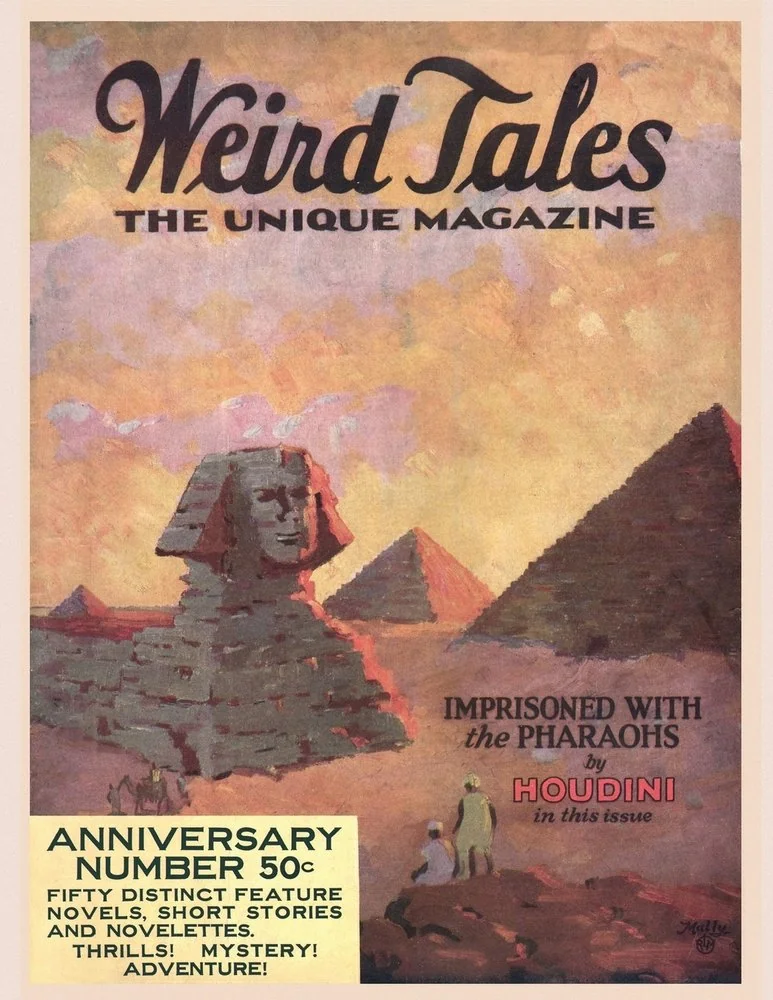
Weird Tales (May-July, 1924)
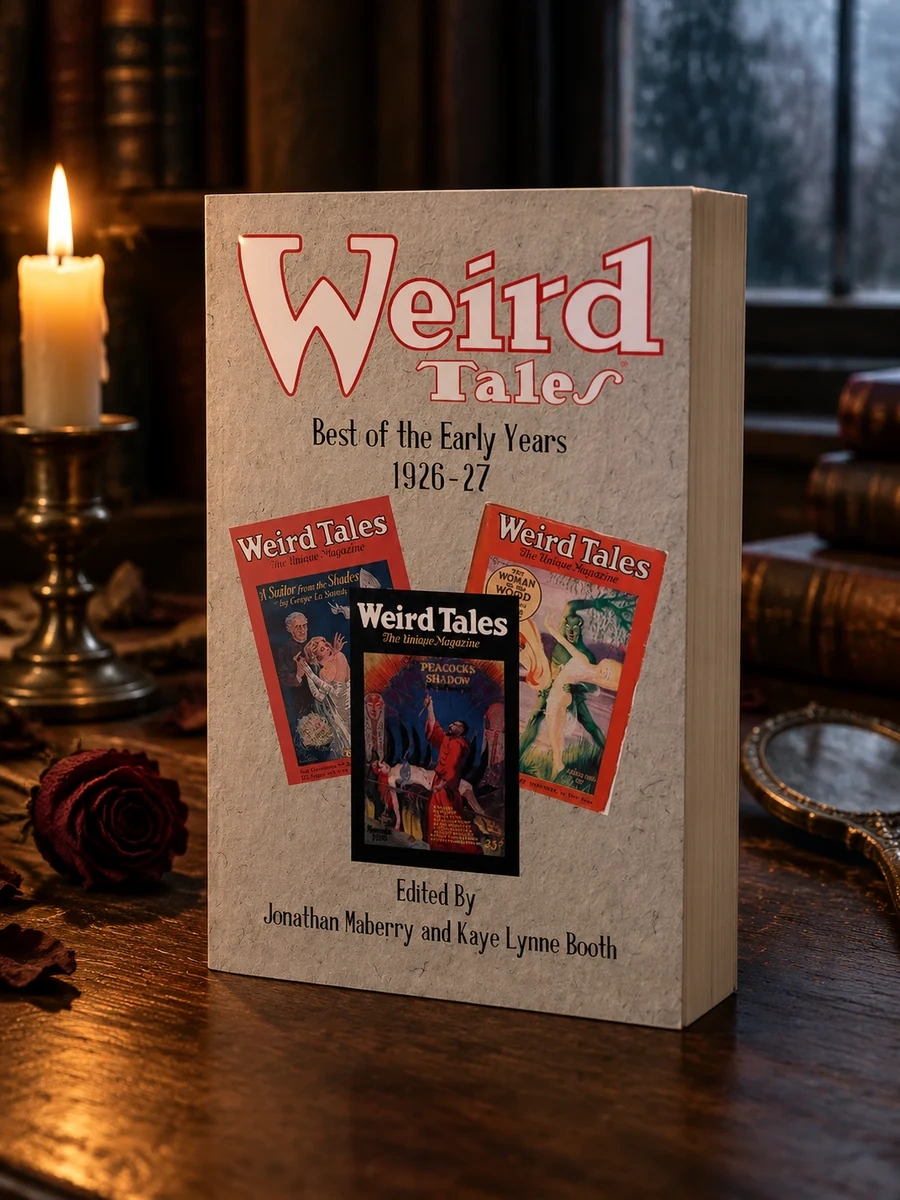
A facsimile reprint of the rare May-July 1924 issue of Weird Tales featuring Lovecraft and Houdini.
Wildside Press released this book on July 11, 2025, as a special reprint of a rare early issue. The ISBN is 9781667662114. The text preserves the original format while gathering diverse macabre narratives into one volume. It includes works by multiple authors beyond Lovecraft, showcasing the collaborative nature of the pulp era. The content ranges from ghost stories to occult detective fiction, providing a broad view of the genre's development during this specific period.
This work represents the legendary Weird Tales magazine, which defined American horror and fantasy fiction for generations. The May-July 1924 issue reflects the raw creative energy of early twentieth-century weird imagination, bridging traditional ghost stories with emerging supernatural themes.


📝 Description: Weird Tales (May-July, 1924)
💎 Our verdict on Weird Tales (May-July, 1924)
📖 Why choose it
Why this book is worth reading
Readers fascinated by the origins of modern horror will find this facsimile reprint invaluable for its direct access to the literary landscape of the early twentieth century. It is particularly suited for fans of H.P. Lovecraft who wish to explore his ghostwritten contribution to Harry Houdini, as well as those interested in the collaborative nature of the pulp era. The collection offers a broad view of genre development through diverse macabre narratives, including haunted mansions, strange experiments, and psychic visions. It appeals to scholars and enthusiasts seeking to understand the raw creative energy that fueled early horror traditions, distinct from the polished psychological thrillers or contemporary fantasy settings found in later works.
⭐ Reader reviews
Reader rating
This oversized collection succeeds by presenting over thirty chilling tales that provide a direct window into the pulp magazine's influence on American literature. The edition effectively highlights key figures like Lovecraft and Houdini while showcasing contributions from Otis Adelbert Kline and Henry S. Whitehead, illustrating the period's eclectic mix of ghost stories and occult detective fiction. It is best suited for readers interested in the historical development of horror and fantasy traditions rather than those seeking modern narrative structures. By preserving the original format, it serves as an essential resource for understanding the evolution of cosmic and psychological horror during this pivotal time.