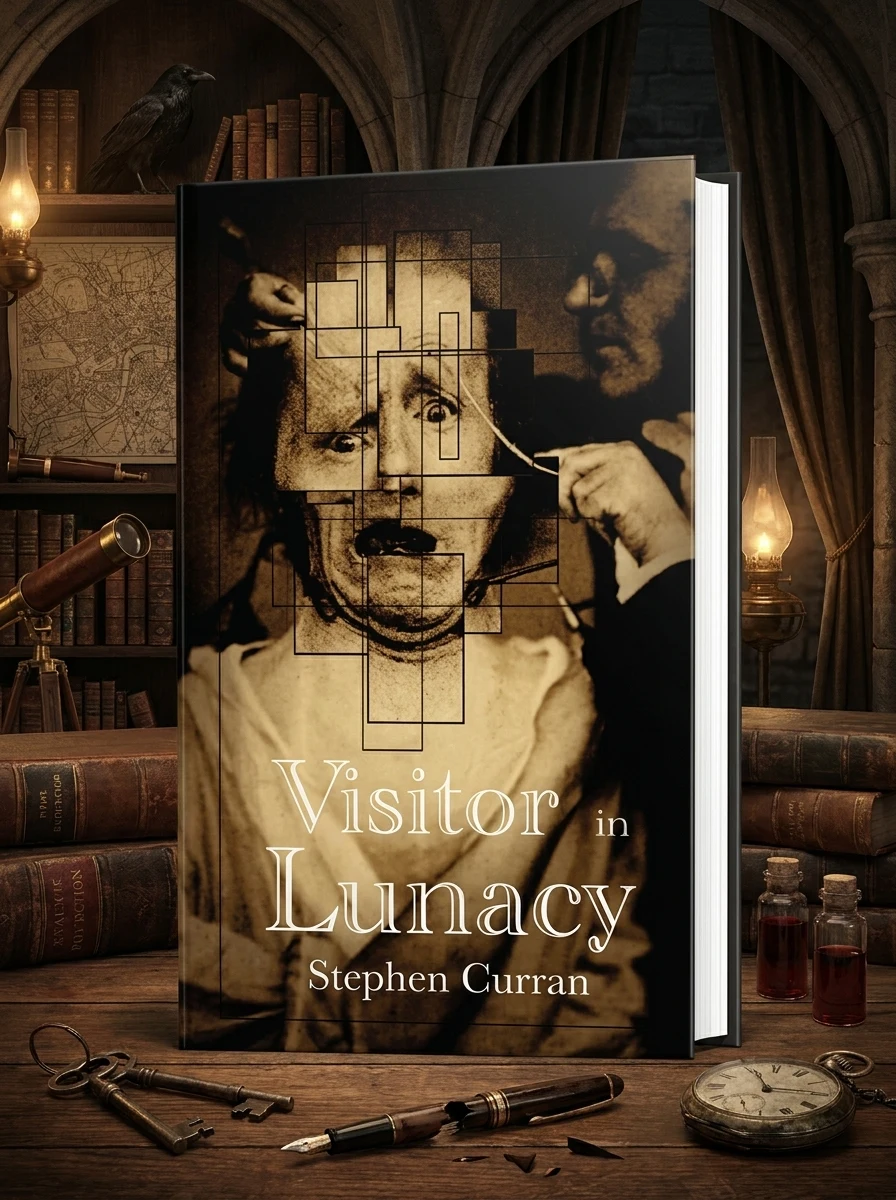
Visitor in Lunacy
A reimagining of Dr. Renfield's final days in an asylum.
Curran focuses on the psychological unraveling of a man who once held power over madhouses. The narrative structure shifts between different locations in the 19th century to show how past trauma dictates present suffering. By placing Renfield in Carfax, the author highlights the irony of his situation. The text does not rely on external horror tropes alone but instead digs into the internal logic of regret and memory. This creates a portrait of a man consumed by the very secrets he tried to hide.
The work sits within the tradition of Gothic fiction that expands upon Bram Stoker's Dracula. It draws on 19th century settings in London, Yorkshire, and Ceylon to explore the era's attitudes toward mental health and institutional power.


📝 Description: Visitor in Lunacy
💎 Our verdict on Visitor in Lunacy
📖 Why choose it
Why this book is worth reading
Readers drawn to complex character studies within Gothic fiction will find this narrative compelling, particularly those interested in the psychological unraveling of figures from classic horror lore. The book appeals to audiences who prefer internal logic over external monster hunting, offering a profound exploration of regret, memory, and the haunting nature of past trauma. It is ideal for fans of cosmic and psychological horror who appreciate narratives that dissect the mind rather than simply confront physical threats. By examining how childhood secrets shape adult lives, the text provides a unique entry point into themes of institutional madness. Those seeking a deep, unsettling atmosphere rooted in isolation and inevitable downfall will gain satisfaction from its intricate portrayal of a man consumed by his own history.
⭐ Reader reviews
Reader rating
Stephen Curran’s Visitor in Lunacy offers a sophisticated reimagining of Dr. Richard Renfield’s fate, focusing on psychological decay rather than traditional vampire tropes. The narrative structure effectively shifts between nineteenth-century locations to illustrate how past trauma dictates present suffering. While it relies heavily on its source material to build an unsettling atmosphere of isolation, the text succeeds in creating a portrait of a man consumed by regret. This approach suits readers who enjoy Gothic fiction with complex character studies and are willing to engage with themes of institutional madness. However, those seeking straightforward action or classic monster hunting may find the focus on internal logic less appealing. It is a compelling study for fans of psychological horror who value depth over pace.
📖 Read on the blog
🏛 Books from this publisher Createspace Independent Publishing Platform








You might also like
See more →

Have a question about this item?
Ask about the edition, condition, delivery or anything else — we reply by email or phone, usually within a day.
