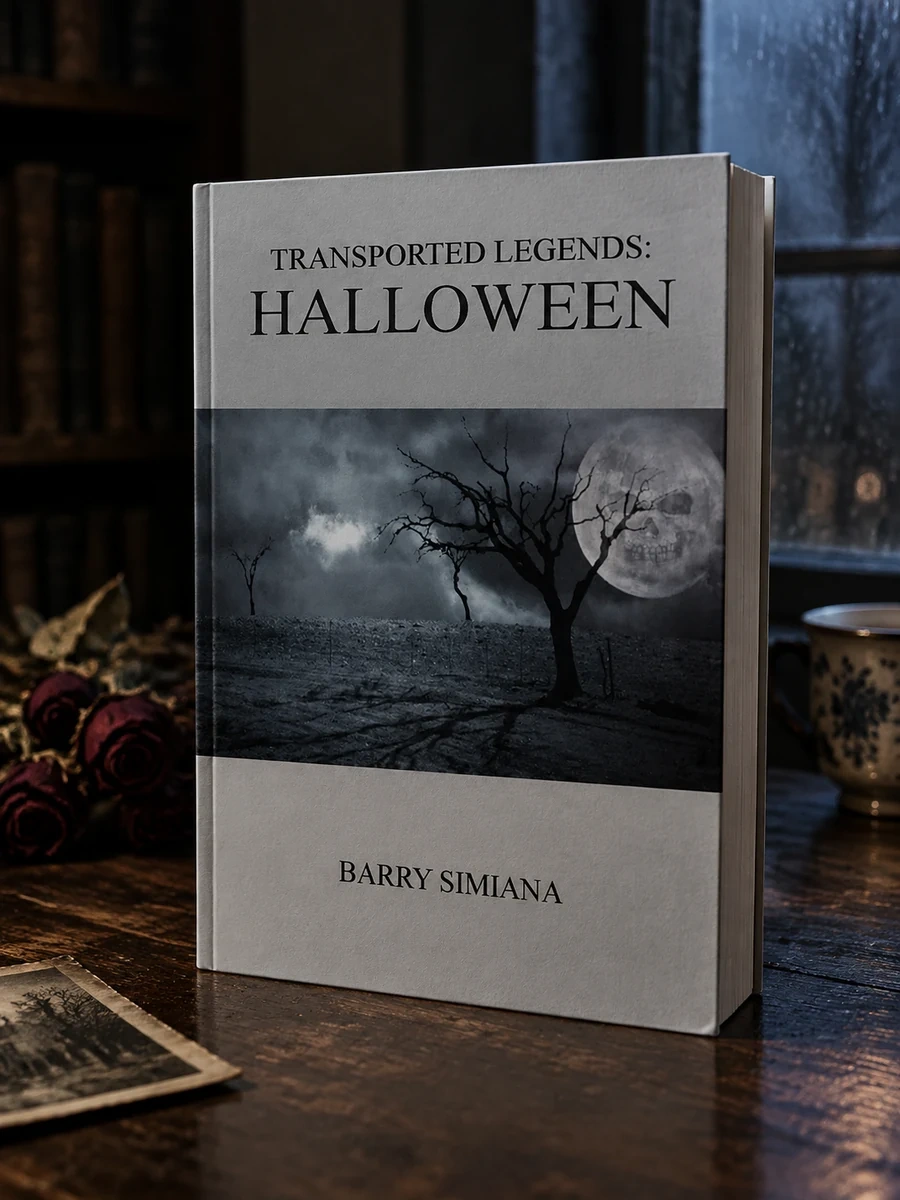
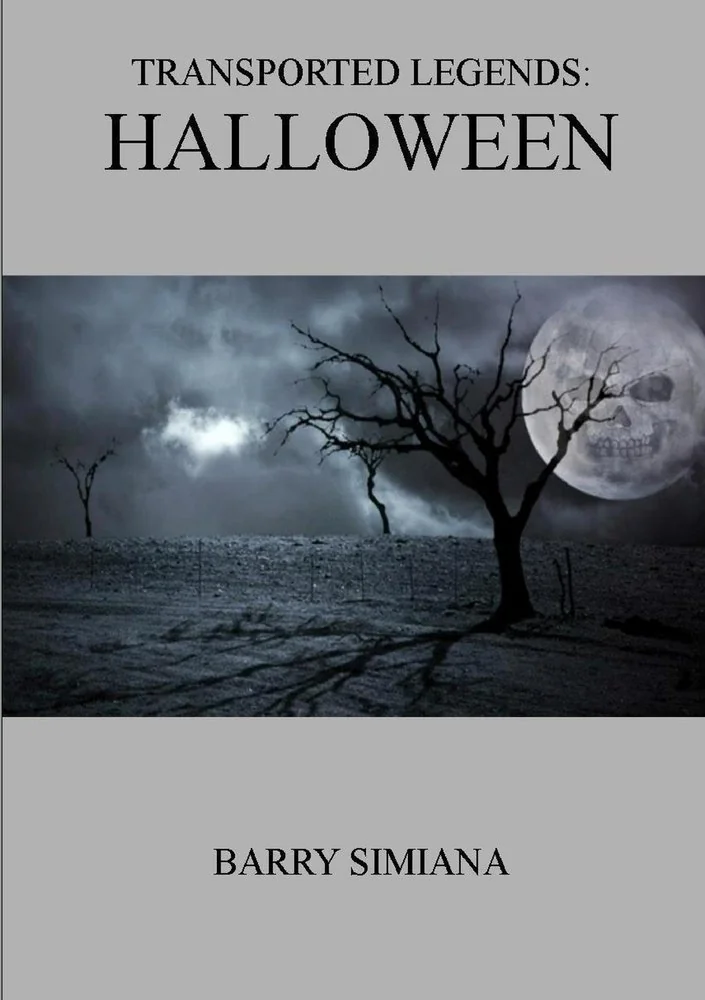
Transported Legends - HALLOWEEN
A story about Old World legends moving to Australia.
Simiana examines the displacement of European folklore into an Australian context. The narrative highlights how trick or treating functions in a land where residents prefer candy over engaging with the fantasy of monsters. The text suggests that these old legends struggle to establish themselves fully in this new environment. By focusing on the first entry in the series, the author sets the stage for understanding how magic folk interact with a population less receptive to their dimensional crossings. The work serves as an introduction to a broader investigation of mythological adaptation.
The book was published in 2012 by Lulu.com. It focuses on the transposition of Old World legends, specifically Halloween traditions, to Australia. The text addresses how these myths behave in a region where they have never really taken root.


📝 Description: Transported Legends - HALLOWEEN
💎 Our verdict on Transported Legends - HALLOWEEN
📖 Why choose it
Why this book is worth reading
Readers interested in the cultural anthropology of folklore will find value in this conceptual exploration of myth migration. The book offers a unique perspective on how Old World legends struggle to establish themselves in a new environment where residents prioritize fun over supernatural fear. It appeals to those curious about the evolution of Halloween customs outside traditional settings, providing a story-driven investigation rather than an academic treatise. Those who enjoy analyzing the tension between established European myths and modern cultural indifference will appreciate this abstract look at how magic folk interact with a population less receptive to dimensional crossings.
⭐ Reader reviews
Reader rating
Simiana presents a thought-provoking examination of folklore adaptation, focusing on the displacement of European myths into Australia. The narrative effectively contrasts traditional trick-or-treat fantasy with local attitudes that favor candy over monster lore. While it lacks detailed historical records or gore, it succeeds in illustrating how ancient rules shift when removed from their original context. This title is best suited for readers who enjoy conceptual horror and cultural analysis over straightforward plot-driven scares. It serves as an intriguing introduction to the broader investigation of mythological adaptation, appealing to those interested in the subtle tensions of magical intrusion.