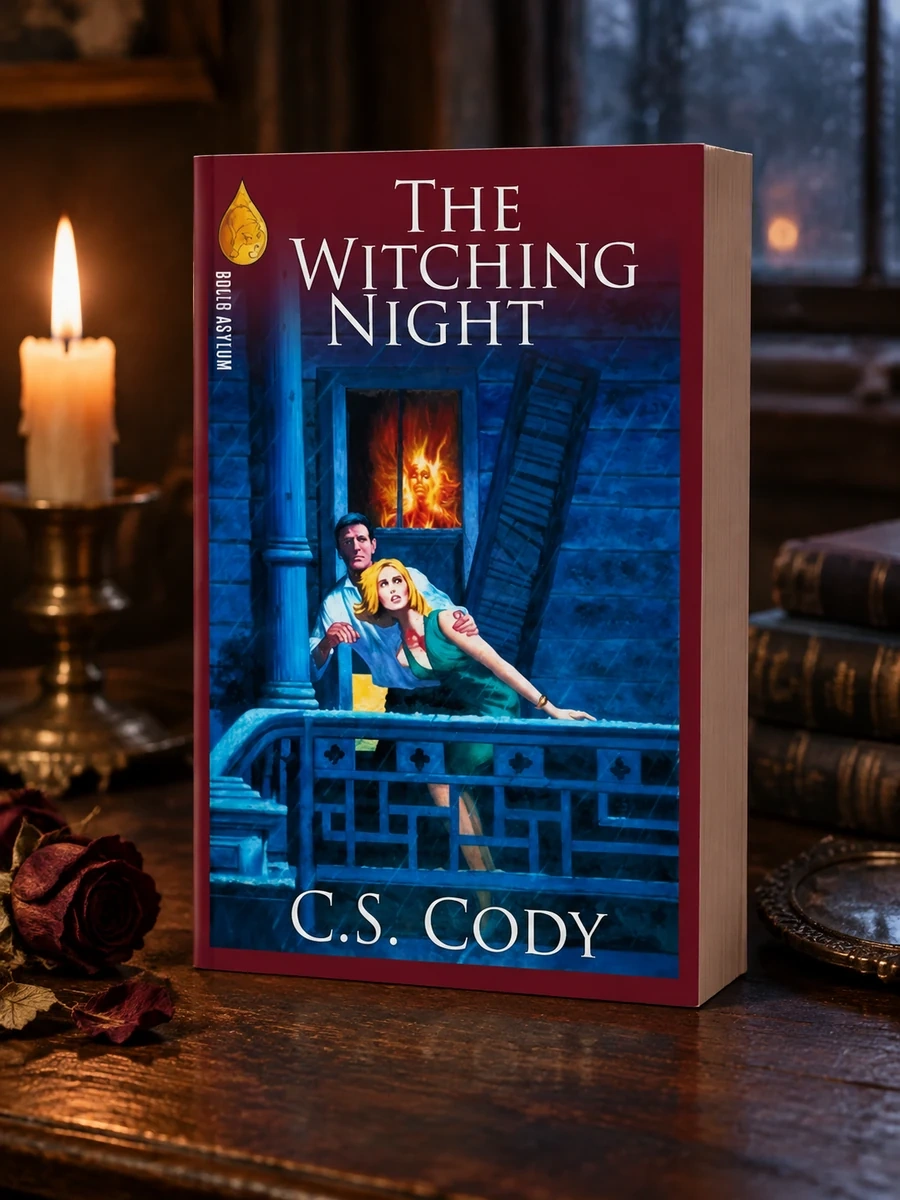

The Witching Night
A doctor battles an indefinable killer using medicine in this early weird fiction novel.
This work explores the clash between clinical rationality and ancient evil. Dr. Loomis attempts to use pharmaceuticals to maintain control while a malicious entity targets him. The narrative focuses on his struggle to remain lucid during these attacks. It reflects Waller's talent for suspense, seen in his other notable works like Hide in Plain Sight. The story does not rely on jump scares but rather on the constant threat of a killer who enjoys torture. This approach creates a unique atmosphere where science fails against an unknown enemy.
Published in 2013 by Bruin Books LLC, this edition launches the Bruin Asylum line of weird fiction. It reissues a novel originally written early in Leslie Waller's career under the pseudonym C S Cody. The text bridges his early speculative work with his later success in crime and thriller genres.


📝 Description: The Witching Night
💎 Our verdict on The Witching Night
📖 Why choose it
Why this book is worth reading
Readers who appreciate the intersection of medical realism and cosmic horror will find this novel compelling. It offers a unique perspective on the failure of science against an indefinable, malignant force. The narrative avoids traditional tropes like vampires or werewolves, focusing instead on psychological tension and the struggle for lucidity. Those interested in the roots of modern weird fiction and the author's collaboration with Steven Spielberg will find value in this chilling tour de force. It provides a suspenseful experience grounded in a realistic setting rather than relying on jump scares.
⭐ Reader reviews
Reader rating
Waller masterfully pits clinical logic against inexplicable evil, creating a tense atmosphere where medicine fails to contain ancient malice. Dr. Loomis’s reliance on pharmaceuticals to maintain control highlights the fragility of rationality. The book excels in building dread through an abstract antagonist rather than conventional monsters. It suits fans of psychological horror and weird fiction who prefer atmospheric suspense over gore. The introduction by Jonathan Eeds adds scholarly context to this early work. While it may not appeal to those seeking clear supernatural explanations, its exploration of scientific hubris is both chilling and intellectually stimulating.
You might also like
See more →



Have a question about this item?
Ask about the edition, condition, delivery or anything else — we reply by email or phone, usually within a day.
